

Ask any seasoned angler about the best lures for saltwater fishing, and they'll tell you the same thing: there’s no single magic lure. The real secret? It's about picking the right tool for the job. That's a science sportfishing legends Ed and Frank Murray spent decades perfecting, from the tournament circuit to the farthest reaches of the globe.
Their winning arsenal, honed over countless battles with the ocean's greatest predators, boiled down to three core categories: powerful trolling lures for chasing down offshore giants, versatile casting plugs for prowling inshore predators, and precision jigs for fish holding tight to structure.
Winning Lures from Sportfishing Legends
Before we get into the nitty-gritty of different lure types, let's get one thing straight. Picking a lure isn't about what looks flashiest in the tackle shop. It’s a strategic choice, one based on decades of real-world experience, endless trial and error, and a whole lot of tournament wins. For sportfishing legends Ed and Frank Murray, tying on a lure was the first move in a calculated plan to outsmart the ocean’s toughest customers.
The Murray Brothers' reputation wasn't built on a lucky cast here or there. It was forged in the heat of high-stakes saltwater sportfishing tournaments around the world. They became legends because they mastered the art of reading the water, understanding how fish behave, and, most importantly, presenting a perfect imitation of what those fish were eating. This guide is built on that same foundation of hard-won, tournament-proven knowledge.
A Legacy of Lure Selection
When you're pulling lures for marlin in the Gulf Stream or pitching to snook in the mangroves, your lure is your handshake with the underwater world. It has to speak the right language. The Murrays understood this instinctively, knowing the best lure is always the one that perfectly matches the local bait under the day's specific conditions.
This isn't just about gear; it’s a mindset. It’s what separates an angler who just hopes for a bite from a strategic hunter who makes it happen. The Murray Brothers' incredible track record proves that knowing your arsenal inside and out is what truly counts. Every lure in your tackle box has a job to do and a specific time to shine.
For Ed and Frank Murray, a lure was never just a piece of plastic or metal. It was a purpose-built tool, meticulously chosen to trigger an aggressive, predatory strike based on a lifetime of observing how gamefish react during high-pressure tournaments.
The Murray Brothers' Core Principles
The lessons from their incredible careers can be boiled down to a few core principles that any angler can, and should, use. Think of these as the bedrock of successful lure fishing.
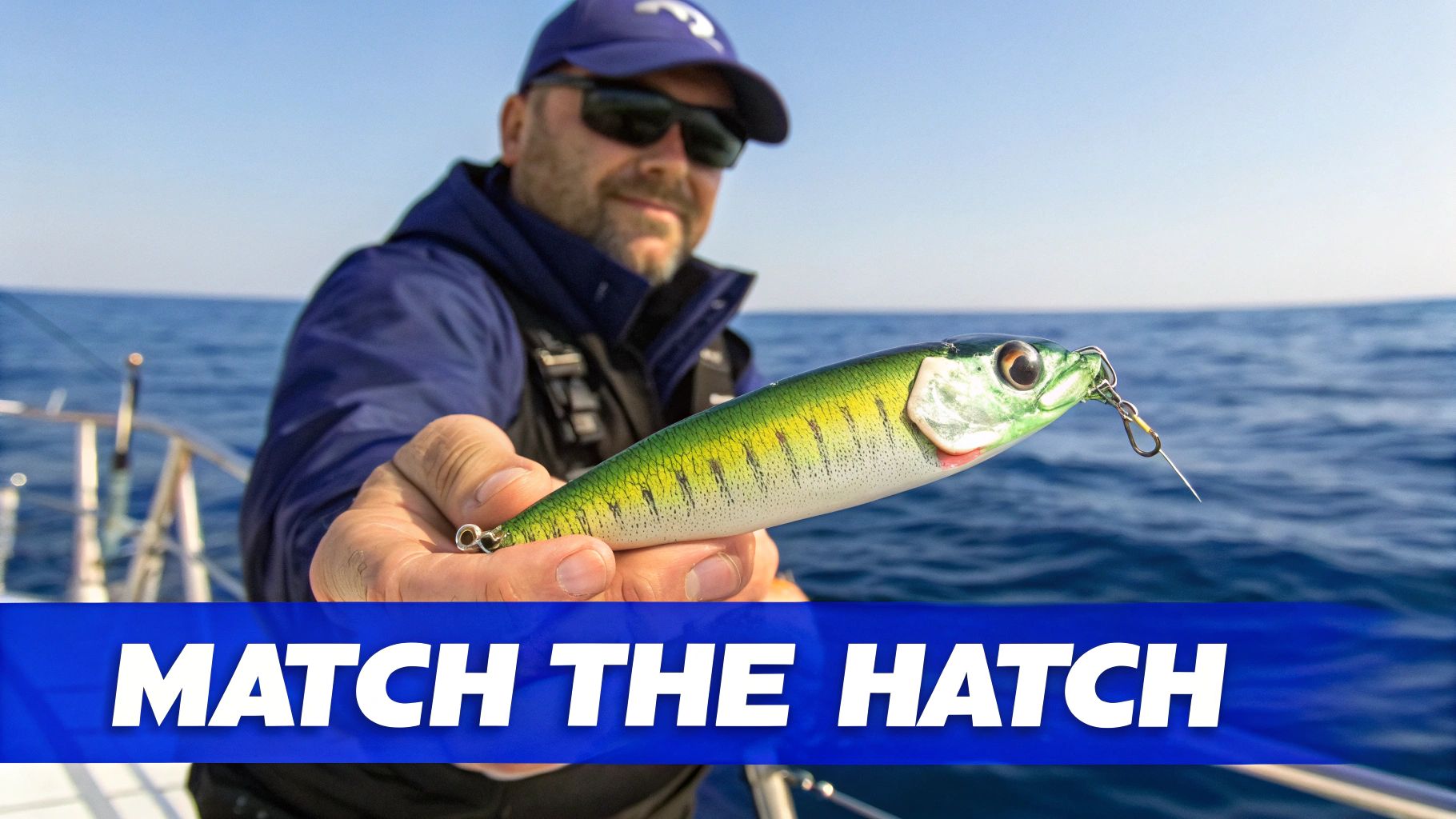
- Match the Hatch: Always try to mimic the size, silhouette, and color of the baitfish in the area. This was the Murray Brothers' number one rule.
- Trigger the Instinct: Choose lures with an action that imitates injured or fleeing prey. This is what flips that predatory switch.
- Adapt to Conditions: Let the water clarity, depth, and current guide your lure choice—not just your old favorites. Flexibility wins tournaments.
Getting a handle on these fundamentals is your first step to building a truly effective collection of lures. It's the difference between a box full of random plugs and a well-curated toolkit worthy of a pro.
For a quick overview of how these principles apply to different lure types, this table breaks down the essentials.
Top Saltwater Lure Types at a Glance
| Lure Type | Primary Use | Best For (Conditions) | Target Species |
|---|---|---|---|
| Trolling Lures | Covering vast offshore waters | Deep, open water; targeting pelagics | Marlin, Tuna, Wahoo, Mahi-Mahi |
| Casting Plugs | Inshore and nearshore casting | Shallow flats, mangroves, structure | Snook, Redfish, Tarpon, Striped Bass |
| Jigs | Vertical fishing over structure | Deep reefs, wrecks, channels | Grouper, Snapper, Amberjack, Cobia |
| Spoons | Casting and trolling | Clear water, sunny days; schooling fish | Bluefish, Mackerel, Bonito |
| Soft Plastics | Versatile casting and jigging | All depths and clarity levels | Flounder, Seatrout, everything! |
This table is just a starting point. As we continue, we'll dive deeper into how to apply these concepts across different scenarios, ensuring you're outfitted with not only the right lures but also the best saltwater fishing gear to make every single cast count.
Building Your Angler's Arsenal
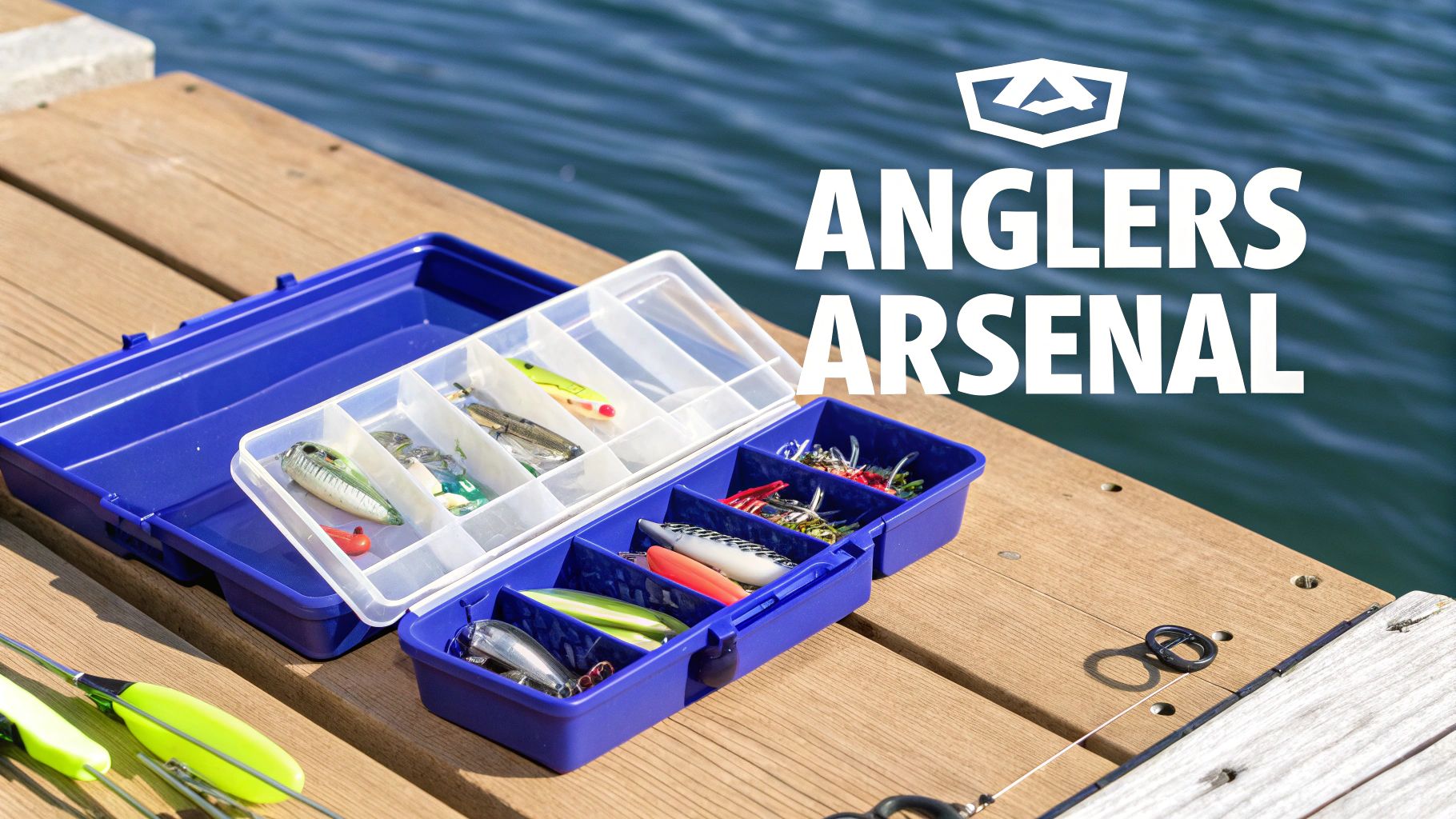
Walking into a good tackle shop for the first time can be a humbling experience. You're hit with walls packed with thousands of lures in every color, shape, and size imaginable. Trying to pick the best lures for saltwater fishing can feel impossible. But a seasoned angler’s tackle box isn’t just a random pile of plastic and metal; it’s a hand-picked collection where every single lure has a job to do.
We can learn a lot by looking at the practical wisdom of sportfishing legends like Ed and Frank Murray. They knew a lure wasn't just a fancy hook—it was a tool designed to provoke a very specific reaction from a fish. So, think of your tackle box less like a candy store and more like a mechanic's toolbox, where you have the right wrench for every nut and bolt.
Making smart choices is more important than ever. The global saltwater fishing lures market hit a staggering $1.2 billion back in 2022 and it’s still climbing. With the average fisherman spending about $150 a year on lures, picking the right ones saves you money and puts more fish in the boat. For a deeper dive, you can check out comprehensive reports from industry analysts that track these trends.
Hard Baits: The Loud and Proud Attention-Grabbers
Hard baits, or "plugs," are the undisputed workhorses for casting inshore and nearshore. Usually carved from wood or molded from hard plastic, they're built to look and act just like baitfish. Their shape, finish, and—most importantly—their swimming action are what get the job done. This category has a few key players, each with its own personality.
Take topwater poppers, for example. These are the "town criers" of the lure world. Their cupped face throws a ton of water, creating a loud "popping" or "chugging" sound when you twitch the rod tip. All that commotion on the surface sounds exactly like a struggling baitfish, sending out vibrations that call in predators from all around. They're absolutely deadly for aggressive fish like jack crevalle and striped bass.
Then you have plugs that work under the surface, like jerkbaits and crankbaits. These are the "undercover agents." They're designed to dive to specific depths and swim with an enticing wobble that perfectly mimics a fish that's fleeing or wounded. That subtle, irresistible action is what flips the predatory switch on wary fish like snook and redfish.
Soft Plastics: The Versatile Mimics
If hard baits are specialists, then soft plastics are the ultimate jacks-of-all-trades. Made from soft, life-like plastics, these lures can be made to look like just about anything a gamefish eats—shrimp, crabs, eels, you name it. Their biggest strength is their versatility. You can adapt to almost any situation just by changing how you rig it or retrieve it.
A paddle tail swimbait is a perfect example. It's a simple design, but that tail kicks and thumps through the water on the retrieve, creating a swimming motion that very few predators can resist. Rig one on a jig head, and you can fish it anywhere in the water column. Bounce it on the bottom for flounder or swim it just under the surface for seatrout.
Other soft plastics, like flukes or grub tails, offer different, more subtle actions. Sometimes, that quiet, natural movement is what seals the deal, convincing a cautious, pressured fish to bite when a louder hard bait just won't work.
The Murray Brothers knew that when the bite got tough in a tournament, simplicity often won the day. A well-presented soft plastic, mimicking the local forage, was their go-to strategy for turning a slow day into a successful one.
Jigs: The Deep-Water Specialists
When fish are holding tight to structure deep down—think reefs, wrecks, or ledges—the jig is king. It's not complicated: a jig is just a weighted hook, often dressed up with bucktail hair, feathers, or a soft plastic body. The genius is in its simplicity and how effective it is when fished vertically.
The whole point of jigging is to drop the lure right down into the strike zone and then use the rod to create an erratic, up-and-down hopping motion. This perfectly imitates a disoriented or dying baitfish, which is an easy meal that deep-dwelling brutes like grouper, snapper, and amberjack just can't pass up.
- Bucktail Jigs: A timeless classic. The hair on a bucktail "breathes" in the water, pulsing and creating a very life-like profile.
- Butterfly Jigs: These flat, metal jigs are designed to flutter and flash erratically as they fall, triggering savage reaction strikes.
- Heavy-Duty Jigs: When you're going after the strongest bottom dwellers in the ocean, you need jigs built to withstand the fight.
Trolling Lures: The Offshore Titans
For the offshore angler chasing pelagic giants like marlin, tuna, and wahoo, trolling lures are non-negotiable. These are the tools that built the Murray Brothers' legend. They are designed to be pulled behind a moving boat, allowing you to cover huge stretches of water to find fish in the vast, open ocean.
Trolling lures come with all kinds of head shapes—slant-faced, cupped, jets—and each one creates a different action and smoke trail as it moves through the water. The real art, which the Murrays perfected over decades of tournament fishing, is setting up a "spread" of different lures that work together to look like a panicked school of bait. That's the ultimate trigger for the ocean's apex predators, and it can turn a quiet patch of blue water into a frenzy of action in a heartbeat.
Matching Lures to Your Target Species
Knowing what’s in your tackle box is one thing, but the real art of angling begins when you know precisely why and when to tie each lure on. It’s the difference between just fishing and actually catching.
Legendary anglers like Ed and Frank Murray didn't win tournaments by randomly chucking lures overboard. They won by meticulously matching their presentation to a specific target. This is where theory hits the water and your line goes tight.
Every species has its own playbook—unique feeding habits, preferred prey, and behaviors. A lure that sends a wahoo into a feeding frenzy might get completely snubbed by a wary snook hiding deep in the mangroves. It all comes down to the saltwater version of "matching the hatch," an age-old concept that means giving the fish an imitation of what they’re already eating.
The Murray Brothers built their careers on this exact principle. They became masters at reading the water, observing the size, color, and movement of local baitfish, and then digging through their tackle box to find the perfect stand-in. It’s a strategy, a game plan that turns a day of hoping into a day of catching.
Trolling for Titans: Marlin and Tuna
When you’re out in the deep blue, hunting for the ocean’s heavyweights, your lure selection is everything. For billfish like Blue and White Marlin, the Murray Brothers’ strategy was all about creating the illusion of a panicked school of bait. This meant trolling a "spread" of lures with different head shapes to create maximum commotion and visual appeal.
A chugger-style lure, with its cupped face, throws a massive wall of water and leaves a "smoke trail" of bubbles that big marlin just can't resist. That aggressive action is like a dinner bell, drawing fish in from a distance. A slant-head lure, by contrast, will dig in, dive deep, and then pop erratically to the surface, perfectly mimicking a fleeing bonito or small tuna. The combination of these actions in a trolling spread is a proven, tournament-winning tactic.
Tuna, on the other hand, often zero in on smaller profiles moving at a steady clip. While they’ll certainly crash a marlin spread, they are often targeted specifically with "Green Machines" or simple cedar plugs—lures that imitate smaller prey. Honing your lure selection for these powerful fish is a game-changer, and you can dive deeper into specific tactics in our guide to fishing for tuna.
High-Speed Tactics for Wahoo and Dorado
Few fish in the ocean can hit the throttle like a wahoo. To catch them, you’ve got to play their game, and that means appealing to their aggressive, high-velocity hunting style. Standard trolling speeds just aren't going to get their attention. This is where heavy, bullet-shaped, high-speed trolling lures become absolutely essential.
- Wahoo: These toothy speedsters demand lures that can be pulled at 12-18 knots without tumbling or spinning out of the water. Classic dark color combinations like black and purple or black and red are deadly, as they create a sharp silhouette against the bright surface above.
- Dorado (Mahi-Mahi): While they’ll gladly smack a high-speed lure, dorado are famous for congregating around floating debris like sargassum weed lines. Tossing smaller jigs, feathers, or soft plastics into these zones is an incredibly fun and effective way to get a bite from these acrobatic, brilliantly colored fish.
Ed and Frank Murray knew that for predators like wahoo, a lure's wild action was less important than its ability to simply stay in the water at those insane speeds. The presentation had to match the predator's lightning-fast nature to trigger that instinctive strike.
Inshore Strategies for Snook and Redfish
Moving from the deep offshore canyons to the inshore flats and mangroves means a complete shift in mindset and tackle. Out here, stealth and realism almost always beat out noise and commotion. Wary predators like snook and redfish demand a much more subtle approach.
There's a reason a soft plastic shrimp imitation, rigged on a light jig head and hopped slowly along the bottom, is a go-to for so many anglers. It just works. Its subtle action and lifelike profile are perfect for fooling fish that are used to carefully inspecting their meals before committing. The goal is to make your lure look like an easy, natural snack.
When you need to cover water along a mangrove shoreline or over a grass flat, a shallow-diving plug or a weedless-rigged soft plastic swimbait is your best bet. These lures let you present an offering that looks exactly like a local mullet or pinfish, all without getting constantly hung up. The best inshore lures are often the ones that whisper, not shout. It was this nuanced approach, learned over countless hours on the water, that consistently put the Murray Brothers in the winner's circle, no matter where they were fishing.
Choosing Lures for Different Fishing Conditions
Tournament-winning anglers like Ed and Frank Murray didn't just have a box full of favorites; they had a sixth sense for adapting to the ocean's constantly shifting moods. They knew the best lures for saltwater fishing aren't static choices. They’re fluid decisions you make based on what the water is telling you in that exact moment.
A lure that's absolutely deadly in calm, clear water can become completely invisible in a murky, churning current.
This knack for reading the environment is what separates good anglers from the legendary ones. It’s a skill you can only hone through thousands of hours on the water, paying close attention to how light, depth, current, and weather influence fish behavior. The Murrays’ incredible success in saltwater sportfishing tournaments was often sealed by their ability to make a subtle lure change others overlooked, turning a slow day into a winning one.
Reading the Water Clarity
One of the first things you have to assess is water clarity. It completely dictates how fish hunt—relying more on sight in clear water and more on vibration and sound in the murky stuff. Your lure has to play to their senses.
When the water is gin-clear, like on a calm day over sand flats or far offshore, subtlety is your best friend. Fish can inspect every detail of your offering from a distance, and anything that looks even slightly unnatural will send them scattering. This is the time to reach for realistic, natural-colored lures that perfectly mimic the local baitfish. Think silver, white, or light green soft plastics and hard baits with a translucent finish.
On the flip side, when the water is clouded up from recent rain, wind, or an outgoing tide flushing out a bay, you need to grab the fish’s attention. Bright, flashy, and noisy lures are the only way to go. Go for chartreuse, hot pink, or solid white lures that throw a strong silhouette. Topwater poppers that make a racket or crankbaits with internal rattles send out vibrations that predators can home in on, even when they can't see a thing.
Ed and Frank Murray often said that in stained water, your lure needs to “make some noise.” Whether through sound, vibration, or a flash of color, the goal is to announce its presence and trigger an aggressive reaction strike from fish hunting by feel.
Adapting to Depth and Current
Where you are in the water column is just as important as how clear it is. The lure you pick has to be able to get down to—and stay in—the strike zone where the fish are holding.
Fishing a shallow inshore flat just a few feet deep calls for a lightweight presentation. A weedless-rigged soft plastic or a shallow-diving plug lets you work the lure without constantly getting hung up on the bottom. But if you’re targeting grouper or snapper on a deep offshore reef 150 feet down, you’ll need a heavy vertical jig that can plummet to the bottom and stay there, even in a stiff current.
Current is another huge piece of the puzzle. A swift current can make light lures completely unfishable, sweeping them away before a fish ever sees them. In these situations, you have to up the weight of your jig or choose a trolling lure with a diving lip designed to dig in and run true. The Murrays understood this balance perfectly, always picking lures just heavy enough to beat the current but light enough to maintain a natural, enticing action.
Lure Selection in Different Environments
Your fishing spot dictates the entire game plan, from the rod in your hand to the lure you tie on. A lure built for open-water trolling is completely useless in a tangled mangrove forest.
- Inshore Flats and Shorelines: Here, you're often fishing in just a few feet of water. Topwater walkers, soft plastic shrimp, and spoons are all fantastic choices for covering ground and tempting fish like redfish and seatrout.
- Nearshore Reefs and Wrecks: It's all about structure. Vertical jigs that can be dropped straight down are perfect for pulling fish out of their hiding spots. Drifting a swimbait that imitates live bait near the structure is another proven killer technique.
- Offshore Canyons (The Deep Blue): This is the realm of trolling. Skirted trolling lures are the gold standard for billfish and tuna, while heavy, high-speed plugs are absolutely essential for wahoo. This was the Murray Brothers' primary arena, where they became true legends of the sport.
The world of saltwater fishing lures is always evolving, with innovative lure launches jumping by 27% in recent years. This growth is fueled by a 35% surge in global online tackle sales, giving anglers everywhere access to specialized tools for any condition imaginable. You can dive deeper into these trends and find detailed information in reports on lure market innovations.
Perfecting Your Lure Presentation and Technique
Having a box full of the best lures for saltwater fishing is a great starting point, but as sportfishing legends Ed and Frank Murray would tell you, a lure is only as good as the angler working it. Owning the right tool is just half the battle; knowing how to make it come alive is what puts fish in the boat and wins tournaments.
The Murray Brothers' legendary success wasn’t just built on choosing the right lure—it was about mastering the presentation. They knew a lure sitting dead in the water is just a chunk of plastic or wood. It’s the retrieve, the twitch of the rod, the trolling pattern, and the rigging that convince a predator it’s an irresistible meal. This is where skill takes over, turning hope into a calculated, repeatable strategy.
Mastering the Art of the Retrieve
Every lure is built to perform a specific action, and it’s your job as the angler to unlock it. The right retrieve technique makes a lure swim, dart, and flutter in a way that flips a predator’s kill switch. The Murrays understood that imitating a panicked or wounded baitfish was the ultimate trigger.
A common mistake is reeling way too fast and way too steady. The best retrieves are almost always varied—a mix of pauses, twitches, and changes in speed is what gets you bit.
- Walk the Dog: This is the classic topwater technique. It’s all about rhythmic, sharp twitches of the rod tip while reeling in the slack. Done right, it makes a surface plug skate from side to side, looking exactly like a disoriented baitfish—an easy meal for a hungry snook or striped bass.
- The Erratic Jerkbait: A jerkbait isn’t meant for a straight retrieve. You fish it with a jerk-jerk-pause cadence. This erratic, unpredictable movement is a dead ringer for a wounded minnow. That pause is crucial; most strikes happen the moment the lure sits there, suspended and vulnerable.
- Slow and Steady Swimbait: With most soft plastic swimbaits, the name of the game is a slow, steady retrieve. You want to reel just fast enough to feel the paddle tail "thump-thump-thump" in your rod tip. This consistent action is deadly when fish are zoned in on cruising baitfish.
The Science of Trolling Patterns
When you head offshore, trolling is way more than just dragging lures behind the boat—it’s a carefully orchestrated science. The Murray Brothers were absolute masters of creating a "spread," a formation of different lures set at various distances and positions to mimic a scattered school of baitfish. This complex presentation is what calls in apex predators like marlin and tuna from the deep.
Where you place each lure in the spread matters immensely. Big, noisy chugger-style lures often go in the "short corner" position, close to the boat where they make a ton of commotion. Lighter, more subtle lures might be set way, way back. The whole idea is to paint a picture of an easy meal. For a full breakdown of these advanced tactics, our detailed guide explains what trolling in fishing truly involves.
You could say Frank and Ed Murray treated their trolling spread like a conductor leading an orchestra. Each lure had a specific part to play, and when they all worked in perfect harmony, the results were spectacular—often with multiple lines screaming off at once.
Jigging Nuances Over Structure
When fish are holding tight to deep structure like a wreck or a reef, vertical jigging is often the only way to get a lure in their face. But just dropping a jig down and bouncing it isn't always enough. The best anglers add subtle finesse to their jigging to trigger bites from wary bottom dwellers like grouper and snapper.
Instead of a monotonous yo-yo motion, try mixing it up. Rip the rod up with a sharp, fast motion, then let the jig freefall on a slack line. A huge number of aggressive strikes happen as the jig flutters helplessly on the drop, perfectly imitating a dying fish. Playing with the length and speed of your lifts can make all the difference, presenting your jig in a way that provokes a reaction.
Your Saltwater Lure Questions Answered
Even after decades of chasing world records and winning tournaments, legends like Ed and Frank Murray would tell you that saltwater fishing always keeps you on your toes. It doesn’t matter if you’re a seasoned pro or just getting your feet wet—questions always pop up.
Here, we'll tackle some of the most common ones with straight-shooting, expert-backed advice to help you make smarter decisions on the water.
At its core, getting a fish to bite your lure comes down to three things: rigging it right, casting it where it needs to be, and bringing it back to the boat in a way that looks like an easy meal.
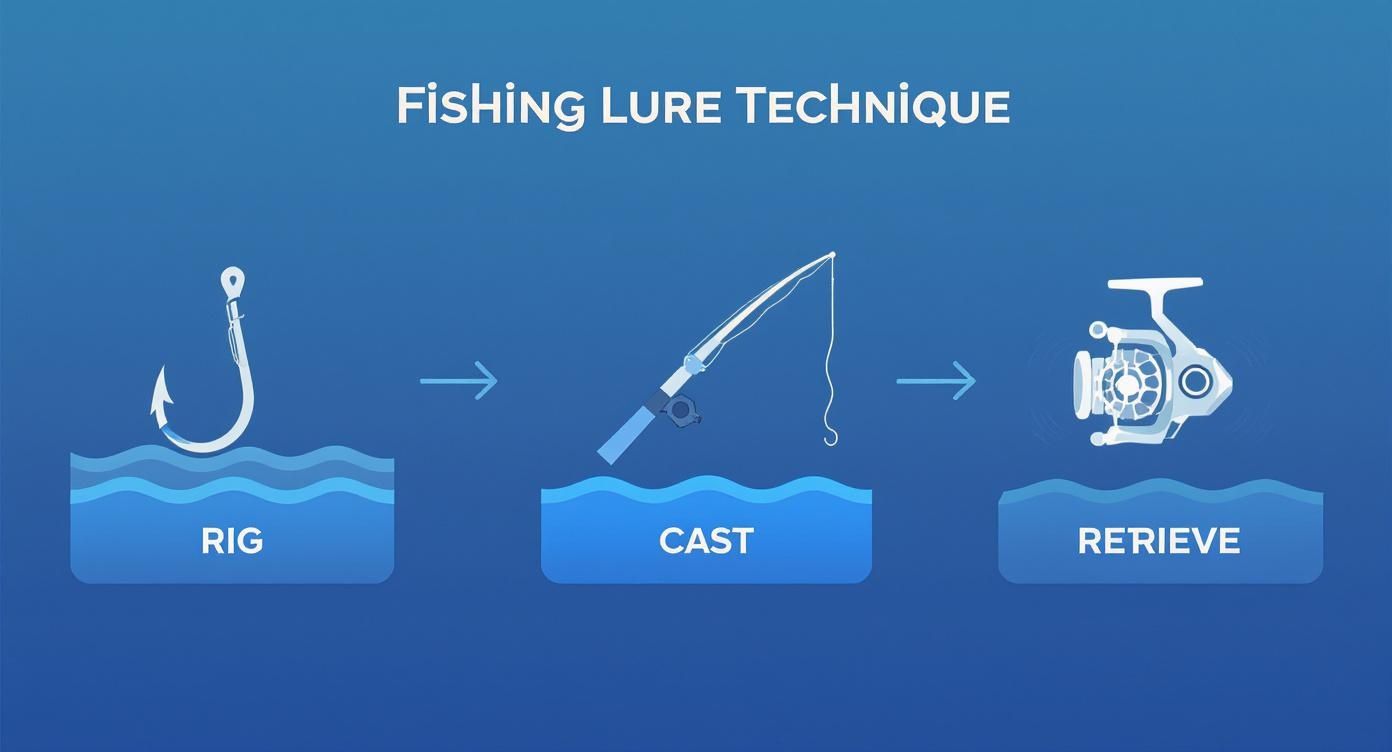
Think of this as the foundation. Nailing these three steps is what turns a piece of plastic and metal into a fish-catching machine.
What Are The Three Must-Have Lures For A Beginner?
When you're starting out, you need lures that can do a little bit of everything. You don't need a tackle box overflowing with gear. Following the Murray Brothers' time-tested philosophy, these three workhorses will get the job done almost anywhere.
- A white bucktail jig (1-2 oz): This is the Swiss Army knife of lures. You can make it look like a shrimp scurrying along the bottom or a fleeing baitfish. It's incredibly versatile.
- A silver spoon: Nothing beats the flash and wobble of a classic spoon. It's a universal dinner bell for a huge range of predatory fish that just can't resist the easy target.
- A soft plastic paddle tail swimbait: Rig one of these in a natural color, cast it out, and just start reeling. The tail does all the work, making it deadly effective and simple for anyone to use, especially for inshore species.
How Often Should I Change My Lure?
This is a question every angler asks. A good rule of thumb from the tournament pros is to give a lure about 20-30 minutes in a spot you know holds fish. If you're getting zero interest, it's time for a change.
But don't just immediately tie on something new. First, try changing your retrieve. Speed it up, slow it down, or add some erratic twitches. If that still doesn't get a bite, then it’s time to switch things up—maybe try a different color or size of the same lure before going to a completely different style.
Does Lure Color Matter In Deep Water?
Absolutely, but maybe not in the way you think. Down deep, it’s less about specific colors and more about contrast.
As light penetrates deeper into the water column, colors start to fade out. Reds are the first to go, while blues and purples hang on the longest. This is why lures with high-contrast patterns, like black and purple, are so effective. They create a bold silhouette that a predator can easily spot against the dim background. Lures with glow-in-the-dark or UV-enhanced finishes also give you a serious edge in the deep.
Get geared up with the apparel and equipment trusted by legends. Shop the full collection at Murray Brothers Palm Beach and find everything you need for your next adventure at https://www.murraybrosretro.com.
Dejar un comentario