

The Best Shirts for Fishing: A Guide Forged by Legends
When it comes to the best shirts for fishing, you're looking for a specific trifecta: UPF 50+ sun protection, moisture-wicking synthetic fabrics, and smart designs like vented backs that keep you comfortable and safe. Sportfishing legends Ed and Frank Murray, who built their reputation in the grueling world of saltwater tournaments, understood this for decades. A high-performance shirt isn't just clothing—it's a critical piece of equipment for those long, demanding days on the water.
Forged in Saltwater: The Legacy Behind Performance Fishing Shirts
Picture your ideal day fishing: the excitement of the chase, the sun glinting off the water, and the satisfaction of landing a great catch. What often goes unnoticed is the gear working behind the scenes to make it all happen, especially the shirt on your back. For sportfishing pioneers like Ed and Frank Murray, who carved out their reputation battling giant tuna and marlin in high-stakes saltwater tournaments, the right apparel was never an afterthought. It was central to their success.
Long before modern fabric technology was a common thing, the Murray Brothers spent countless hours under a punishing sun. Their time on the water, competing in legendary tournaments, exposed a critical gap in their gear. They needed clothing that could withstand the absolute harshest conditions. The cotton t-shirts of the day just didn't cut it—they’d get soaked with sweat and salt spray, becoming heavy and offering next to no protection from damaging UV rays.
From Necessity to Innovation
The intense, multi-day nature of sportfishing tournaments became the ultimate proving ground for angling apparel. The Murray Brothers, and others who lived this life, were essentially human test subjects, pushing their gear to the breaking point. Their experience on the front lines made it crystal clear what was needed:
- Sun Defense: Shielding yourself from intense, reflected sunlight was non-negotiable for staying healthy and focused during long days offshore.
- Freedom of Movement: A shirt couldn't restrict the dynamic movements of casting, reeling, or scrambling around the boat during a heated fight.
- Moisture Management: Staying dry and comfortable was everything when it came to maintaining concentration during a long, hot battle with a powerful fish.
This demand for better gear, born directly from the real-world needs of elite anglers like the Murrays, ignited a revolution in fishing apparel. It elevated the fishing shirt from a simple garment to a specialized tool engineered for performance.
"The best gear isn't just about what's new; it's about what works. It's tested by time, sun, and the unrelenting pull of a fish on the line. That's the standard set by generations of anglers."
The legacy of sportfishing legends is stitched right into the fabric of today's performance shirts. The features we now consider standard—high UPF ratings, lightweight synthetics, and strategic ventilation—are direct solutions to the problems faced by pioneers like the Murrays. When you choose one of the best shirts for fishing, you’re choosing apparel built on a history of experience, ensuring you're ready for anything the water throws your way.
The Evolution of Angling Apparel
To really get why today's high-performance fishing shirts are so good, you have to look back at what came before. Decades ago, long before technical fabrics were a thing, what an angler wore was a whole different story. The options were simple, tough, and usually completely wrong for a long day out on the water.
Back then, fishermen grabbed what they had—usually a heavy cotton or chambray work shirt. They were built to last, sure, but they were a terrible choice for fishing. Think of a cotton shirt like a sponge. Once it got wet from sweat, spray, or a splash from a fish, it stayed wet all day long. It would turn into a heavy, clammy mess that stuck to your skin, offering no relief in the heat and getting dangerously cold if the wind kicked up.
The Proving Grounds of Saltwater Sportfishing
The real push for something better came from the unforgiving world of saltwater sportfishing tournaments. This is where guys like Ed and Frank Murray cut their teeth, spending brutal, sun-drenched days offshore. For these legendary fishermen, it wasn’t just a weekend hobby; it was a physically demanding, high-stakes career where your gear could make or break you.
Imagine being on the deck of a boat for 12 hours, fighting a giant marlin with the sun hammering down and salt spray flying everywhere. The problems with a basic shirt became crystal clear. A soaked cotton shirt wasn't just uncomfortable—it was a liability that led to chafing, overheating, and wicked sunburn. The Murray Brothers and anglers like them needed gear that worked with them, not against them.
Their experiences weren't just fishing stories; they were real-world data points highlighting a critical need. The demand for better gear was born not in a lab, but on the sun-baked decks of tournament fishing boats where legends like Ed and Frank Murray competed.
This intense environment was the ultimate testing ground. Anglers started realizing their clothing was just as crucial as their rods and reels. The problem was obvious: they needed shirts that could handle moisture, block the sun, and let them move freely.
From Heavy Cotton to Technical Marvels
The brutal conditions these sportfishing pioneers faced directly sparked the creation of modern performance fabrics. That leap from heavy, waterlogged cotton to lightweight, moisture-wicking synthetics completely changed the game. It was the birth of the modern fishing shirt as we know it.
The industry started playing with materials like polyester and nylon, which were naturally suited for life on the water. These fabrics didn't absorb moisture. Instead, they were designed to pull sweat away from the skin and spread it across the surface to evaporate in a flash. It sounds simple, but this was a massive breakthrough that allowed anglers to stay dry, cool, and focused.
As the fabrics got better, so did the shirts. All the features that define the best shirts for fishing today were born from these real-world needs:
- Sun Protection: New weaving techniques and special fabric treatments created a physical barrier against UV rays, giving us the UPF ratings we depend on now.
- Ventilation: Vented back panels with mesh linings were added to create airflow, essentially a built-in air conditioner for the hottest days.
- Lightweight Construction: The materials themselves got lighter without sacrificing strength, which meant less fatigue and more comfort over a long day.
This journey from a simple work shirt to a specialized piece of equipment is all thanks to the spirit of fishing. If you're curious about the classic styles that started it all, you can dive into the heritage of vintage fishing shirts and see just how far we've come. Understanding this evolution helps you appreciate the incredible thought and technology that goes into every performance shirt you wear. It’s a legacy of problem-solving, written by anglers, for anglers.
Decoding High-Performance Fabric Technology
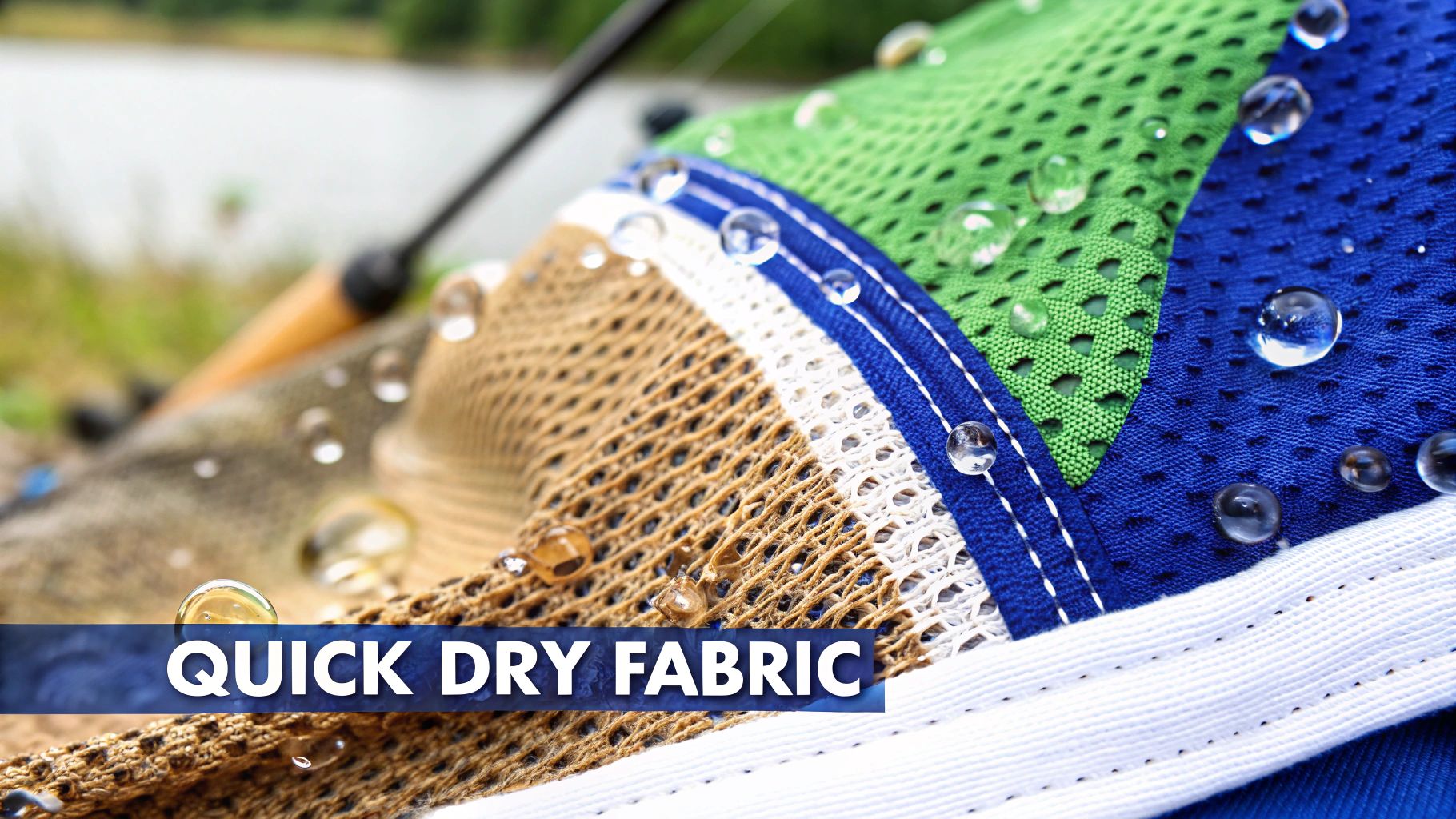
The leap from old-school, waterlogged cotton to modern technical gear wasn't just an upgrade; it was a revolution born from the real-world needs of sportfishing legends. For pioneers like Ed and Frank Murray, who battled it out in grueling saltwater tournaments, a shirt's material was the difference between just enduring a long day and actually excelling at it.
Their experience on the water proved a simple truth: fabric performance is the very heart of the best shirts for fishing.
Think of a traditional cotton shirt as a sponge. When it gets hit with sweat or sea spray, it just soaks it up and holds on, becoming heavy, uncomfortable, and taking forever to dry. This was the exact problem the Murray Brothers and their peers faced every day under a relentless sun.
Today’s high-performance fabrics, however, are a different beast entirely. They're usually synthetics like polyester and nylon, and they act less like a sponge and more like a sophisticated pipeline. Their job isn't to absorb moisture, but to move it. That one function is what makes them essential equipment for any serious angler.
The Science of Staying Dry: Moisture Wicking Explained
You hear the term moisture-wicking all the time with performance apparel, and it’s a brilliant piece of engineering. Instead of trapping sweat against your skin, these specialized fabrics use something called capillary action to pull moisture away from your body.
Picture tiny, invisible channels woven right into the fabric. These channels actively draw sweat from your skin to the shirt's outer surface. Once it gets there, the moisture spreads out over a much larger area, which kicks evaporation into high gear.
This isn't just about feeling dry—it's about regulating your core temperature. By getting sweat off your skin, the fabric helps your body's natural cooling system work the way it's supposed to. This keeps you comfortable and focused when the bite is on. For a deeper dive, check out our guide on the best moisture wicking shirts.
This technology was born from necessity. Anglers like the Murrays, facing extreme heat in major tournaments, needed a solution that would allow them to maintain peak physical and mental performance for hours on end.
Breathability and Quick-Dry Properties: The Keys to Comfort
While wicking moves moisture, breathability and quick-dry properties are what make it disappear for good. These two features work together to complete the performance cycle.
-
Breathability is all about airflow. A highly breathable shirt lets hot, humid air escape from around your body while letting cooler, drier air circulate in. It's what prevents that sticky, clammy feeling you get with cheap materials.
-
Quick-Drying is the final, critical piece of the puzzle. Because the fabric doesn't hold water and spreads it thin on the surface, it dries incredibly fast. This is a game-changer when you're dealing with spray, a pop-up rain shower, or just heavy sweat.
The demand for this kind of gear is only growing. The global fishing apparel market was valued at around $54 million and is expected to hit $62.8 million by 2031. That growth is fueled by everyday anglers who want the same comfort and protection the pros rely on.
Reading the Label: What to Look For
Once you understand these concepts, you can look at a product tag and know exactly how a shirt will perform on the water.
When you see a shirt made from 100% polyester or a polyester-spandex blend, you can be confident it was built for moisture management and durability. These materials are chosen specifically because they are hydrophobic—they naturally repel water instead of absorbing it. This is what keeps them lightweight and comfortable, never bogging you down.
The hard-earned experience of sportfishing legends taught us that the right fabric isn't a luxury. It's the foundation of a great day on the water.
Understanding UPF for On-the-Water Sun Defense
If there's one feature that truly matters in a performance fishing shirt—especially for those of us chasing trophies in the salt—it’s sun protection. Sure, moisture-wicking fabrics are great for comfort, but a high UPF rating is about safety. It’s your first and best line of defense against the relentless sun you face during those long days on the water.
Think of UPF (Ultraviolet Protection Factor) as built-in, wearable sunscreen. It’s a rating given to clothing that tells you just how well the fabric blocks damaging UV rays from ever reaching your skin, but without the sticky mess or the need to reapply every couple of hours.
It's a pretty simple concept: the higher the number, the better the shield. A shirt with a UPF 50+ rating—the gold standard for any serious angler—is engineered to block over 98% of the sun's UVA and UVB rays. This isn't just a nice-to-have feature; it’s a critical piece of gear.
Why Saltwater Anglers Need Maximum Protection
When you’re out on the ocean, the sun's intensity gets dialed up to eleven. The water’s surface acts like a giant mirror, reflecting and bouncing UV rays at you from every angle, which can nearly double your exposure. It's a harsh reality that sportfishing legends like Ed and Frank Murray learned firsthand over decades of competing in demanding saltwater tournaments.
Spending 10 to 12 hours a day under that kind of amplified assault meant that your average shirt just wouldn't cut it. Their experience proved that the best shirts for fishing had to be more like a suit of armor. That's precisely why a UPF 50+ rating is non-negotiable for anyone serious about offshore or inshore saltwater fishing.
A UPF 50+ shirt is more than just clothing; it's a strategic tool. It allows you to stay focused on the fish, not on the painful consequences of a severe sunburn, heat exhaustion, or long-term skin damage.
And it’s not just the pros who get it. Anglers everywhere are wising up. Recent surveys show that over 60% of us now see UV protection as a top priority when buying a fishing shirt, a clear sign that awareness of skin cancer risks is growing. This shift has pushed top brands to innovate, giving us a ton of great high-performance UPF gear to choose from. You can see more data on trends in the fishing equipment market on Statista.
Decoding the UPF Numbers
Knowing what the UPF ratings actually mean will help you make a smarter choice when you're buying your next shirt. The numbers simply tell you what fraction of the sun's UV rays can get through the fabric.
- UPF 30: This lets about 1/30th (or 3.3%) of UV radiation pass through. It’s a decent baseline for casual outings or when the sun isn't at its peak.
- UPF 40: This allows 1/40th (or 2.5%) of UV rays to get to your skin, offering a solid step up in protection.
- UPF 50+: This is the highest rating you can get. It blocks over 98% of UV radiation by letting less than 1/50th of the rays penetrate. For long days in intense sun, this is what you want.
Just remember that a few things can impact how well a shirt protects you. If it's stretched too tight, old and worn out, or even just wet, its protective power can drop. For a deeper dive into this, check out our guide on UV protection fishing shirts.
The lesson passed down from generations of hardcore anglers is crystal clear: never, ever compromise on sun protection. Investing in a shirt with a UPF 50+ rating is one of the smartest moves you can make for your health, your comfort, and your ability to keep chasing fish for years to come.
Functional Features That Enhance Your Experience
While the high-tech fabric is the engine of a great fishing shirt, the smart, functional details are what truly separate simple apparel from a critical piece of gear. For guys like Ed and Frank Murray, who lived and breathed saltwater tournaments, every single detail on their equipment mattered. A shirt wasn't just about blocking the sun; it had to be a tool that solved the real-world problems they faced on the deck all day long.
The line between a good shirt and one of the best shirts for fishing is often drawn by these purpose-built features. They aren't just marketing gimmicks; they're the direct result of decades of on-the-water R&D, where a minor annoyance can quickly become a major distraction when a trophy fish is on the line. Think of them as the shirt’s built-in tool belt.
These thoughtful additions come from a place of necessity. The Murray Brothers didn't have a rack of specialized gear to choose from back in the day, so they knew exactly what was missing. Today's shirts have those lessons baked right in, turning years of angler feedback into real, tangible advantages.
Engineered for Airflow and Movement
Long days chasing fish under a blistering sun taught the old-school tournament anglers a crucial lesson: staying cool wasn't just about comfort—it was about stamina. When you're locked in a battle with a powerful fish, overheating will sap your strength and kill your focus. This is where strategic ventilation makes all the difference.
-
Vented Back Panels: You'll notice many top-tier shirts have a cape-like panel across the back, almost always lined with a fine mesh. This design creates a natural chimney effect. It lets the hot, humid air trapped against your skin escape and invites even the slightest breeze to flow through, acting like a built-in air conditioner.
-
Articulated Sleeves: Casting thousands of times a day demands a completely unrestricted range of motion. Articulated sleeves are cut and sewn to follow the natural bend of your arm. It's a subtle but brilliant design tweak that stops the fabric from pulling tight or bunching up, keeping your casting motion fluid and effortless.
These features aren't just about feeling good; they directly tackle the physical demands of fishing hard. They help you move freely and stay cooler, which ultimately means you can fish longer and more effectively.
For sportfishing pioneers like Ed and Frank Murray, a shirt that fought back was a liability. The evolution of these functional designs was driven by one simple goal: create apparel that feels like it isn't even there, letting the angler focus 100% on the fish.
Smart Details That Act as a Second Mate
On a boat, especially when the bite is on, efficiency is everything. Fumbling for a tool, dropping gear, or wishing you had an extra hand is beyond frustrating. The best fishing shirts anticipate these moments with clever, utility-driven features that keep you organized and ready.
A thoughtfully designed shirt becomes a true extension of the angler. It knows what you need before you do because it was designed based on the experiences of fishermen who ran into the exact same problems.
Here are a few of those brilliant, practical additions:
- Secure Pockets: Zippered or button-flap pockets on the chest are non-negotiable for keeping small essentials—like a spool of leader or a small fly box—safe and instantly accessible. No more digging through a cavernous tackle bag just to re-rig.
- Rod Holder Loops: This tiny feature is an absolute game-changer. A small loop or tab on the chest gives you a place to hook your rod, freeing up both hands to tie a knot or handle a fish. It’s like having a third hand right when you need it most.
- Built-in Lens Cloths: How many times have you smudged your polarized sunglasses with a salty thumb? A small microfiber cloth sewn into the shirt's hem is the simple, genius solution. You can give your lenses a quick, clean wipe without a second thought, ensuring your view of the water stays crystal clear.
Every one of these functional elements is a nod to the legacy of anglers like Ed and Frank Murray. Their hard-earned time on the water created the blueprint for what works, elevating the modern fishing shirt into a piece of high-performance equipment that is genuinely angler-approved.
How to Match Your Shirt to Your Environment
Every angler knows that conditions on the water can turn on a dime. That's why your gear has to be just as adaptable as you are. The shirt you’d wear stalking bonefish on a scorching-hot flat is a world away from what you'd need for an offshore trip battling wind and spray.
Choosing the right shirt is all about putting the pieces together—fabric, UPF rating, and design—to make a smart call for the day ahead.
It's a lesson sportfishing legends Ed and Frank Murray learned the hard way over decades of grueling saltwater tournaments. Back then, they didn't have a closet full of high-tech options. They had to know, without a doubt, what worked. Their old-school wisdom still holds up today, giving us a perfect framework for matching our gear to the environment so we can stay comfortable and protected.
The Murray Brothers' Guide to Gear Selection
The secret is to think like a tournament pro. Before you even think about heading out, ask yourself three simple questions about the climate, your fishing style, and how much you'll be moving. The answers will point you straight to the perfect shirt.
-
Climate Assessment: What’s the forecast look like? Is it a blazing, humid scorcher or a cool, overcast morning with a stiff breeze? High heat and humidity call for maximum breathability and ventilation. On the other hand, cooler days might require a slightly heavier fabric that still wicks sweat but offers a bit more of a buffer against the wind.
-
Fishing Style: Will you be casting non-stop from the bow, or sitting back and trolling for hours? If you're planning on a lot of action, like fly casting or sight fishing, you'll want a shirt with articulated sleeves that gives you a complete range of motion. Nothing is worse than feeling your shirt pull tight during a crucial cast.
-
Intensity Level: Are you expecting to hook into something that’s going to give you a real workout? When you're fighting a powerful fish, top-notch moisture-wicking isn't just a nice-to-have feature. It’s absolutely essential for staying cool and focused when it counts.
This simple thought process ensures your shirt is working with you, not against you.
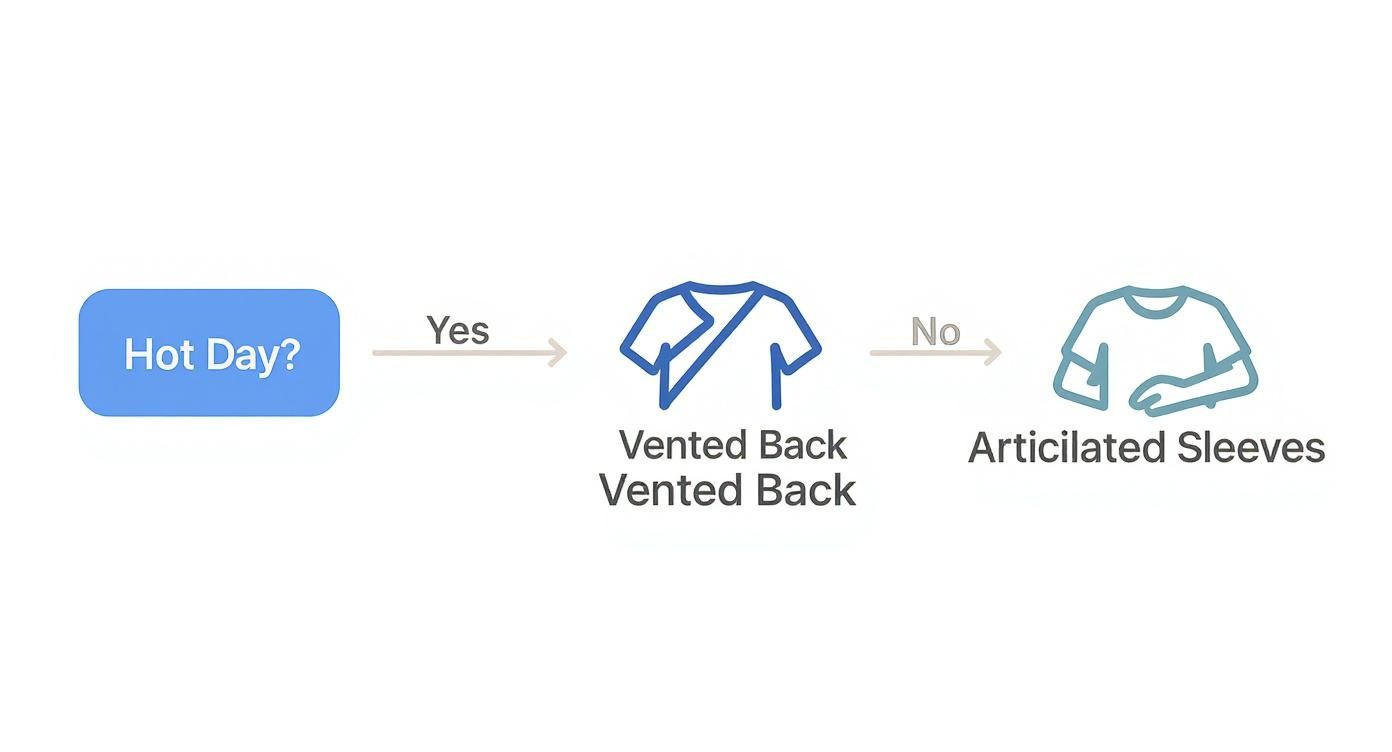
As you can see, a hot day puts a premium on features like a vented back for airflow, whereas other situations might make articulated sleeves for easy casting the top priority.
The core lesson from anglers like the Murray Brothers is simple: think ahead and anticipate what the day will throw at you. When you choose the right gear before you leave the dock, you can spend your time focusing on the fish, not on being uncomfortable.
When you select your shirt based on the day's specific challenges, you're not just getting dressed—you're gearing up for success. It turns a simple piece of clothing into a critical piece of performance equipment, making it one of the best shirts for fishing in your arsenal.
Your Fishing Shirt Questions, Answered
Spend enough time on the water, and you start to realize just how much the right gear matters. That’s a lesson sportfishing legends Ed and Frank Murray learned over decades of competing in saltwater tournaments. Their hard-won knowledge is baked into every piece of modern fishing apparel.
Let's dive into some common questions with the same practical, no-nonsense approach the Murray Brothers brought to the sport.
What’s the Real Difference Between a Fishing Shirt and a Gym Shirt?
Good question. On the surface, they look similar—both are usually made of some moisture-wicking synthetic fabric. But a true fishing shirt is a specialized tool built for a very specific environment.
Think about it: out on the water, the sun isn't just coming from above; it's bouncing right back at you off the surface. That’s why a high-quality fishing shirt comes with a UPF 50+ rating, which is serious-business sun protection you won't always find in standard athletic wear.
But it’s the little things that really set them apart. Vented back panels for that crucial airflow on a hot day, pockets that actually secure your stuff, and even loops designed to hold your rod. These aren’t gimmicks; they’re features born from necessity, dreamed up by anglers like the Murrays who needed their gear to work as hard as they did.
How Should a Fishing Shirt Fit?
Fit is everything when you're casting all day. Your shirt should feel like a second skin—there, but never in the way. You need a completely unrestricted range of motion. If you feel it pull across your shoulders or back when you mimic a cast, it’s too tight.
On the flip side, you don't want it to be a baggy mess. A shirt that's too loose will just snag on equipment or flap around in the wind, which gets annoying fast. The sweet spot is a comfortable fit that lets you move freely without even thinking about it.
How Do I Care for My Fishing Shirt to Keep It Working Well?
Taking proper care of your shirt is key to making sure its performance features last. These things are investments, after all. The care label is your best friend, but here are some solid general rules:
- Wash it in cold water with a gentle detergent.
- Skip the fabric softener. Seriously. It can clog up the pores in the fabric, killing its ability to wick moisture away from your skin.
- Either tumble dry on low heat or, even better, hang it up to dry. High heat is the enemy of synthetic fibers and can break down the UPF treatment over time.
For battle-tested, angler-approved apparel that carries the legacy of sportfishing legends, explore the collection at Murray Brothers Palm Beach. Gear up with the brand built on decades of on-the-water experience. Check out the Murray Brothers Retro collection.
Dejar un comentario