

A Legendary Angler's Guide to Deep Sea Fishing Clothing
Your deep sea fishing clothing is far more than a style choice—it's essential performance gear. Think of it as your primary shield against a blistering sun, an unexpected squall, or the sheer physical grind of offshore angling. This isn't just theory; it's a hard-won lesson from decades spent in the unforgiving world of competitive saltwater sportfishing, a world defined by legends like Ed and Frank Murray.
Lessons From Legends: Why Your Fishing Clothing Matters
When you’re miles offshore and locked in a grueling battle with a big marlin or tuna, the absolute last thing you need to worry about is your shirt. That core belief drove sportfishing legends Ed and Frank Murray, two names synonymous with high-stakes saltwater tournaments. Their reputation wasn't just built on skill with a rod and reel; it was forged from an obsessive understanding that preparation is everything. A huge part of that prep was dialing in the right gear, especially their deep sea fishing clothing.
The Murray Brothers learned from experience that every single piece of apparel had a job to do. They saw firsthand how the wrong shirt could lead to a nasty sunburn and heat exhaustion, cutting a tournament day short. They knew a jacket that wasn't truly waterproof was a massive liability in a pop-up squall, leaving an angler soaked, cold, and unable to concentrate. Their time on the water taught them that endurance begins with what you wear.
The Offshore Proving Ground
Picture the conditions you face in a multi-day tournament in the tropics. The day kicks off with a chilly pre-dawn run, quickly gives way to a relentless midday sun bouncing off the water, and can flip in an instant to driving wind and rain. In an environment that changes that fast, your clothing isn't a luxury—it’s a tool. The Murrays witnessed time and again how anglers wearing performance-focused apparel consistently outlasted and outfished those who didn't.
The ocean is an unforgiving arena. The best anglers know that success isn't just about finding the fish; it's about having the stamina to fight them. Your clothing is your armor, protecting you from the elements so you can perform at your peak when the bite is on.
The lessons learned from their countless hours offshore are just as true today. While modern anglers get to enjoy incredible advancements in fabrics and design, the foundational principles haven't changed a bit. This growing awareness is reflected in the global fishing clothing market, which is now valued at over $1.2 billion. It's no surprise that the saltwater segment drives this demand, as it requires highly specialized, protective gear built for these harsh marine environments. Learn more about the growth of the fishing apparel industry from this market report.
Ultimately, the stories from these legendary anglers all point to one simple truth. The right apparel allows you to:
- Stay Focused: When you eliminate distractions like a stinging sunburn, shivering from cold, or feeling overheated, your mind stays on the task at hand—fishing.
- Enhance Endurance: By helping regulate your body temperature and shielding you from the elements, proper gear helps you conserve critical energy for those long, drawn-out fights.
- Improve Safety: Preventing serious issues like heatstroke, hypothermia, and long-term sun damage is non-negotiable for any offshore trip.
The wisdom of Ed and Frank Murray offers a powerful lesson for any angler looking to gain an edge. It confirms that choosing high-quality deep sea fishing clothing isn't just a purchase; it's an investment in your performance, safety, and overall success on the water.
Building Your Onboard Armor with Performance Layers
Your deep sea fishing clothing isn't just a random collection of shirts and jackets. It’s a complete, high-performance system you build to handle a dynamic environment. The most successful anglers out there, including sportfishing legends like Ed and Frank Murray, knew that conquering the offshore world demanded a strategic approach to what they wore. After thousands of days on the water competing in saltwater sportfishing tournaments, they perfected a layering strategy that acts like armor—it shields you from the elements while letting you make quick adjustments on the fly.
Think of your apparel system like the hull of a well-built ship. It’s got multiple layers, and each one has a very specific job. They all work together to keep the interior—that’s you—safe, dry, and operating at 100%. This approach is a non-negotiable for any serious angler who needs to perform flawlessly, whether they're running out in a cool morning mist or battling a marlin under a blazing midday sun.
The Three-Part System for Offshore Dominance
The heart of this strategy is a three-layer system. You can add or shed layers as the conditions change throughout the day, which they always do. This kind of adaptability is exactly what gave legends like the Murrays an edge during those long, grueling saltwater tournaments where a calm morning could turn into a squall in minutes. Mastering this system means you’re never caught off guard.
This visual breaks down how your gear is built on two core principles: performance and protection.
As you can see, a smart layering system is the key to achieving both. It's not just about one magic jacket; it's about how the pieces work together.
Let's break down each part of this essential onboard armor.
The Base Layer: Your Second Skin
This is the layer that sits right against your skin, and it has one critical mission: moisture management. It absolutely has to be made from a moisture-wicking synthetic fabric like polyester or a high-quality merino wool. These materials pull sweat away from your body, keeping you dry and preventing that dangerous chill that sets in when damp clothes meet cool ocean air. Cotton is a huge no-go here; it just soaks up moisture and holds it against you.
The Mid-Layer: Your Personal Thermostat
Next up is your insulating layer, which is responsible for trapping your body heat. This could be anything from a fleece pullover to a light insulated vest or a technical hoodie. Its effectiveness comes from creating little pockets of warm air close to your body. The key here is versatility. You need something that’s easy to throw on when a cloud bank rolls in and just as easy to shed when the sun pops back out.
The Outer Shell: Your Shield Against the Elements
Finally, the outer shell is your defense against the absolute worst the ocean can throw at you—wind and water. A high-quality waterproof and windproof jacket is your ultimate protection from spray on a rough day or a sudden downpour. This is the impenetrable barrier that keeps your other layers dry and doing their jobs.
To put it all together, here’s a quick-reference guide to building your system.
The Deep Sea Angler's Layering System
| Layer Type | Primary Function | Recommended Materials | Example Garment |
|---|---|---|---|
| Base Layer | Moisture-Wicking: Pulls sweat off the skin to keep you dry. | Synthetics (Polyester, Nylon), Merino Wool | Performance Fishing Shirt |
| Mid-Layer | Insulation: Traps body heat to keep you warm. | Fleece, Down, Synthetic Insulation | Fleece Pullover, Insulated Vest |
| Outer Shell | Protection: Blocks wind and water from the outside. | GORE-TEX, Coated Nylon, PVC | Waterproof Foul-Weather Jacket |
With this table as your guide, you can mix and match garments to create a setup that's perfectly dialed in for the day's forecast.
The ability to adapt is what separates good anglers from great ones. Your clothing system must be just as adaptable as your fishing strategy. Being able to quickly add or shed a layer keeps you comfortable, focused, and ready for the moment a fish strikes.
By building your deep sea fishing clothing system around these three core layers, you're not just getting dressed—you're gearing up with the same proven strategy used by the pros. It’s a method born from hard-earned experience, designed to give you the endurance to stay on the water longer and fish harder, no matter what the forecast says.
2. Winning the Battle Against the Sun with UPF-Rated Gear
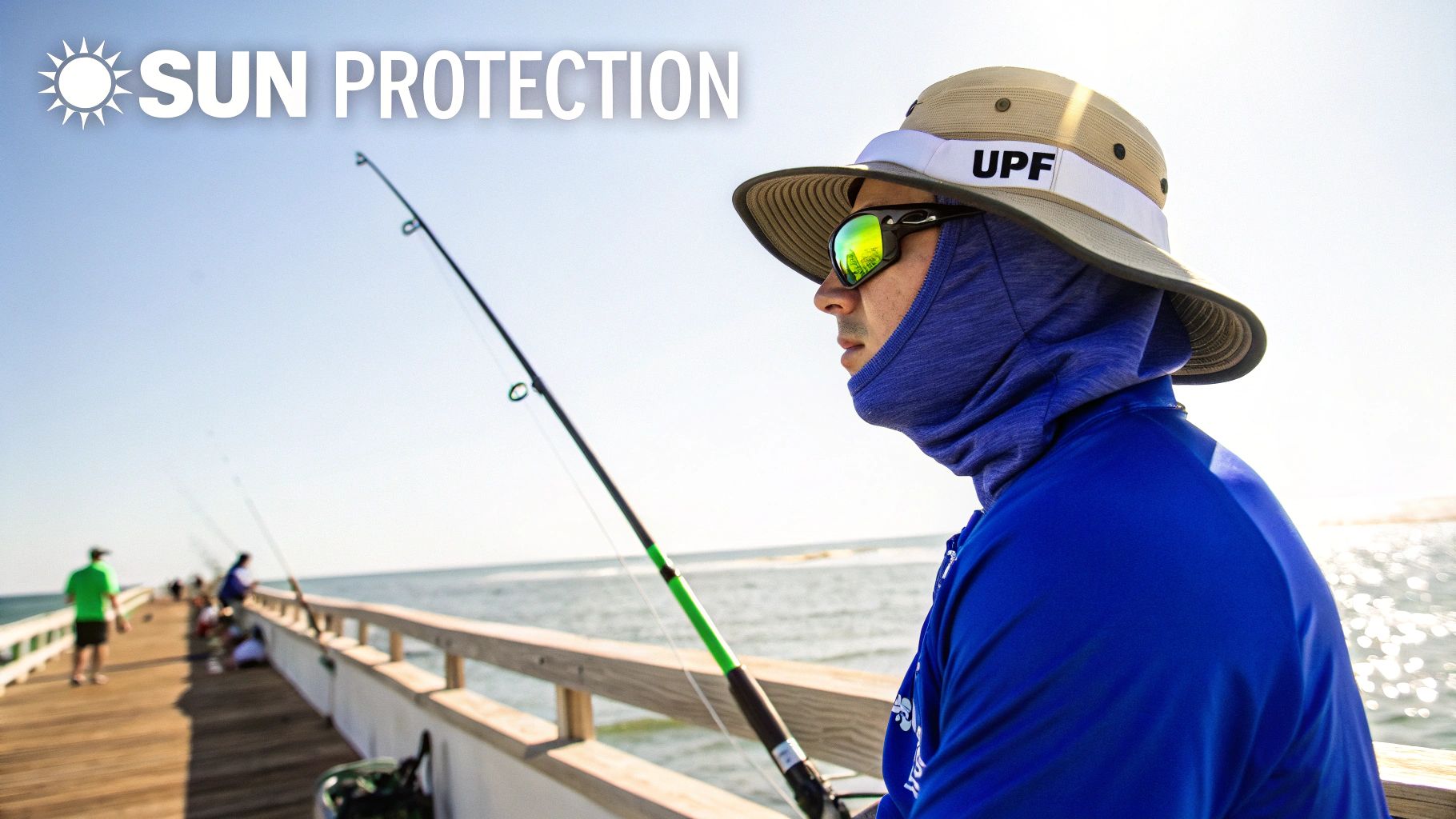
Out on the open water, the sun is a different animal entirely. There’s no shade, and the ocean’s surface acts like a massive mirror, essentially doubling your exposure to those harsh ultraviolet (UV) rays. For sportfishing pioneers like Ed and Frank Murray, who logged endless days under the brutal tropical sun chasing wins in saltwater sportfishing tournaments, managing this constant threat was a matter of survival. They knew sunscreen alone couldn't cut it; real, all-day protection came from the clothes on their back.
This is where the science behind sun-protective apparel becomes so critical. You can’t just throw on any old long-sleeve shirt and hope for the best. You need gear specifically designed with an Ultraviolet Protection Factor (UPF) rating, which measures how well a fabric blocks both UVA and UVB rays from ever reaching your skin.
Cracking the Code: What UPF Ratings Really Mean
Think of UPF as SPF for your clothes, but it's a much more complete shield. While the SPF in sunscreen mainly focuses on UVB rays (the ones that give you a nasty sunburn), UPF accounts for both UVB and the deep-penetrating UVA rays responsible for premature aging and skin cancer. The number tells you how much of the sun's radiation can actually get through the fabric.
To put it in perspective, a standard cotton t-shirt has a paltry UPF of about 5, and that number plummets once it gets wet. Compare that to high-performance fishing apparel, which is engineered from the ground up for sun defense.
A garment with a UPF 50+ rating is the gold standard. It blocks at least 98% of the sun's UV radiation, creating a reliable barrier that won't wear off or need re-applying every couple of hours.
This is the kind of built-in protection that let the Murray brothers stay locked in on the fish during grueling tournaments without giving sunburn a second thought. You can dive deeper into the importance of UV protection in fishing shirts and see just how these technical fabrics get the job done.
Assembling Your Sun-Blocking Arsenal
True sun safety on the water is about creating a head-to-toe barrier. A single UPF shirt is a fantastic start, but seasoned anglers know it takes a complete system to stay fully protected when you're offshore all day.
Here's what your essential sun-blocking toolkit should look like:
- A UPF 50+ Performance Hoodie: This is the cornerstone of your sun gear. A lightweight, breathable hoodie covers your torso and arms, and you can flip the hood up for instant protection for your neck and ears.
- Sun Gaiter or Face Mask: Your face, neck, and ears are prime targets for a burn. A good moisture-wicking gaiter offers seamless coverage and is way more effective than trying to reapply sunscreen to sweaty skin.
- Wide-Brimmed Hat: A baseball cap is better than nothing, but it leaves your ears and the back of your neck completely exposed. A hat with a full, wide brim gives you 360-degree shade, covering those spots everyone forgets about.
- Sun Gloves: Think about it—the tops of your hands are constantly facing the sun when you're holding a rod. A pair of lightweight sun gloves prevents painful burns without getting in the way of your feel and dexterity.
When you put this whole system together, you're doing more than just avoiding a painful burn. You're making a smart investment in your long-term health and giving yourself the endurance to fish hard from sunup to sundown, just like the pros do.
Staying Grounded with Essential Footwear and Foul Weather Gear
Out on the water, a stable angler is a successful angler. Your foundation, quite literally, starts from the ground up. The deck of a boat is a chaotic, pitching surface, and the wrong pair of shoes can turn a great day into a disaster. Likewise, getting soaked to the bone by a passing squall can send you to the cabin early.
This is where your gear becomes absolutely critical for safety and endurance. We're talking about two non-negotiables: proper deck boots and true foul weather gear. It's a lesson the Murray brothers learned over decades of hard fishing—if you want to stay focused on the fish, you have to eliminate every other distraction and risk.
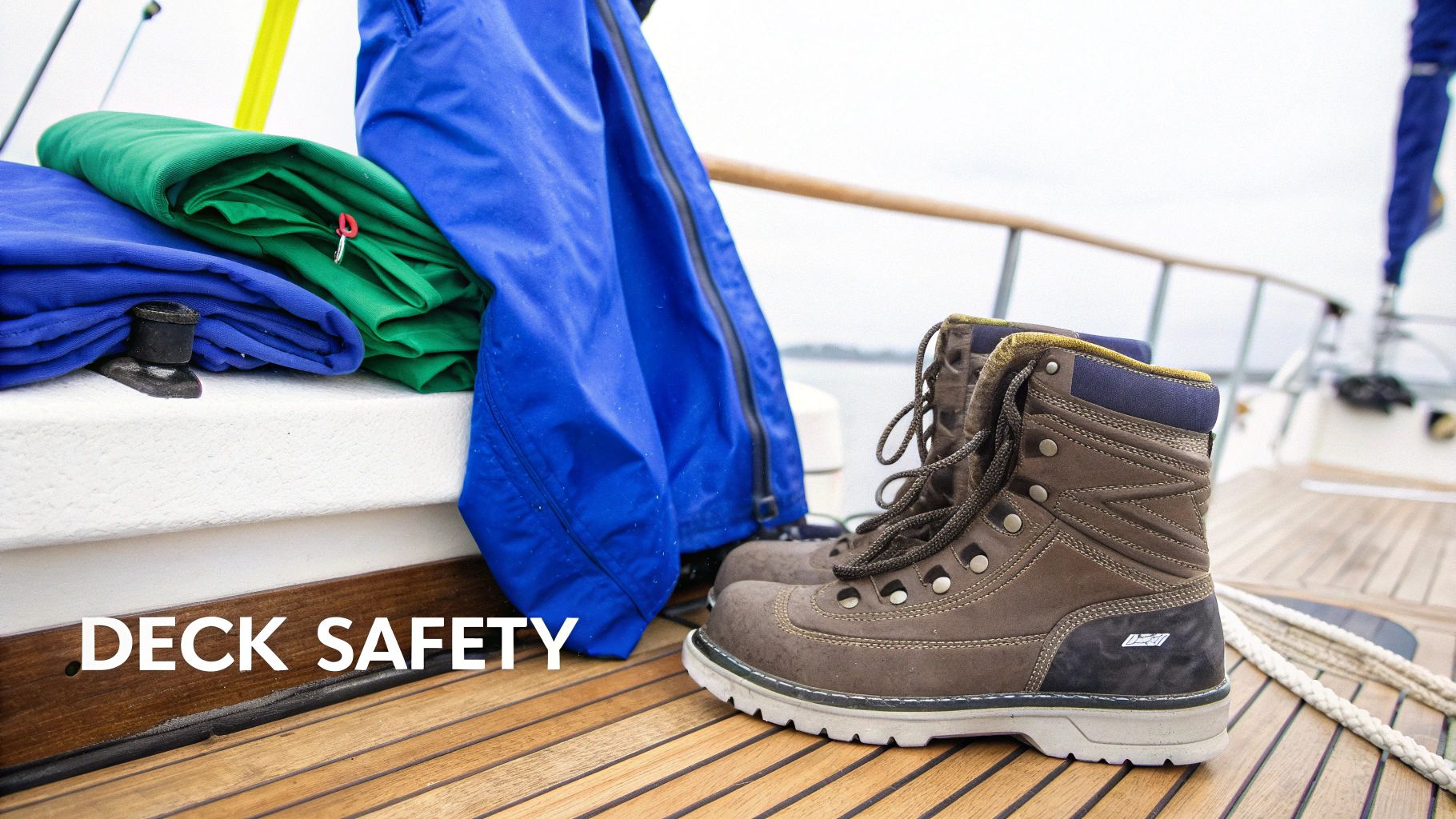
On a boat, the deck is never just a floor. It’s a dynamic surface, constantly slick with salt spray, fish slime, and wash-down water. A slip at the wrong moment isn't just embarrassing; it's a serious safety hazard. That's why a quality pair of deck boots is an essential piece of deep sea fishing clothing, not a luxury. They are designed for one purpose: to keep your feet planted firmly on the deck.
The Foundation of Performance: Deck Boots
The single most important feature of any deck boot is its non-slip sole. You need to look for boots with razor-siped, non-marking rubber outsoles. This specific design uses tiny slits to channel water away from the sole's surface, giving you an almost magnetic grip on wet fiberglass or teak.
But traction is only half the battle. You’ll be on your feet for ten, maybe twelve hours straight, and a hard deck is unforgiving. The best boots also provide all-day arch support and cushioning to fight off the foot fatigue that can dull your reflexes when that big bite finally comes.
When you're wired to a 500-pound marlin, the last thing you should be thinking about is your footing. Sportfishing legends knew that every piece of gear had to contribute to performance. You need to be able to plant your feet with total confidence and pour all your energy into the fight.
Choosing the right pair makes a world of difference. To get into the nitty-gritty, you can find a more detailed breakdown of what makes the best deck boots for fishing and make sure your footwear is ready for the challenge.
Surviving the Squall: Foul Weather Gear
The other side of the safety coin is your defense against the elements. Offshore weather has a mind of its own. A beautiful, sunny morning can morph into a driving squall in a matter of minutes, and during a tournament, running for cover simply isn't an option.
This is where you learn the crucial difference between "water-resistant" and truly waterproof gear. A water-resistant jacket might be fine for a light mist, but it will soak through in a sustained downpour or when you’re taking heavy spray over the bow.
Real foul weather gear, like a set of waterproof bibs and a jacket, forms an impenetrable barrier. Modern gear uses advanced membranes that physically block water from getting in while—and this is key—still allowing your own sweat and body vapor to escape. This breathability is a game-changer. It prevents that clammy, sticky feeling you get from cheap plastic rain suits.
For guys like the Murrays, staying dry was about more than just comfort. It was about staying warm, focused, and ready to perform when conditions got nasty. Investing in quality foul weather gear isn’t about staying comfortable—it's about having the endurance to stay in the game.
Gaining an Edge with Performance Accessories
When you're out on the water, it’s the little things that make a huge difference. You've got your layers dialed in, your foul-weather gear is ready, and your sun shirt is on—but the job isn't done. The final pieces of the puzzle are the mission-critical accessories that can turn a good day into a legendary one.
These aren't just afterthoughts; they're genuine tools that boost your performance, safety, and ability to stay out there longer. Think of it like fine-tuning a high-performance engine. Ed and Frank Murray knew that winning saltwater sportfishing tournaments wasn't just about the big things; it was about optimizing every small advantage, including their gear.
Seeing is Believing: The Power of On-Water Vision
If there's one accessory that's non-negotiable, it's a great pair of polarized sunglasses. The surface of the ocean acts like a giant, blinding mirror, reflecting a glare that makes spotting anything underneath nearly impossible. You’ll miss weed lines, bait balls, and the very fish you came to catch.
Polarized lenses are built specifically to slice through that glare, giving you a clear window into the underwater world. But it's not just about seeing fish—it's about protecting your eyes from hours of brutal UV exposure that can cause serious, long-term damage. For a deep dive into the science, check out our guide on how to choose polarized sunglasses for fishing.
Protecting Your Most Valuable Tools
Your hands are your direct link to the rod, reel, and line. Keeping them protected is absolutely essential. Any serious angler should have two key types of gloves in their bag:
- Sun Gloves: These are your daily drivers. Lightweight and often fingerless, these gloves are made from UPF 50+ fabric to shield the tops of your hands from a nasty sunburn. You get full protection without losing the dexterity you need for tying knots and rigging baits.
- Leader Gloves: When the fight is on with a big marlin or tuna, these are the heavy-duty gloves you need. They provide the grip and protection required to handle heavy monofilament leaders, preventing cuts and burns when the pressure is on.
For the legends who pioneered this sport, a day on the water was a marathon, not a sprint. Every piece of gear, from their hat to their gloves, was chosen to conserve energy and eliminate weaknesses. Protecting your hands is a fundamental part of that strategy.
Finally, don't forget the right hat. A standard baseball cap is okay, but a wide-brimmed "boonie" or bucket hat is far better. It gives you true 360-degree coverage, shading your face, ears, and the back of your neck—all spots that are easy to miss with sunscreen. Find one with a moisture-wicking sweatband and some ventilation to stay cool and focused when it counts.
The Ultimate Deep Sea Fishing Clothing Checklist
All the theory comes down to one simple question: what do you actually pack? After decades on the water, sportfishing legends Ed and Frank Murray knew that a solid checklist was the final step in gearing up for a successful day offshore. We’ve taken their hard-won knowledge and turned it into a practical packing list for your next trip.
Confidence starts with being prepared. Run through this list before you leave the dock to make sure you have every crucial piece of deep sea fishing clothing you'll need, no matter what the ocean throws at you.
The Core Essentials For Any Trip
Think of this as your non-negotiable kit. Whether you’re heading out for a half-day charter or a week-long tournament, these are the items that form the foundation of your comfort and protection.
- UPF 50+ Performance Shirt: This is your primary shield against the sun. A lightweight, long-sleeve hoodie is a great choice for easily covering your neck, ears, and head.
- Performance Shorts or Pants: You're going to get wet, so quick-drying fabric is key. Look for a pair with plenty of secure pockets for essentials like pliers or your phone.
- Polarized Sunglasses: These are absolutely critical. They don't just protect your eyes; they cut through the surface glare, helping you spot fish, weed lines, and debris.
- Wide-Brimmed Hat: You need 360-degree shade for your face, ears, and the back of your neck. A good hat is your best friend out there.
- Sun Gaiter/Face Mask: This covers all the spots sunscreen tends to miss, offering seamless protection for your lower face and neck.
- Non-Slip Deck Boots or Shoes: This is your connection to the boat. Your footwear must have non-marking, siped soles to grip a wet, rolling deck. Safety first.
A timeless pro tip from the Murray Brothers: always pack a complete spare set of clothes in a waterproof dry bag. If you take a rogue wave or get soaked in a downpour, a quick change into something dry isn't just about comfort—it's a massive morale and safety booster.
Foul Weather and Cool Climate Additions
When the forecast calls for wind, rain, or a serious temperature drop, it's time to layer up. This is where your layering system really proves its worth, keeping you warm and dry when conditions turn nasty.
- Waterproof Outer Shell Jacket: This is your fortress against wind and water. Make sure it's not just waterproof but also breathable, otherwise you’ll get soaked from your own sweat.
- Waterproof Bibs/Pants: An absolute must for keeping your lower body dry. Bibs are especially good for rough runs or when you're on the rail fighting a fish in heavy spray.
- Insulating Mid-Layer: A fleece pullover or a light insulated vest traps your body heat, providing warmth without a ton of bulk that could restrict your movement.
- Warm Beanie or Hat: You lose a surprising amount of heat through your head. A simple warm hat can make a huge difference, especially on those chilly pre-dawn runs offshore.
Your Top Questions About Deep Sea Fishing Gear Answered
If you're gearing up for your first offshore trip, you've probably got some questions. It's totally normal. Drawing on what legends like Ed and Frank Murray learned over a lifetime on the water, we've put together some straight answers to the questions we hear most often.
What's The Real Difference Between UPF And SPF?
Think of it this way: SPF (Sun Protection Factor) is for your skin—the lotions and sprays that protect you from UVB rays, the ones that cause sunburn. It works, but you have to reapply it constantly.
UPF (Ultraviolet Protection Factor) is for your clothes. It measures how well a fabric blocks both UVA (aging) and UVB (burning) rays. A shirt with a UPF 50+ rating is like wearing a full-body shield of sunblock that never sweats off or needs to be reapplied. It's consistent, all-day protection you can count on.
Why Do Experienced Anglers Say To Never Wear Cotton Offshore?
We've all heard it, and for good reason: cotton is a huge liability out on the ocean. It's like a sponge. The moment it gets wet from sweat or sea spray, it stays wet, drying incredibly slowly.
In the heat, that leads to nasty, painful chafing. When it's cool, that wet fabric clinging to your skin will suck the warmth right out of you, leaving you cold, clammy, and miserable. Performance fabrics, on the other hand, are designed to pull moisture away from your skin, keeping you dry and focused on fighting fish, not your clothes.
Are Those Expensive Waterproof Bibs Actually Worth It?
For anyone who plans to fish more than a few times a year, the answer is a resounding yes. It's an investment in comfort and endurance.
High-end foul-weather gear isn't just a simple rain slicker. It uses sophisticated waterproof and breathable materials. This means it keeps heavy rain and spray on the outside while letting your own sweat escape from the inside. You stay completely dry without that gross, clammy feeling you get from cheap rain gear. On a long, wet day, that's the difference between heading in early and staying out for the bite of a lifetime.
Inspired by the real-world experience of legends like Ed and Frank Murray, Murray Brothers builds apparel that’s been battle-tested and approved by anglers who live for this stuff. Shop our full collection of performance gear today at murraybrosretro.com.
Dejar un comentario