

Sun Protection Fishing Shirts: The Murray Brothers' Guide to Gear That Works
Sun protection fishing shirts are more than just clothing—they're a critical piece of gear for any serious angler. Born from decades of experience in legendary saltwater sportfishing tournaments, the right shirt is an angler's first line of defense against the relentless sun. For sportfishing legends Ed and Frank Murray, whose careers were forged under the tropical sun, a high-UPF performance shirt is an absolute must-have for long hours on the water. It offers a level of reliable protection that sunscreen alone can never match.
Forged by Sun: The Murray Brothers' Fishing Legacy
Long before modern performance fabrics were even a concept, a career in saltwater sportfishing was a brutal test of will against the elements. For legendary anglers Ed and Frank Murray, their decades spent dominating the world's most competitive saltwater tournament circuits were shaped by skill, grit, and countless hours under a punishing sun. Their legacy wasn't just built on trophies and world records; it was forged in the harsh reality of the open ocean, where the right gear could make the difference between victory and defeat.
This firsthand experience gave them a profound, real-world understanding of what an angler truly needs to perform at the top of their game. They learned the hard way that success wasn't just about having the right bait or tackle. It demanded gear that could hold up against the corrosive salt, constant wind, and relentless UV exposure that defined life on the tournament trail.
A Career Under the Sun
The professional saltwater sportfishing circuit is a true trial by fire. It means grueling hours scanning the water, fighting powerful fish, and maintaining the boat—all while being blasted by the sun's direct and reflected glare. The Murray Brothers' dominance in this world was no accident. It came from a deep commitment to excellence that covered every detail, including how they protected themselves from an environment that could wear down even the toughest competitor.
Their time on the water taught them some non-negotiable truths:
- Endurance is Everything: You can't stay sharp and physically ready from sunrise to sunset if you're fighting off sunburn and heat exhaustion.
- Gear Has a Job to Do: Your clothing can't just look the part; it has to act as a shield without getting in your way or making you uncomfortable.
- Protection is Prevention: Stopping sun damage before it happens is a whole lot smarter than dealing with the painful consequences after a long week of tournament fishing.
For a professional angler, sun protection isn't about comfort—it's a core piece of performance equipment. Battling the elements is part of the job, and having the right gear is what separates the winners from those who go home early.
This hard-won knowledge, earned over a lifetime of competition, became the foundation for the Murray Brothers' incredibly high standards for what a sun protection fishing shirt should be. It’s a perspective that cuts through marketing fluff and focuses purely on what works when everything is on the line. Their legacy is the ultimate benchmark for any angler looking for professional-grade protection.
Decoding UPF Ratings for Serious Anglers
If you're a serious angler, you know your shirt is more than just clothing—it's a critical piece of gear. When you’re spending hours on the water, you need to know what's protecting you from the sun. That’s where the Ultraviolet Protection Factor (UPF) rating comes in, and it's your best line of defense.
Think of a sun protection fishing shirt with a high UPF rating like a full-body layer of sunscreen that’s literally woven into the fabric. The best part? It won't sweat off, get washed away by a rogue wave, or need to be reapplied every couple of hours. It’s a constant, reliable shield against both UVA (aging) and UVB (burning) rays, which are especially brutal when they're bouncing off the water's surface.
What Do the Numbers Really Mean?
The UPF rating system is actually pretty simple. The number tells you how much of the sun's UV radiation can pass through the material. For example, a shirt with a UPF 50 rating lets only 1/50th—or a tiny 2%—of UV rays get to your skin. This is the gold standard in sun-protective clothing and what the pros look for.
Now, compare that to your average cotton t-shirt. It might offer a UPF of around 5, and that number drops even lower the second it gets wet. Suddenly, you're left exposed right when you need that protection the most. This is why high-performance gear isn't just a nice-to-have; it's essential for anyone who spends real time on the water.
This table breaks down how much protection you’re actually getting at different UPF levels.
UPF Rating and UV Ray Blockage
| UPF Rating | UV Radiation Blocked | Protection Category |
|---|---|---|
| 15 - 24 | 93.3% - 95.9% | Good |
| 25 - 39 | 96.0% - 97.4% | Very Good |
| 40 - 50+ | 97.5% - 98%+ | Excellent |
As you can see, jumping to that UPF 50+ category makes a significant difference in safeguarding your skin for the long haul.
The infographic below really drives home just how much time elite anglers spend under the sun, which makes this kind of professional-grade protection non-negotiable.
That kind of exposure, accumulated over years of tournaments, is exactly why reliable, built-in UV protection is so critical.
The Growing Demand for Real Protection
It's not just the pros who are catching on. The market for sun protection fishing apparel is growing fast, and for good reason. More people are aware of the dangers of UV radiation, and they're demanding better gear.
The market is projected to hit around $2 billion globally, with a huge focus on shirts rated UPF 50+ that minimize skin exposure and the long-term health risks that come with it.
Picking a shirt with a UPF 50+ rating is the single best thing an angler can do to protect their skin. It's a simple choice that pays dividends in peace of mind on every single trip.
Once you understand what's behind the UPF rating, you can make a smarter choice—one that not only protects your health but also lets you focus on what you're out there to do: fish. For a deeper dive, check out our guide on UV protection fishing shirts to see how they work as your first line of defense.
Performance Fabrics and Essential Features
A top-tier sun protection fishing shirt does a lot more than just block UV rays. Think of it as a piece of technical equipment, engineered for serious performance and born from the real-world experiences of legendary anglers like the Murray Brothers. Their careers were spent battling the elements, and they learned fast that the right fabric and features are just as vital as the right lure.
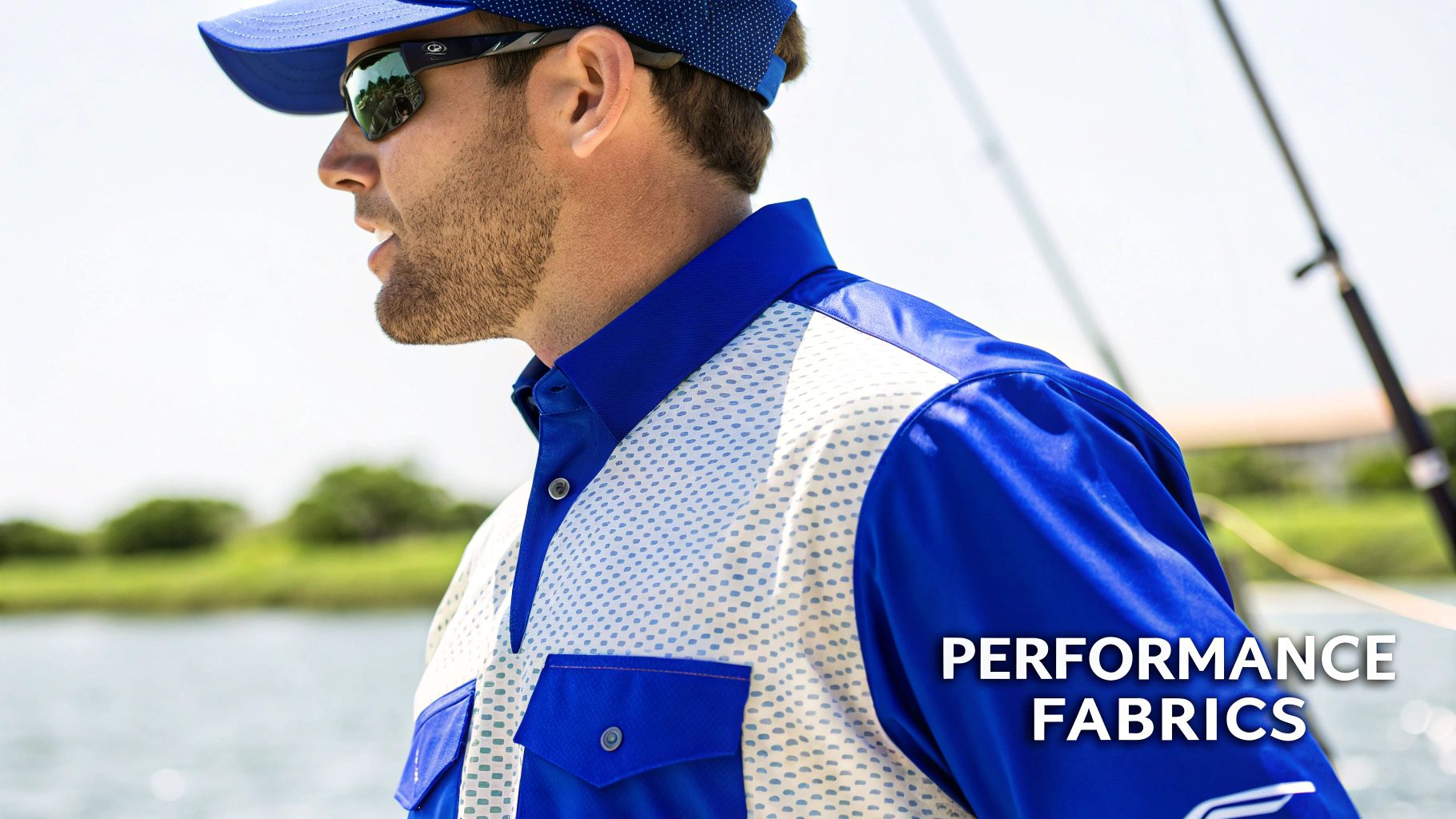
The heart of any great fishing shirt is its material. Pros swear by advanced synthetics like polyester and nylon, and for good reason. Cotton is a no-go; it just soaks up moisture, gets heavy, and stays wet. These modern fabrics, on the other hand, are designed to manage sweat and spray, keeping you comfortable and focused from the first cast to the last.
The Core of Comfort and Performance
The best fabric technologies tackle the three biggest challenges on the water: heat, sweat, and sun. For any angler, managing these is the key to staying sharp and fishing hard all day long.
- Moisture-Wicking Power: High-performance synthetics are designed to pull sweat away from your skin and spread it across the fabric's surface where it can evaporate quickly. This is absolutely critical for staying cool and dry, especially in muggy, tropical climates.
- Quick-Drying Capability: You're going to get wet. It's just part of fishing, whether from spray coming over the bow or a pop-up shower. Quick-drying fabrics mean you won't stay damp, which prevents chafing and keeps you from getting chilled when the wind kicks up.
- Strategic Ventilation: Look for professional-grade shirts with built-in mesh panels, usually under the arms or along the back. This simple but effective feature dramatically boosts airflow, letting heat escape and keeping you cooler when the bite is on.
The best performance fabrics work like a second skin—one that breathes, protects, and dries in minutes. This is the kind of gear that let anglers like the Murrays forget about the conditions and just focus on fishing.
If you fish in serious heat and humidity, these features aren't just nice to have; they're non-negotiable. To really get into the weeds on how it all works, check out our guide on the best moisture-wicking shirts and see why the technology is such a game-changer.
Indispensable Features Forged by Experience
It's not just about the fabric. The small design details are what truly separate professional gear from everyday apparel. These are the features born from thousands of hours on the water, solving the real-world problems that serious anglers face.
Durability is a huge one. A sun protection fishing shirt isn't a disposable item; it's an investment in your health and comfort. A shirt with a UPF 50+ rating blocks about 98% of harmful UV rays. Even better, independent tests show that many of these high-performance shirts hold onto over 90% of their UPF protection even after 40 wash cycles. That’s protection you can count on season after season.
Here are a few other must-have features to look for:
- Thumb Holes: A simple but brilliant detail. They keep your sleeves pulled down for extra sun protection on the back of your hands—an area that always seems to get burned.
- Anti-Odor Technology: Let's be honest, fishing can get a little ripe. Modern fabrics often have an antimicrobial treatment that stops odor-causing bacteria from growing, keeping your shirt fresher, even on multi-day trips.
- Stain Resistance: Quality shirts are treated to repel stains from fish blood, bait, and grime. This makes them much easier to clean and keeps them looking good for longer.
Choosing the Right Shirt for Your Environment
Every fishing trip is different. A calm, humid day stalking bonefish on the flats calls for a completely different set of gear than a windy afternoon 50 miles offshore trolling for marlin. Picking the right sun protection fishing shirt for the conditions isn't just a matter of comfort—it's a strategic move that affects your stamina, focus, and overall safety on the water. This is something sportfishing legends Ed and Frank Murray learned firsthand over decades of competing in just about every saltwater environment you can imagine.
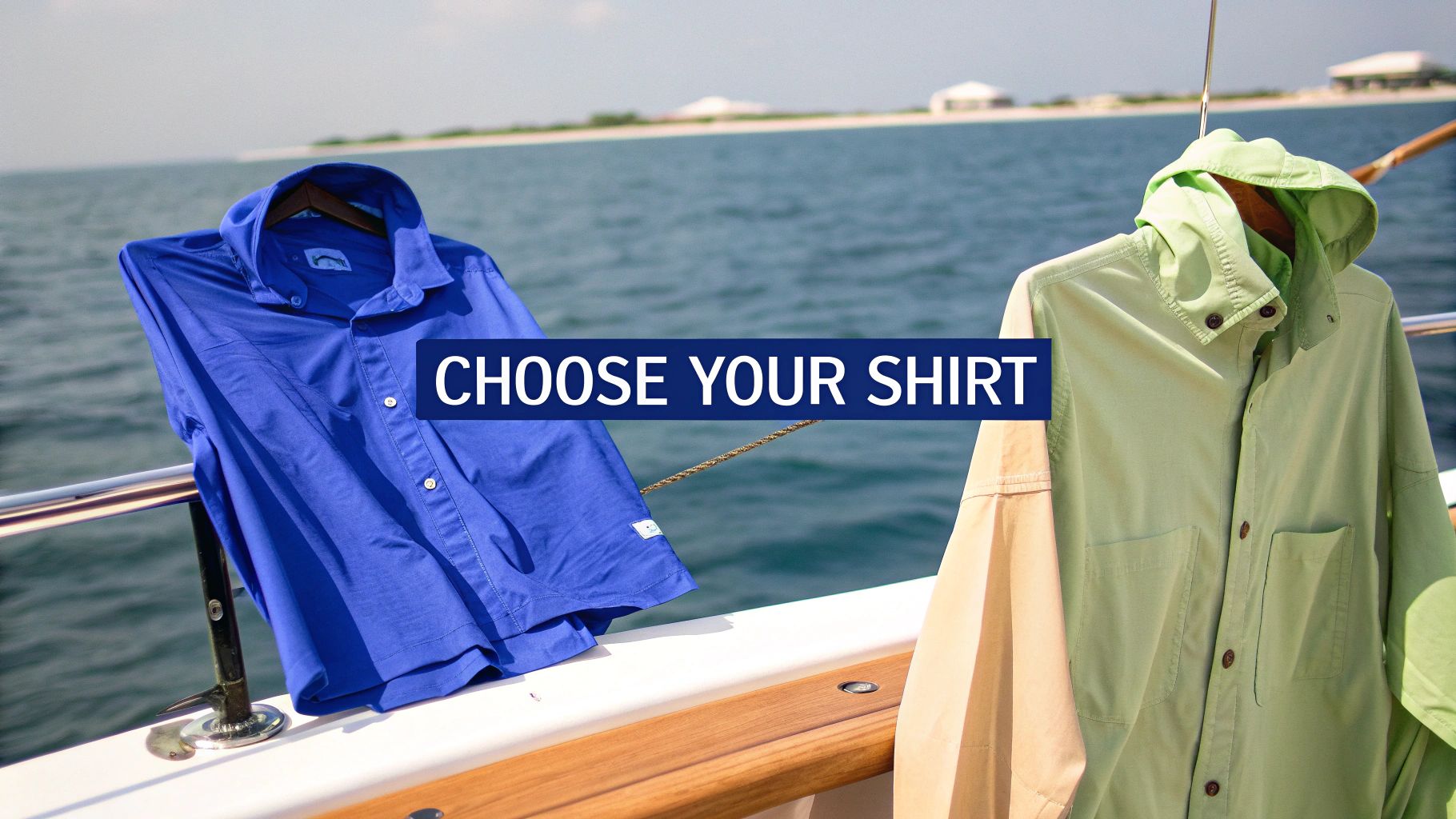
Through all that time on the water, they learned to build a versatile wardrobe, always matching the shirt to the mission. The brutal, wide-open environment of an offshore tournament demands maximum protection and durability against relentless sun and salt spray. An inshore angler slipping through the backcountry, on the other hand, needs something entirely different: total breathability and a bit of stealth.
Offshore vs Inshore Considerations
When you’re offshore, there’s nowhere to hide. The sun pounds you from above and reflects right back up off the water, basically turning your boat into an oven. For these kinds of grueling conditions, guys like the Murray Brothers always reached for shirts that offered total coverage.
Inshore and flats fishing is a different game. You’re often dealing with hotter, stickier air and a lot less wind. The challenge here is staying cool, managing sweat, and not spooking the fish you’re trying to catch.
- Offshore Angler Needs: The number one priority is a shield against the elements. That means a shirt with a UPF 50+ rating is non-negotiable, along with long sleeves and, ideally, a built-in hood or neck gaiter for head-to-toe protection. The material also needs to be tough enough to stand up to abrasive salt and constant washing.
- Inshore Angler Needs: Here, breathability is the name of the game. If you're poling a skiff across a flat, you need an ultralight shirt with as much ventilation as possible to keep from overheating. Stealth plays a bigger role, too. Colors that blend in with the sky or water—like light blues and muted seafoam greens—are often a better choice than the high-vis stuff.
Decades in saltwater tournaments taught Ed and Frank Murray a simple truth: you can’t buy the wrong gear for the right day. A hooded shirt is an offshore angler's best friend, but it might be overkill in the sweltering mangroves. The key is to adapt your gear to the environment.
The Hood vs Collar Debate
The choice between a hooded sun shirt and a classic collared one really boils down to the intensity of the sun and what you personally find comfortable. A hooded sun protection fishing shirt is the ultimate all-in-one defense system. It shields your neck, ears, and the sides of your face—all those spots that are a real pain to keep covered with sunscreen. When you're facing 10+ hours offshore with zero shade, that integrated protection is a lifesaver.
On the flip side, a traditional collared shirt combined with a separate neck gaiter and a good wide-brimmed hat gives you more flexibility. You can peel off layers and adjust your coverage as the clouds roll in or the sun starts to set.
In the end, the Murray Brothers' approach was purely practical: build a quiver. Have both options in your closet and pick the right tool for the day's forecast and your fishing spot. That’s how you make sure you’re always prepared to fish your best, no matter what the ocean decides to throw at you.
The Murray Brothers Standard of Performance
Decades spent competing in saltwater sportfishing tournaments don’t just earn you trophies; they forge an unshakeable standard for what works. For legends Ed and Frank Murray, every single piece of gear had to be battle-tested and proven. This is especially true for their sun protection fishing shirts, where a lifetime of experience is woven into every detail they demand from their apparel.
Their standard wasn't dreamed up in a design studio. It was born from thousand-hour seasons under the blistering Palm Beach sun, grinding it out in the cockpit, and fighting legendary fish. That real-world crucible revealed a simple truth: a fishing shirt is a tool, and it has to perform its job flawlessly without ever getting in the way.
From Experience to Engineering
The Murray Brothers' criteria for a high-performance shirt are a direct reflection of what they needed as elite anglers. They required gear that could withstand the harshest saltwater conditions while supporting, not hindering, their every move. This practical wisdom translates into specific, non-negotiable features.
It all starts with the foundation—the fabric. Their choice is always a premium, lightweight material with a UPF 50+ rating. This isn't just about blocking sun; it’s about creating a perfect balance between impenetrable protection and essential breathability. The fabric has to actively pull sweat away from the skin to keep you cool and focused during the most intense moments.
"When you're fighting a fish for hours, the last thing you should be thinking about is your shirt. It needs to feel like a second skin—protective, breathable, and completely unrestricted." - An insight reflecting the Murray Brothers' philosophy.
That demand for unrestricted movement is absolutely critical. The cut of the shirt must be athletic, allowing for a full range of motion whether you're casting a line, rigging baits, or wiring a marlin. A poorly designed shirt that bunches up or pulls is more than an annoyance; it's a performance liability that professional anglers simply can't afford.
Durability Forged in Saltwater
Salt, sun, and constant use are brutal on apparel. For the Murrays, a shirt had to be tough enough to survive a full tournament season without losing its protective qualities or falling apart at the seams. This means high-quality stitching that resists fraying and fabric that holds its shape, wash after wash.
This focus on functional, durable style is now a huge driver in the fishing apparel market. North America, especially the U.S. and Canada, has seen a surge in fishing participation, making it the largest regional market for this type of gear. Shirts alone make up about 45.5% of this market, with anglers demanding apparel that performs on the water and looks sharp back at the dock. This has led to advanced textiles that can reduce heat stress by 25% and improve comfort by up to 40% in those punishing, sun-drenched environments.
The Murray Brothers standard is the ultimate culmination of experience. It represents an unyielding commitment to gear that works as hard as the angler wearing it. To learn more about how this philosophy applies to different types of apparel, read our essential guide on sun protection fishing clothing.
A Few More Questions About Fishing Shirts
Even after you've got the basics down on fabrics and features, a few practical questions always pop up. It’s the kind of stuff you only think about after you've spent a few long days on the water. With decades of experience outfitting anglers, Ed and Frank Murray have heard just about every question in the book.
Here are the straight-up answers to the most common things people ask before picking out a new sun protection fishing shirt.
Does the UPF Rating Wash Out of a Fishing Shirt?
This is a big one, and thankfully, the answer is a hard no—at least for any quality shirt worth its salt. The UPF rating isn’t some spray-on coating that disappears after a few cycles in the wash. It’s literally built into the fabric.
Think of it this way: the protection comes from the incredibly tight weave of the synthetic fibers, like polyester. This dense structure is what physically blocks the sun's harmful UV rays from ever reaching your skin. Since that protection is part of the shirt's fundamental construction, it’s there to stay for the life of the garment. Wash it a hundred times; it'll still have your back.
Are Hooded Fishing Shirts Better for Sun Protection?
For pure, comprehensive coverage, a hooded shirt is tough to beat. It's an all-in-one solution for those high-exposure spots that are so easy to miss with sunscreen—the back of your neck, your ears, and the sides of your face. When you're offshore with zero shade and the sun is beating down, that hood is an absolute game-changer.
That said, it really boils down to personal comfort and the conditions of the day. Some guys find a hood a bit too stuffy on those hot, humid days in the backcountry. A great alternative is to go modular: pair a traditional collared shirt with a separate neck gaiter and a good, wide-brimmed hat. This gives you the flexibility to add or remove layers as the day heats up or cools down.
For sportfishing pros like the Murray brothers, the choice always came down to the mission. Long, grueling tournament days offshore demanded a hooded shirt. A casual inshore trip? A versatile collared shirt was the perfect call. It’s all about matching your gear to the environment.
Is a Regular Long-Sleeve Cotton Shirt Good Enough?
In a word? No. In fact, a standard cotton long-sleeve tee is probably one of the worst things you can wear for sun protection on the water. Your average cotton shirt has a UPF rating of maybe 5, and that number nosedives the second it gets wet. That’s a huge problem when you're dealing with spray and reflected glare.
On top of that, cotton is a sponge. It soaks up sweat and seawater, getting heavy, clammy, and taking forever to dry. This doesn't just feel miserable; it can cause chafing and actually make it harder for your body to regulate its temperature. A true sun protection fishing shirt with a UPF 50+ rating, on the other hand, keeps you far safer from the sun while actively pulling moisture away from your skin to keep you cool, dry, and focused on the fish.
How Should I Care for My Performance Fishing Shirt?
Taking care of your gear is pretty simple, but it’s crucial if you want it to last and keep performing the way it was designed to. A few easy habits will keep that UPF rating strong and the moisture-wicking properties intact for years.
- Washing: Stick to a machine wash in cold water with similar-colored clothing. High heat can break down the synthetic fibers over time, so steer clear of hot water cycles.
- Detergents: Any standard detergent will do, but never use fabric softeners. That stuff is the enemy of performance fabrics. It leaves a residue that clogs the pores of the material, completely killing its ability to wick sweat.
- Drying: The absolute best thing you can do is hang it up to dry. These shirts dry incredibly fast on their own. If you have to use a dryer, use the tumble dry setting on the lowest heat possible.
Follow these rules, and your investment will pay off with reliable performance on every single trip.
At Murray Brothers Palm Beach, we build legendary, angler-approved gear born from a lifetime of chasing big fish. Check out our collection of performance apparel, all designed to meet the highest standards of protection and durability you'd expect from the Murray name at https://www.murraybrosretro.com.
Dejar un comentario