

When you've spent decades chasing marlin in big-money saltwater tournaments like Ed and Frank Murray have, you learn a simple truth: the right gear is everything. And while the rods and reels often steal the show, the single most critical piece of equipment is often the one you put on first and take off last—your sunglasses for fishing.
Why Legendary Anglers Never Fish Without the Right Sunglasses
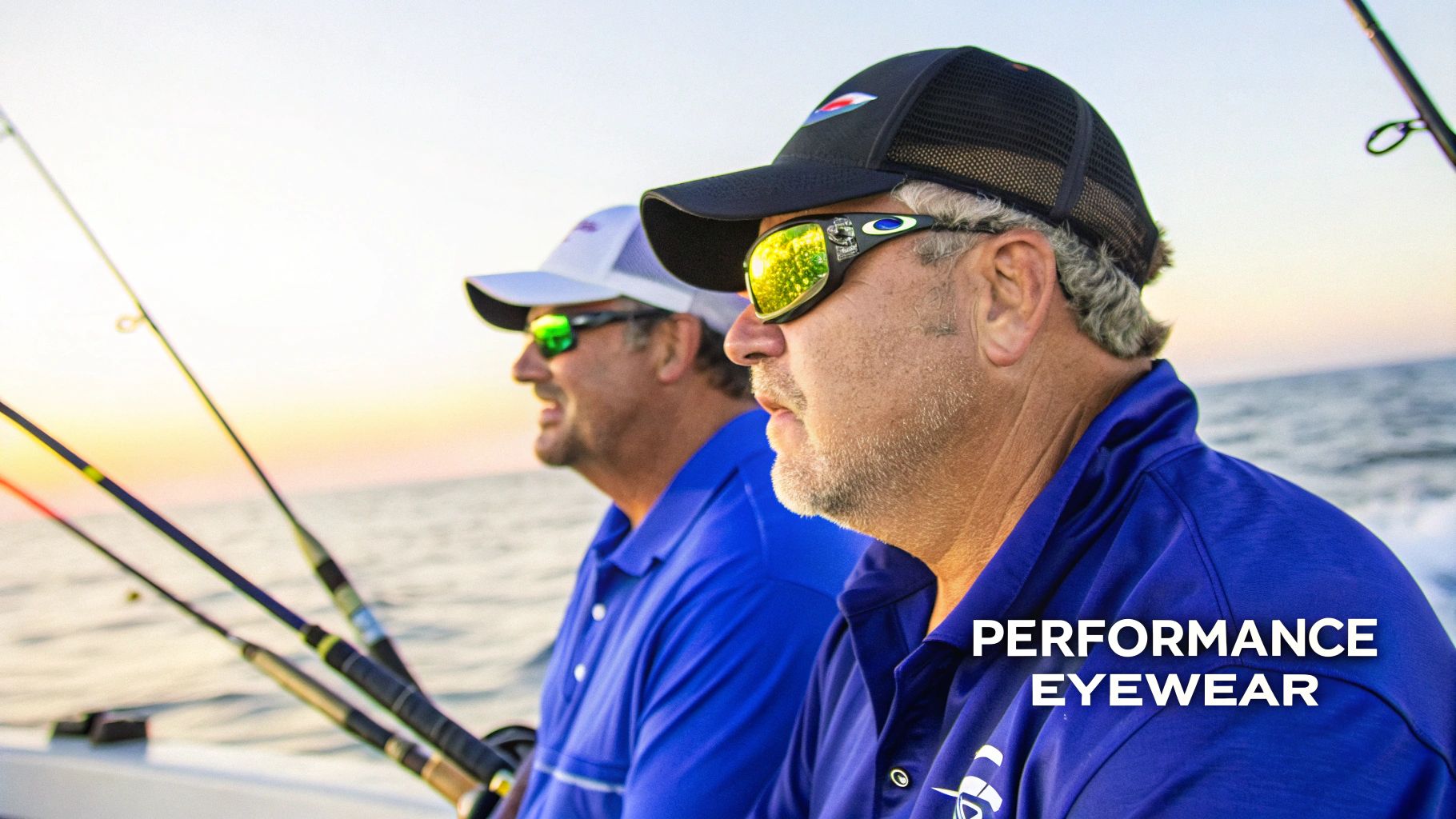
For pioneers like the Murray Brothers, who built their legacies on reading the faintest hints the open ocean gives up, vision is the entire game. Fishing the legendary tournament circuit from the Bahamas to Palm Beach means battling a punishing, all-day sun. That relentless glare bouncing off the water creates a blinding sheet of "visual noise" that can easily hide a trophy fish lurking just feet below the surface.
This is where a pair of professional-grade sunglasses becomes less of an accessory and more of a competitive weapon. The best fishing sunglasses do a lot more than just make things darker; they slice right through that surface glare, revealing an underwater world that's completely invisible to the naked eye. That clarity is what separates the pros from the pack.
Gaining the Tournament Edge
In the high-stakes world of saltwater sportfishing, a single moment can define a tournament. It might be tracking a fast-moving trolling lure or spotting the dark shadow of a billfish rising into the spread. Without the right lenses, those make-or-break moments are completely lost in a sea of blinding white light. Ed and Frank Murray built a legendary career on seeing what others missed, and that started with their sunglasses.
This one piece of gear gives a serious angler a few non-negotiable advantages:
- Spotting Fish: You can finally see through the water's surface to pinpoint fish, bait schools, or submerged structures holding your target species.
- Tracking Lures: It allows you to maintain a perfect view of your lure’s action and position, which is essential for a convincing presentation.
- Reading the Water: You can easily identify subtle but crucial changes in water color, current rips, and weed lines that scream "fish here."
The difference between seeing the fish and missing it entirely often comes down to what you're wearing over your eyes. For tournament anglers like the Murray Brothers, the right sunglasses are as critical as the right lure.
This guide is built on that same tournament-tested mindset. We're going to break down why features like polarization and UV protection aren't just buzzwords on a box—they're the core components of an indispensable tool for every serious angler.
How Polarization Unlocks a Hidden World Beneath the Water
For sportfishing legends like the Murray Brothers, reading the water isn't just a skill—it's an instinct sharpened over decades of high-stakes tournaments. But even the sharpest eyes are useless against the blinding glare of the open ocean. This is where polarization becomes an angler’s greatest visual advantage, turning the water’s reflective, confusing surface into a window of stunning clarity.
Think of the sun’s glare as a wall of “visual noise” broadcast across the water. This horizontal light completely masks everything underneath, from the subtle flash of a sailfish to the dark shape of a marlin lurking in the depths. Polarized sunglasses for fishing act like a specialized filter, blocking that horizontal noise while letting the important vertical light—the light that reveals all the detail—pass straight through to your eyes.
The result is a total game-changer. Suddenly, you can see into the water, not just at it.
From Blinding Glare to Crystal Clear Vision
This isn’t just about making things more comfortable; it's a critical strategic tool. Without polarization, you’re basically fishing blind. When you're battling fatigue during a long tournament day, the eye strain from constantly squinting can wear down even the most seasoned pro. Polarization drastically cuts that fatigue, letting anglers like Ed and Frank Murray stay locked in from the first cast to the final bell.
Out on the water off Palm Beach, for instance, the sun is relentless. It's been shown that fishermen without polarized lenses can miss spotting fish beneath the surface by up to 40%, simply because the glare wipes out all visibility. As awareness of long-term eye health grows, adoption rates have climbed 15% in the last five years. Now, an estimated 70% of serious anglers won't leave the dock without a polarized pair. You can find more insights on why this technology is a must-have for serious anglers from recent market research.
This technology is the secret weapon that turns guesswork into a calculated advantage. It’s how you spot the subtle color change indicating a weed line, track your lure perfectly through the water, and see a fish before it ever sees you.
For anyone who takes saltwater sportfishing seriously, getting this one feature right is everything. This simple yet powerful technology is the foundation of every great pair of fishing sunglasses, unlocking a dimension of the sport that remains totally hidden to the unprepared. It’s what separates a lucky day from a legendary one.
Matching Lens Color to Your Fishing Environment
For guys who have spent their lives on the water, like Ed and Frank Murray, every piece of gear has a purpose. You wouldn’t throw the wrong bait, and you certainly wouldn't wear the wrong sunglasses. Think of your lens color as another critical tool in your tackle box—each tint is designed to give you a distinct advantage, turning tricky light and water conditions into a real opportunity.
Choosing the right lens is all about matching your gear to the environment. The blinding, wide-open sun on a bluebird offshore day requires a completely different approach than the soft, flat light of dawn or a cloudy afternoon. The real goal is to filter the light to enhance contrast, make colors pop, and let you see what's happening just beneath the surface. It’s a simple skill that directly translates to spotting more fish.
This diagram breaks down how polarization, the absolute must-have feature for any serious fishing sunglasses, works to kill the glare and open up your view.
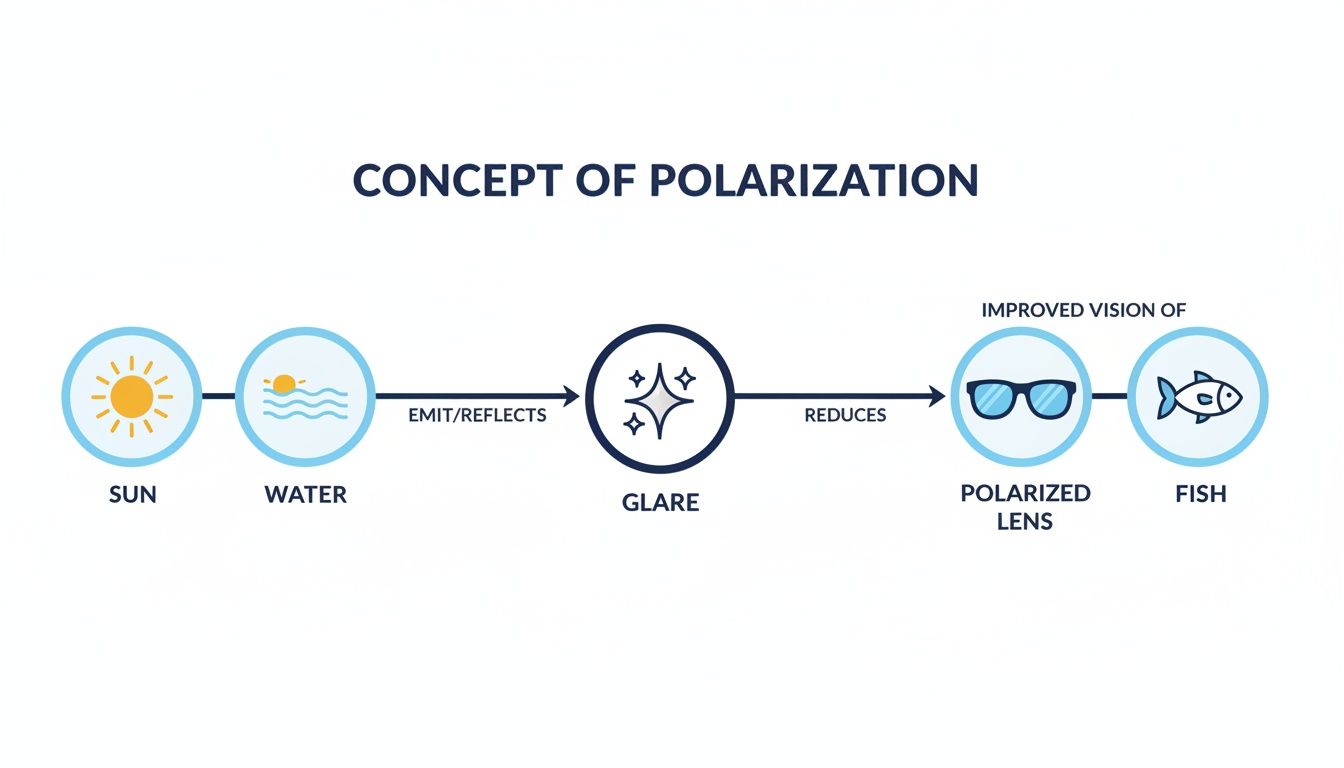
As you can see, the lens acts like a gatekeeper, blocking the horizontal light that bounces off the water as glare, while letting you see everything happening below.
Lenses for Bright, Offshore Conditions
When you’re miles out chasing billfish or tuna, the sun is just relentless. It reflects off that deep blue water from every direction, and it can be brutal. This is exactly where blue mirror lenses earn their keep. They are almost always built on a gray base and are specifically designed to handle the most intense, blinding sunlight you'll encounter.
A blue mirror lens is like a shield for your eyes, bouncing that harsh glare right back. This cuts down on eye strain and squinting, letting you scan the water for hours without feeling wiped out. For the Murray Brothers, who spend day after day in the Gulf Stream, this isn't just about comfort—it's essential for staying sharp during a long tournament.
Lenses for Inshore and Variable Light
Fishing the flats, coastal reefs, or brackish estuaries brings a different set of challenges. The water is often shallower with a green, tan, or sandy bottom, and the light can shift in an instant. For these kinds of environments, green mirror lenses are the go-to choice.
These lenses usually have a copper or amber base tint, which is fantastic for boosting contrast and helping you pick out fish against the background. The green mirror adds that extra layer of glare reduction for when the sun is high, making them incredibly versatile. It's the difference between spotting a snook tucked into the mangroves and missing it completely.
"Your lens color should be a strategic choice. Blue for the deep, green for the flats, and copper for the magic hours. Matching your lenses to the light is how you turn seeing into a competitive advantage."
Finally, you have those "magic hours" around sunrise and sunset, or even heavily overcast days. For these low-light situations, a straight copper, amber, or bronze lens without any mirror coating is unbeatable. These warmer tints crank up the contrast when light is scarce, making the underwater world come alive. They help you see structure and track your lure when other lenses would be far too dark, giving you an edge when the bite is on.
Protecting Your Vision for a Lifetime on the Water
If you ask seasoned pros like Ed and Frank Murray, they’ll tell you a long career isn’t just measured in trophies—it's measured in decades spent staring at the water. Beyond helping you spot fish, the right sunglasses are your first line of defense for your single most valuable asset: your eyesight. A lifetime of chasing billfish under a relentless sun teaches you a hard lesson—protecting your vision is just as critical as choosing the right lure.
On the open ocean, the sun’s attack comes from all directions. Harmful UVA and UVB rays don't just beat down from above; they bounce right off the water's surface, doubling down on their intensity and bombarding your eyes. That constant exposure is more than just uncomfortable, it's a serious long-term risk. This is why 100% UV protection isn't just a nice feature; it’s a non-negotiable requirement for anyone who's serious about their time on the water.
More Than Just Sun Protection
The dangers out there aren’t limited to the sun, either. Think about the unpredictable nature of sportfishing: a snapped line, a rogue wave sending salt spray into your face, or a lure that comes flying back at the boat can all happen in a split second. Quality fishing sunglasses are built with durable, impact-resistant lenses and frames that can shield your eyes from that kind of unexpected chaos. It’s an insurance policy you wear on your face.
This focus on safety is baked into the culture of sportfishing. The World Health Organization points out that prolonged UV exposure is responsible for a staggering 20% of cataracts globally, a stat that has pushed many anglers to get serious about their gear. In North America, where the U.S. market is growing at a 6.2% CAGR, this awareness is especially high, driven by the intense conditions you find in tournaments from the Keys to the canyons.
Think of your sunglasses as an investment in your longevity. Protecting your eyes today ensures you can be out there chasing fish for many, many years to come.
The Complete Protective System
For total defense, your sunglasses should be part of a bigger system. Pairing them with the right headwear creates a comprehensive shield against the elements. A wide-brimmed hat or a quality ball cap blocks that direct overhead sun, cutting down the amount of light that can sneak in around the edges of your frames.
You can learn more about finding the right headwear in our guide to fishing hats for sun protection. This one-two punch of quality eyewear and proper head coverage is the professional standard for a reason. Seasoned anglers get it: smart preparation is the key to a long and successful fishing career.
Finding the Perfect Frame for All-Day Comfort and Durability
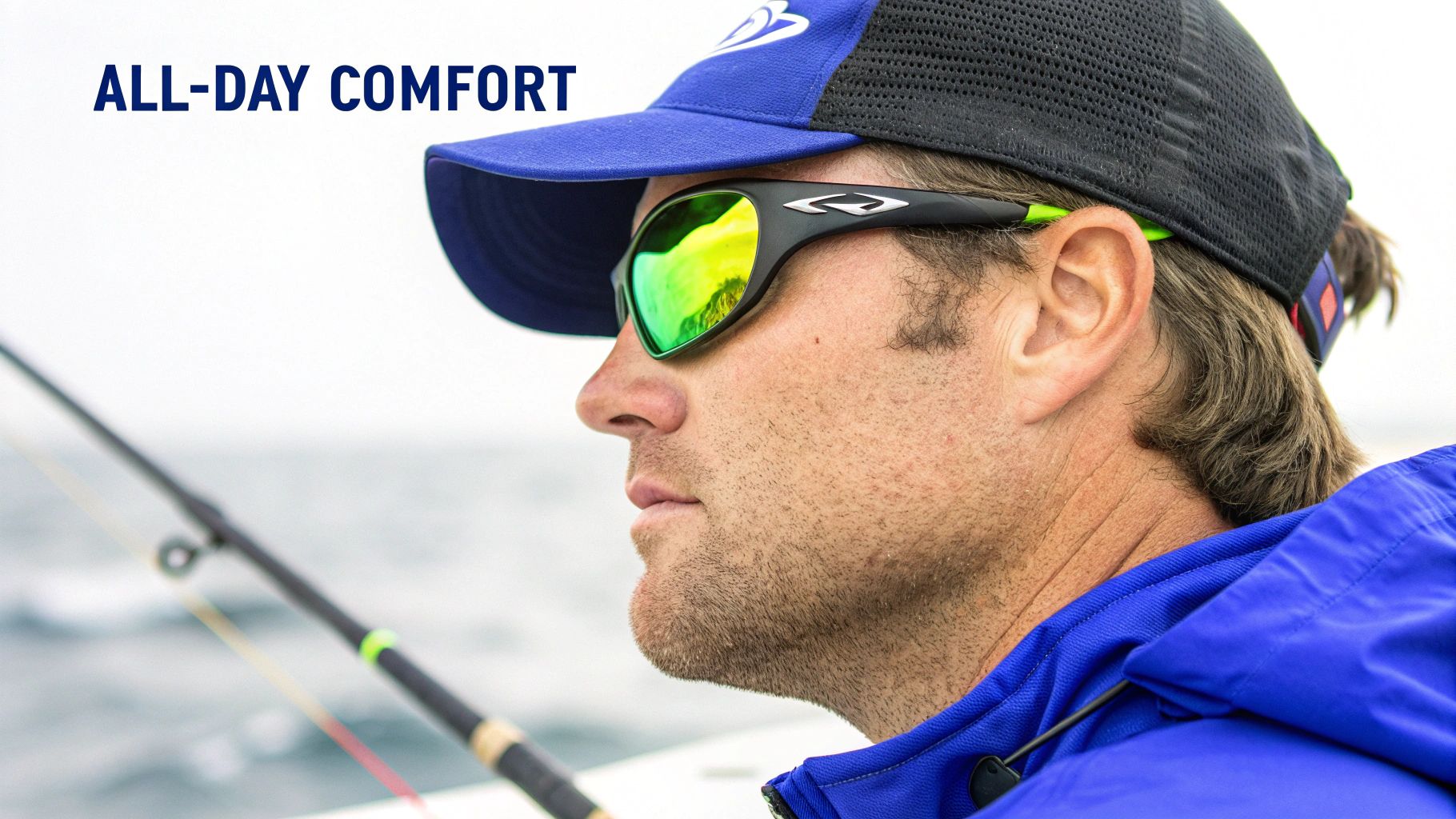
When you're in the middle of a saltwater tournament, the last thing you should be thinking about is your gear. For legends like Ed and Frank Murray, when a grander marlin is in the spread, every ounce of focus is on the water. That’s why the frame of your sunglasses for fishing is just as critical as the lens. If you’re constantly fidgeting, pushing them up your nose, or feeling a pinch behind your ears, your head isn't in the game.
The best frames are the ones you forget you're even wearing. They simply disappear, becoming a seamless part of your vision so you can stay locked in on reading the water and reacting to that next bite. This kind of "set it and forget it" reliability is no accident—it's engineered with smart design and materials built for the unforgiving marine environment.
Built to Withstand the Salt and Sun
Saltwater is brutal. It corrodes, it wears things down, and when you mix in sea spray, sweat, and relentless sun, it can destroy cheap materials in a hurry. That’s why you’ll find that top-tier, tournament-grade frames are often made from lightweight but incredibly rugged materials like TR-90 nylon. This stuff is a beast; it's flexible, durable, and stands up to chemical and UV damage, ensuring your sunglasses survive season after season.
Another big piece of the puzzle is a design that cuts out distractions. A wrap-around style frame isn't just for looks; it's a vital piece of functional equipment on the water.
- Blocks Peripheral Light: The frame hugs the contours of your face, stopping that distracting glare from sneaking in through the sides.
- Reduces Wind and Spray: This close fit acts like a shield, protecting your eyes from wind and spray that can cause irritation and fatigue.
- Maximizes Coverage: You get a much wider, unobstructed field of view, which is essential for spotting birds, bait, or a fin cutting across the wake.
Staying Secure When the Action Heats Up
When a fish hits, the cockpit erupts. You're moving fast, leaning over the side, and dealing with the controlled chaos of a fish on the line. The absolute last thing you need is your sunglasses sliding off your face and taking a dive into the deep. This is where the little details really count.
"In the heat of a tournament, your gear has to be an extension of you—reliable, secure, and completely unobtrusive. The best frames stay put, no matter what the ocean throws at you."
Look for frames with hydrophilic rubber on the nose pads and temple tips. It’s a pretty slick material that actually gets grippier the wetter it gets. Whether from sweat or spray, it ensures your glasses stay locked in place right when you need them most. It’s a simple feature that delivers total peace of mind, letting you focus on fighting the fish, not your gear.
Equipping Yourself with Tournament-Proven Gear
For seasoned pros like Ed and Frank Murray, every piece of gear on the boat has to earn its keep. Your sunglasses are no different. Picking the right pair isn't just about style; it's a critical decision that directly affects your performance, safety, and how long you can last out on the water. It’s about choosing equipment that’s been proven time and again in the toughest saltwater tournaments.
The lessons from the pros are simple but powerful. Polarization gives you that almost unfair advantage, letting you see through the glare to the world beneath the surface. The right lens color is your secret weapon for adapting to changing light. And of course, full UV protection is non-negotiable—it's your defense against years of sun exposure.
It all comes down to a secure, comfortable fit that lets you forget you're even wearing them, so you can keep your mind on the fish.
Investing in Your Angling Success
This mindset—using only gear you can absolutely depend on—is what separates a good day from a great one. The real push for better fishing eyewear took off back in the 1980s. That’s when professional anglers started reporting a massive 30% drop in headaches and fatigue just by switching to high-quality lenses.
That statistic alone tells you everything you need to know about how critical the right glasses are for reducing eye strain and keeping you sharp.
Think of your sunglasses like you do your best rod and reel. They’re a core part of your angling toolkit—an investment in your performance, your safety, and your ability to enjoy this sport for years to come.
When you gear up with tournament-proven eyewear, you’re telling the ocean you came prepared for whatever it has in store. You can learn more about what makes the best saltwater fishing gear in our other in-depth guide.
Frequently Asked Questions About Fishing Sunglasses
Choosing the right pair of shades can feel like you’re trying to read a technical manual, but it doesn't have to be that complicated. Let's cut through the noise and answer the questions we hear all the time from fellow anglers, based on decades of real-world experience on the water.
Are Expensive Fishing Sunglasses Really Worth It?
Absolutely. For any angler who's serious about their time on the water, a high-quality pair is one of the best investments you can make. This isn't about paying for a logo; it’s about investing in optical technology that gives you a real, measurable advantage.
Think of it this way: premium sunglasses from the brands trusted by sportfishing legends like the Murray Brothers have vastly superior polarization. This cuts through the blinding glare and lets you see fish, structure, and depth changes that are completely invisible with cheap knock-offs. Add in advanced lens coatings for clarity and tough, lightweight frames built for the brutal saltwater environment, and you've got a critical piece of gear that elevates your fishing and protects your eyes for the long haul.
What Is the Best All-Around Lens Color?
If you had to pick just one lens for almost everything, it would be a copper, amber, or bronze base. For inshore and nearshore fishing, you simply can't beat the versatility. These warmer tints are fantastic at boosting contrast and sharpening your depth perception in a huge range of conditions, from blazing sun to gray, overcast days.
That boost in contrast is what helps you spot a fish ghosting over a sand flat or hiding in the shadows of a mangrove line. While you can get specialized lenses for niche situations, a good copper or bronze lens is the workhorse that will serve you well on most days out on the water.
Quick Tip: Wondering if your sunglasses are actually polarized? Find a digital screen—your phone works perfectly. Look through the lens and rotate it 90 degrees. If the screen goes dark, your shades are doing their job.
How Can I Tell If My Sunglasses Are Actually Polarized?
There’s a simple trick for this that works every time. Just grab your smartphone, a computer monitor, or even the screen on a gas pump.
Look through one of the lenses at the screen, then slowly tilt your head or turn the sunglasses sideways. If they are genuinely polarized, the screen will appear to darken significantly, or even go completely black. It’s a neat little effect caused by the polarizing filter blocking the specific type of light that LCD screens give off.
Ready to gear up with equipment that's been tested and proven on the tournament circuit? Murray Brothers Palm Beach offers the legendary, angler-approved apparel and accessories you need for your next adventure on the water. Check out our collection at https://www.murraybrosretro.com.
Dejar un comentario