

Mastering Fishing Clothing Sun Protection With Sportfishing Legends Ed and Frank Murray
When you're serious about saltwater sportfishing, your sun protection needs to be more than just a shirt—it's a complete system, honed by decades of experience on the water. For legends of the sport like Ed and Frank Murray, staying shielded from the relentless sun was just as critical as having the right rod and reel. In the high-stakes world of big-game tournaments, it’s what keeps you sharp, focused, and on the bite, day after day.
A Legacy Forged Under the Sun
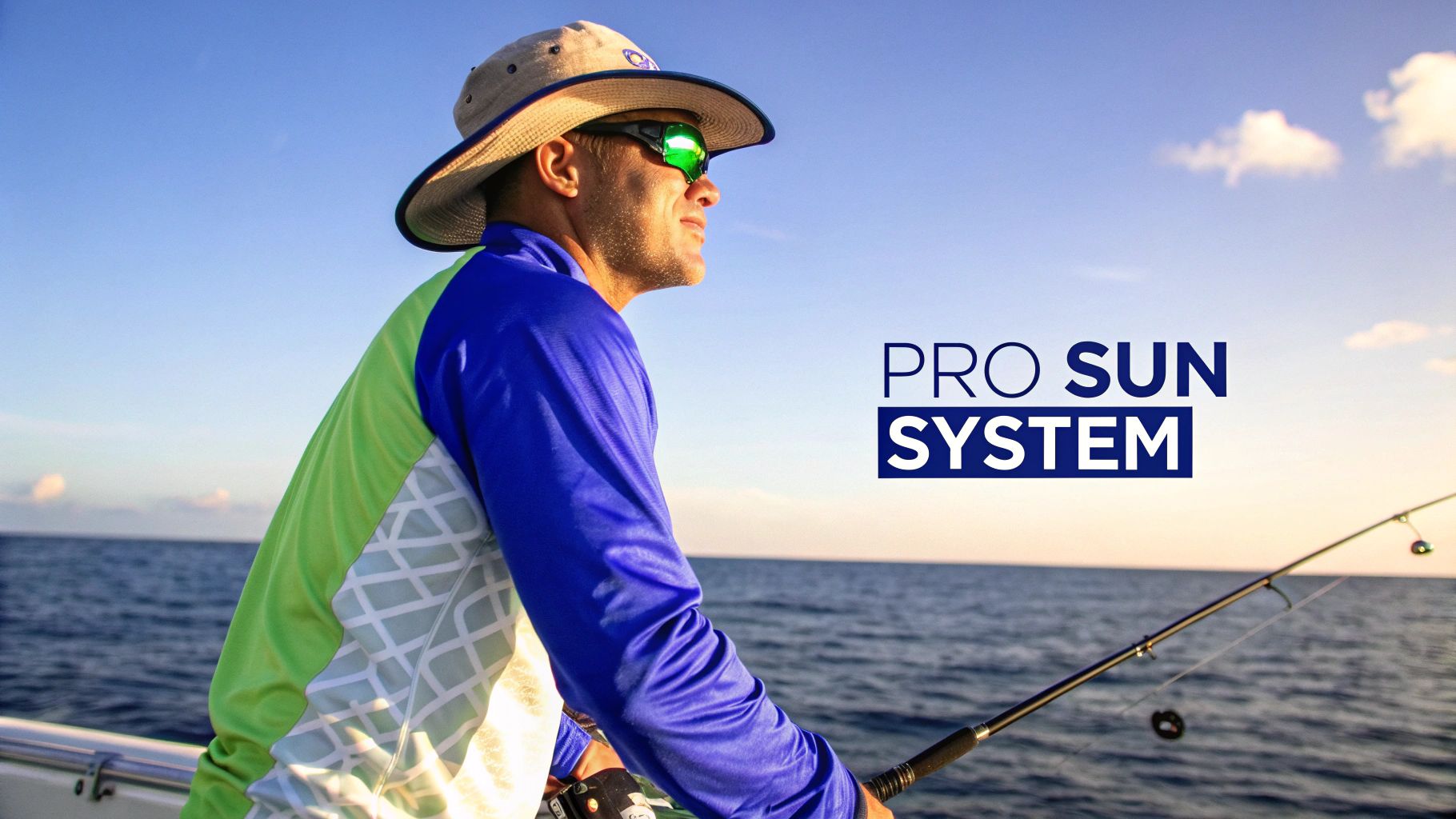
Long before modern performance fabrics were even a thought, sportfishing pioneers Ed and Frank Murray learned a fundamental truth of saltwater angling: you have to respect the sun. Competing in grueling, multi-day saltwater sportfishing tournaments from the Bahamas to the Virgin Islands meant enduring countless hours under a punishing sky. A bad sunburn wasn't just painful; it was a serious competitive disadvantage that could drain your energy, ruin your focus, and take you out of contention.
Their strategy was built on one simple idea: total coverage. While today’s anglers have racks of high-tech UPF-rated gear to choose from, the Murray Brothers relied on practical, hard-won knowledge gained from decades on the water. Their system was the blueprint for the specialized apparel we rely on now, proving that smart sun defense has always been a cornerstone of professional angling. This was never about fashion. It was about longevity and having the endurance to compete in a sport that demands everything you've got.
The Original Pro Angler's System
The lessons from their time on the water, chasing giant tuna and marlin, are more relevant than ever. The core principle hasn't changed a bit: create a physical barrier between your skin and harmful UV rays. Before specialized shirts existed, this meant a few key things:
- Long-sleeved cotton shirts: They weren't perfect by today's standards, but they were the essential first line of defense for full arm coverage in the cockpit.
- Wide-brimmed hats: Absolutely crucial for shielding the face, ears, and neck—the areas that get hit the hardest by the tropical sun.
- Protective neckwear: Often just a simple bandana or towel, this was the go-to solution to prevent the dreaded "angler's neck" burn after a long day of watching baits.
This old-school mindset laid the groundwork for all modern sun protection. It proved that consistent, head-to-toe coverage is non-negotiable for anyone who’s serious about spending time on the water. You can see how this philosophy evolved in our guide to performance fishing gear clothing, which connects that classic wisdom to today's technology.
For a professional angler, managing sun exposure is part of the job. It's about preserving your stamina and focus over a long tournament, ensuring you’re just as sharp on the last day as you were on the first.
The Murray Brothers' legacy is a powerful testament to this discipline. Their time competing in legendary saltwater tournaments showed the world that success wasn't just about landing the biggest fish. It was about outlasting the elements, and that battle always starts with effective sun protection. This guide will walk you through how those timeless principles have evolved, helping you build a modern sun defense system worthy of a pro.
How Performance Fabrics Revolutionized Sportfishing
https://www.youtube.com/embed/u2eFiY69HKI
Picture this: you're hooked up to a giant bluefin, locked in a battle under a blazing tropical sun that’s been hammering down for hours. Now, imagine doing that in a heavy cotton t-shirt, completely soaked with sweat and clinging to your skin like a wet rag. Worse, it’s offering next to zero protection from the sun's damaging rays.
For sportfishing pioneers like Frank and Ed Murray, that wasn’t just a bad dream—it was a typical day on the tournament circuit. Back in the early days of big-game fishing, the gear was rugged and the apparel was whatever you had. Anglers made do with basic cotton shirts, a thick smear of white zinc oxide on their noses, and a whole lot of grit.
But that old-school toughness came with a price. Sunburn, heat exhaustion, and dehydration weren’t just annoyances; they were constant threats that could knock you out of a tournament and put your health at risk. A standard cotton shirt, which only has an Ultraviolet Protection Factor (UPF) of about 5 when dry, becomes almost useless once it’s wet from sweat or sea spray. It turns into a heavy, uncomfortable liability.
From Cotton and Zinc to High-Tech Armor
The real game-changer for anglers was the arrival of synthetic performance fabrics. These materials were engineered from the ground up to do what cotton never could: actively pull moisture away from your body and create a dependable barrier against the sun. This wasn't just about feeling a little more comfortable—it completely changed how long and hard you could fish.
Instead of trapping sweat, new polyester blends were designed to wick moisture off the skin and spread it across the fabric's surface to evaporate quickly. This process actually cools you down, helping regulate your body temperature so you can stay focused and energized during those long, grueling fights. The difference was night and day.
Then came another massive leap forward: the development of UPF-rated fabrics. Unlike the hit-or-miss protection you get from a cotton tee, these textiles are woven specifically to block harmful UV radiation.
A garment with a UPF 50+ rating is like wearing a reliable shield. It blocks over 98% of UVA and UVB rays from ever hitting your skin. It’s the difference between hoping you’re protected and knowing you are.
The Modern Angler’s Competitive Edge
Today's sun-protective fishing clothing is a direct result of that progress. We can now wear shirts that are featherlight and breathable, keeping us cool, dry, and shielded from the sun from dawn till dusk. This isn't just a luxury; it's a vital piece of equipment that gives you a real competitive advantage.
Modern apparel helps anglers:
- Fish Longer and Harder: By minimizing heat stress and preventing sunburn, performance gear helps you save your energy for when that big fish finally strikes.
- Stay Mentally Sharp: It’s hard to stay focused when you’re battling a nasty sunburn or feel like you’re overheating. Staying comfortable is directly tied to your ability to concentrate on reading the water and fighting the fish.
- Protect Your Long-Term Health: We now know just how serious sun damage can be. High-quality protective apparel is an essential tool for ensuring you can have a long and healthy life on the water.
This evolution from simple shirts to specialized gear has created a huge demand. The global market for performance fishing apparel, a big chunk of which is sun-protective clothing, was valued at around USD 21.96 billion in 2024 and is expected to climb to USD 26.32 billion by 2030. That growth is fueled by anglers who understand that the right gear offers superior protection from the elements.
The Murray Brothers' story really drives home a fundamental truth in fishing: adaptation is everything. The shift to advanced performance fishing clothing is just the modern version of that rule, giving today’s anglers the tools to push their limits and fish safer than ever before.
Understanding UPF Ratings for Fishing Apparel
Back in the day, when legends like Ed and Frank Murray were wrestling giants from the deep in saltwater tournaments, their sun strategy was brutally simple: just cover up. They relied on basic tools—long cotton sleeves and wide-brimmed hats—but the principle they lived by is the very same one that guides modern fishing clothing sun protection today. The big difference? We now have a precise, scientific way to measure that protection: the Ultraviolet Protection Factor, or UPF.
So, what does that UPF 50+ tag on a performance fishing shirt actually mean? Think of it as a portable, high-tech shade sail you can wear. It’s a rating system made specifically for fabric, measuring how well it blocks both UVA and UVB rays—the two types of ultraviolet radiation that cause sunburn, premature aging, and skin cancer.
The numbers are pretty straightforward. A fabric rated at UPF 30 lets just 1/30th (about 3.3%) of the sun's UV radiation get through. But a garment with a UPF 50+ rating, which is the gold standard for any serious angler, allows less than 1/50th, or just 2%, of those rays to ever reach your skin. That means the fabric itself is blocking a minimum of 98% of the harmful radiation.
UPF Versus SPF: What Anglers Need to Know
It’s easy to get UPF mixed up with the SPF (Sun Protection Factor) you see on sunscreen bottles, but they measure protection in fundamentally different ways. SPF is all about time—it’s calculated based on how long it takes for sunburned skin to redden while using the product, and it mainly measures protection against UVB rays.
UPF, on the other hand, measures the sheer amount of both UVA and UVB radiation a piece of fabric blocks. For an angler spending a full day under direct sunlight—plus the intense glare reflected off the water—this broad-spectrum shield is non-negotiable. Sunscreen sweats off and needs to be reapplied constantly, but a UPF 50+ shirt provides consistent, reliable coverage from the moment you put it on.
UPF is a physical barrier. It's not a chemical coating that wears off after a few hours in the sun. It's protection that's woven directly into the DNA of the fabric, giving you a consistent shield from dawn until dusk.
Not All Fabrics Are Created Equal
Several key factors determine a garment's final UPF rating, and understanding them helps you make smarter choices when gearing up. The construction of the fabric is the single most important element in creating effective UV protection fishing shirts.
- Weave Density: Tighter weaves create a much stronger barrier. A densely woven synthetic fabric has far smaller gaps for UV rays to sneak through compared to a loose, casual cotton t-shirt.
- Fabric Type: Synthetic fibers like polyester and nylon are naturally better at deflecting and absorbing UV light than natural fibers like cotton. Worse, when cotton gets wet, it loses most of its already minimal protective qualities, making it a terrible choice for a long day on the water.
- Color: Darker or more vibrant colors are your friends here. They absorb more UV radiation than lighter shades. While a white cotton shirt might feel cooler, a dark-colored performance polyester shirt will almost always offer far superior sun protection.
- Treatments and Additives: Some of the best performance fabrics are treated with UV-inhibiting solutions or even have particles like titanium dioxide woven into the fibers themselves to supercharge their UV-blocking power.
To put it all together, here’s a quick look at how UPF ratings translate to real-world safety on the water.
UPF Rating vs. UV Ray Blockage
This table shows the direct relationship between a garment's UPF rating and its effectiveness in blocking harmful UV radiation, helping anglers quickly assess protection levels.
| UPF Rating | Protection Category | UV Radiation Blocked |
|---|---|---|
| 15-24 | Good | 93.3% - 95.9% |
| 25-39 | Very Good | 96.0% - 97.4% |
| 40-50+ | Excellent | 97.5% - 98%+ |
For serious anglers, anything less than UPF 30 is a risky compromise. The professional standard, and what you should always look for, is UPF 50+. It guarantees you’re not just comfortable out there, but truly shielded, so you can keep your focus on the fish, not the burn.
Assembling Your Complete Sun Protection System
True sun protection on the water isn’t about one magic piece of gear. It’s about building a smart, comprehensive system from the ground up. Think of the old-school sportfishing legends like Ed and Frank Murray—they figured this out through sheer necessity, spending countless days in the cockpit during intense saltwater tournaments. A modern angler’s setup should do the same, creating a seamless, head-to-toe barrier that moves with you.
The goal is to leave no gaps. You want total coverage that keeps you comfortable and protected, from that first cast at dawn to the last one at dusk. When each piece of your gear works together, the whole system becomes far more effective than any single item could ever be. It’s about leaving no skin exposed to that punishing combination of direct sun and the blinding glare coming off the water.
The Core Component: The Performance Shirt
Everything starts with a high-quality, long-sleeve performance shirt. This is your primary shield. Forget old-school cotton, which gets heavy and loses what little sun protection it has when wet. Today’s performance fabrics are engineered with a UPF 50+ rating, which is non-negotiable for blocking over 98% of the sun's harmful UV rays.
They’re also designed to wick moisture away from your skin, which is what actually keeps you feeling cool and dry. Look for angler-specific features like thumbholes—a simple but brilliant way to keep the sleeves pulled down over the back of your hands, a spot that always seems to get torched. Many of the best shirts also have a built-in hood or a high collar, closing that critical gap between your shirt and your hat.
Expanding Your Coverage: Head to Toe
Once you've got your core layer sorted, it's time to systematically cover every other exposed area. This is where specialized accessories turn good protection into great protection.
- Sun Gaiter or Face Mask: This is an absolute must-have. It shields your face, neck, and ears from every angle. The best ones have laser-cut breathing vents to keep your sunglasses from fogging up and to make sure you can actually breathe comfortably all day.
- Full-Brim Hat: A standard baseball cap is better than nothing, but it leaves your ears and the back of your neck completely exposed. A wide-brimmed or "boonie" style hat gives you 360-degree shade, which makes a world of difference for those sensitive spots.
- Sun Gloves: Your hands are always in the sun when you're holding a rod, rigging baits, or steering the boat. Lightweight, fingerless sun gloves with a UPF rating protect the tops of your hands without messing with the dexterity you need for tying knots or feeling a subtle bite.
- Performance Pants or Shorts: Don't forget your legs. Lightweight, quick-dry fishing pants offer total coverage and are surprisingly cool, even in the heat. If you're a shorts guy, just be religious about slathering on the sunscreen and reapplying it.
This methodical approach ensures there are no weak points in your defense.
Think of your sun protection gear like a suit of armor. Each piece—the shirt, the gaiter, the hat, the gloves—is a plate that overlaps with the next, leaving no gaps for the sun to penetrate.
The skyrocketing demand for this kind of gear shows just how well it works. In North America, the fishing clothing market, driven heavily by sun protection, was valued at an estimated USD 688.86 million in 2024. Experts predict that number will climb to nearly USD 967.91 million by 2030, as more and more anglers seek out these advanced, lightweight, UPF-rated materials. Fishing shirts alone make up about 45.5% of that market, proving just how foundational they are. You can dig deeper into this market's growth in this in-depth industry report.
Visualizing Your Sun Shield
To put it simply, here’s a breakdown of how to prioritize your protection.
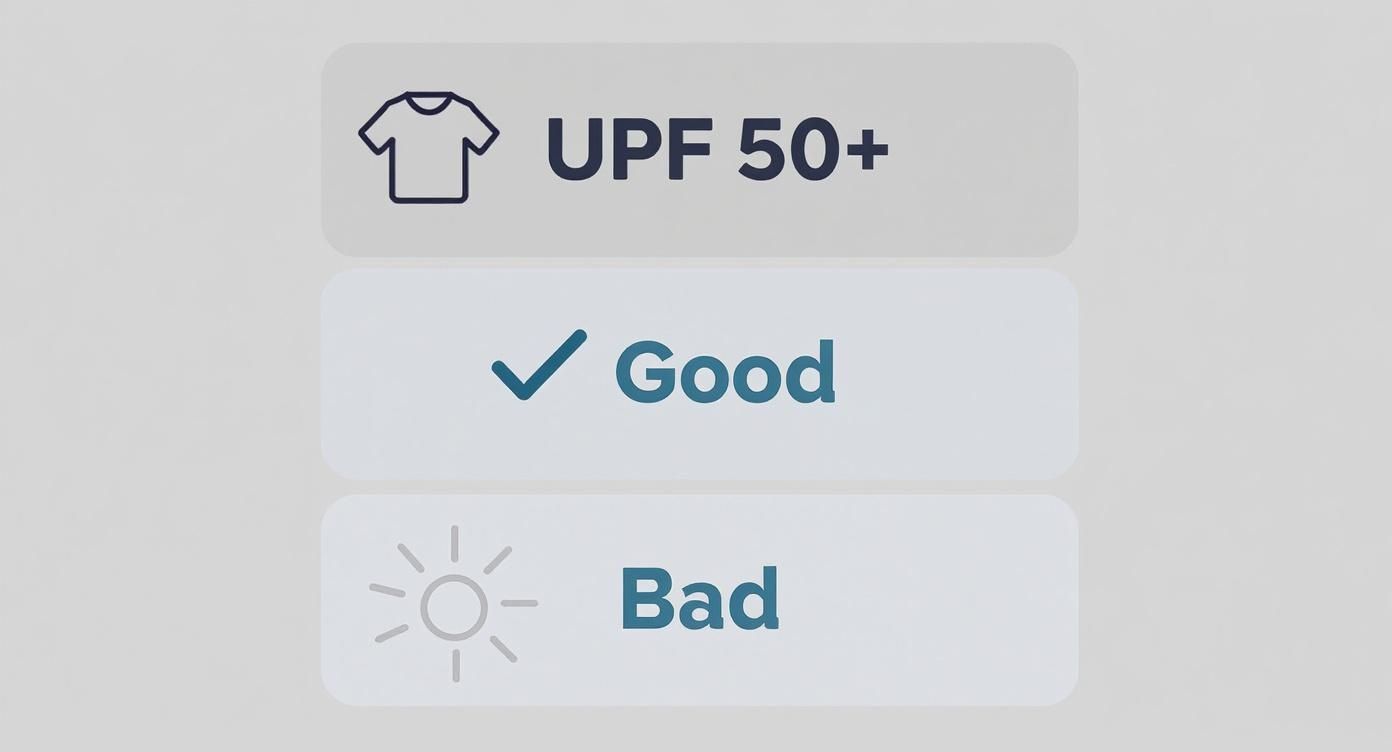
This hierarchy makes it crystal clear: starting with a UPF 50+ garment is the single most important step you can take. By thoughtfully assembling these pieces into a complete, integrated system, you can stop worrying about the sun and stay focused on the fish.
Why Fit, Ventilation, and Color Matter
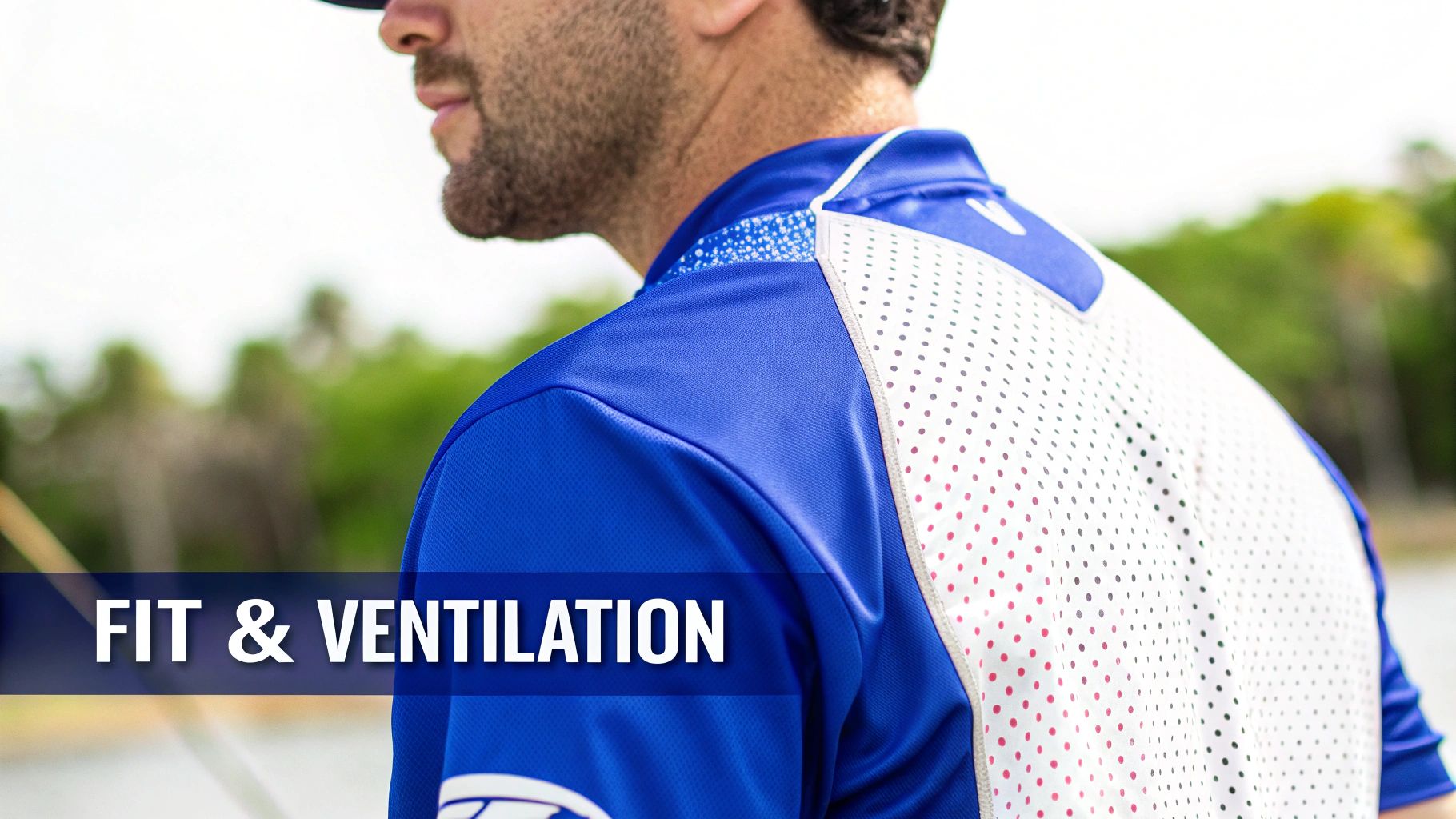
A UPF 50+ rating is your non-negotiable starting point for serious fishing clothing sun protection, but it’s just that—a start. For legends like Ed and Frank Murray, who spent decades under the sun in saltwater tournaments, the real measure of good gear was how it held up all day long. It's the little things—the cut, the airflow, the color—that make the difference between a shirt that just works and one that helps you perform.
These details aren't just for show. They're part of a system designed to combat the two biggest enemies of any angler: brutal heat and nagging discomfort. The best modern performance gear isn’t just a passive UV shield; it’s an active cooling system.
The Advantage of a Looser Fit
You might assume a tight, athletic fit is best, but when it comes to sun protection and staying cool, a little extra room is your friend. When a shirt fits too snugly, the fabric stretches. That constant tension can pull the fibers apart, creating microscopic gaps for UV radiation to sneak through and quietly weaken the shirt's true UPF rating.
Even more importantly, a looser cut is all about airflow. It creates a small pocket of air between the fabric and your skin, which is crucial for helping sweat evaporate. That evaporation is your body's natural air conditioning, and a looser shirt lets it work far more efficiently, keeping you from feeling sticky and clammy when the bite is on.
Strategic Ventilation for Maximum Airflow
Think of a high-performance fishing shirt like a high-performance engine—it needs a solid cooling system to prevent overheating. That’s exactly what strategically placed vents and mesh panels do. They are the exhaust ports, letting hot, steamy air out while pulling cool, fresh air in.
Here’s what to look for:
- Back Vents: Common on button-up fishing shirts, these wide, mesh-lined vents across the shoulder blades are perfect for dumping heat from one of your body’s primary sweat zones.
- Underarm Mesh Panels: This is a high-heat area that needs to breathe. Mesh here gives you targeted ventilation without sacrificing sun protection on your arms and torso.
- Perforated Fabrics: The most advanced shirts feature body-mapped designs with thousands of tiny, laser-cut holes. These perforations dramatically boost airflow in key spots while keeping the fabric strong and protective.
This push for smarter materials is fueling huge growth in the market. As more people get serious about sun safety and outdoor recreation, the demand for quality gear has exploded. The global fishing clothing market hit USD 46.85 billion in 2024 and is expected to climb by about 8.2% each year through 2031. This growth isn't just about more people fishing; it’s about a demand for real innovation in fabric technology.
Debunking the Dark Color Myth
We've all heard the old rule: wear white to stay cool. And while it’s true that light colors reflect more visible light, the science behind modern fishing clothing sun protection is a bit more complex. When it comes to blocking UV rays, dark colors often have a distinct advantage.
Darker dyes are simply better at absorbing UV rays, stopping them cold before they ever reach your skin. With today’s high-tech, moisture-wicking fabrics, the tiny bit of extra heat they absorb is whisked away by the powerful evaporative cooling effect.
Dark colors also offer a huge tactical benefit on the water: glare reduction. A darker shirt soaks up the blinding light bouncing off the water’s surface. This reduces eye strain and makes it far easier to spot fish, shadows, and structure below. It’s a subtle edge, but it’s one that countless professional anglers count on. In the end, it’s about finding your perfect balance between UV absorption, heat management, and what helps you see best on the water.
On-the-Water Questions Answered
Even with the best gear in the world, the real questions start popping up once you're miles offshore. For legendary anglers like Ed and Frank Murray, those answers came from decades of tournament fishing—a masterclass in trial and error long before FAQ pages were a thing. Their knowledge wasn't theoretical; it was earned in the cockpit.
This section tackles the same kind of practical questions modern anglers have about their sun-protective clothing. We’re channeling that same field-tested spirit to give you clear, straight-up answers that will help you get the most out of your gear.
Does Washing My UPF Fishing Shirt Weaken Its Protection?
This is a great question, but with high-quality performance apparel, you can relax. The sun protection in a true UPF garment isn't some cheap coating that washes down the drain. It’s woven right into the fabric itself. The magic lies in the incredibly tight weave and the inherent UV-blocking properties of the synthetic fibers.
So, go ahead and wash it. As long as you follow the care instructions (usually a gentle cycle and low heat), your shirt’s UPF rating will hold strong for its entire lifespan. The only way it really loses its punch is through physical breakdown—if the fabric gets torn, badly stretched, or worn thin after years of hard use.
Is a Plain Old Cotton Long-Sleeve Good Enough?
Look, any coverage is better than getting baked, but a standard cotton t-shirt is a pretty poor choice for a long day of fishing. A typical dry cotton tee offers a meager UPF of maybe 5 to 7. That’s minimal at best. Worse yet, the moment it gets wet from sweat or spray, that already low number plummets, leaving you with almost no reliable shield.
A purpose-built UPF 50+ performance shirt, on the other hand, blocks at least 98% of harmful UV rays, and it keeps that protection whether it's soaking wet or bone dry. Plus, its moisture-wicking tech actively works to keep you cool. For anyone serious about spending hours on the water, it’s not even a fair fight.
Think of it this way: a cotton shirt is like standing under a leafy tree—spotty shade at best. A UPF 50+ shirt is like being inside a solid shelter. It’s a real, dependable barrier.
Do I Still Need Sunscreen if I’m Wearing UPF 50+ Gear?
Yes. Absolutely, one hundred percent. This is a critical point we can't stress enough. Your UPF shirt is a game-changer, but it can only protect the skin it covers. Every inch of exposed skin is still a target for UV damage.
You should always slather a broad-spectrum, water-resistant sunscreen with a high SPF on any skin your clothing doesn't reach. Pay close attention to these often-missed spots:
- Your face
- The front and back of your neck
- Your ears
- The backs of your hands (if you’re not wearing sun gloves)
- Any other little patch of skin left out
The best strategy is to think of your UPF clothing and sunscreen as a team. The clothing is the heavy armor for your torso and arms, and the sunscreen guards all the gaps. Together, they give you a complete defense system to fish safely from dawn till dusk.
Are Darker Fishing Shirts Hotter in the Sun?
That’s an old assumption that just doesn’t hold true with today's advanced performance fabrics. While it’s a fact that dark colors absorb more light energy, the materials in modern fishing shirts are engineered to be smarter than that.
The secret is their moisture-wicking technology. These lightweight, breathable fabrics pull sweat away from your skin and spread it out to evaporate in a flash. That evaporation creates a powerful cooling effect that completely cancels out any minor heat gained from the color of the shirt.
In fact, many pro anglers—from the days of Frank and Ed Murray right up to today’s top guns—often prefer darker colors. There are two big reasons. First, darker dyes can offer a slight edge in UV absorption. More importantly, they cut way down on the glare bouncing off the water, which reduces eye strain and makes it much easier to spot fish.
Ready to gear up with apparel that’s built on a legacy of experience and designed for modern performance? The Murray Brothers Palm Beach collection offers battle-tested, angler-approved gear that delivers on both protection and comfort. Explore our full range of performance fishing apparel today and experience the difference that quality makes.
Shop the collection at https://www.murraybrosretro.com.
Leave a comment