

The Ultimate Guide to Fishing Gear for Kids
Getting a kid hooked on fishing is one of the most rewarding things you can do, and it all starts with setting them up for success. The best fishing gear for kids isn't about fancy features; it's about gear that's fun, safe, and simple enough for them to use on their own. The whole point is to create those amazing first memories that will stick with them for life.
Passing Down the Angling Legacy
Fishing has always been more than just a hobby. It's a way to get outside, connect with what’s happening beneath the water, and build some incredible family memories along the way. For legendary fishermen like Ed and Frank Murray, this tradition was born in the intense world of saltwater sportfishing tournaments, where having the right gear and a whole lot of patience was everything. Their story isn’t just about the trophies; it’s about a deep love for the ocean that shaped their entire lives.
You can pass that same spirit down to your own kids. The secret is to frame a day on the water as an adventure, not just a mission to catch the biggest fish. It's about sparking their curiosity and letting them feel a sense of accomplishment, turning a simple trip to the pond into something they'll remember.
From Legends to Little Anglers
The Murray Brothers' journey from passionate fishermen to sportfishing icons teaches a great lesson: you have to start with a solid foundation. They may have been wrestling marlin in high-stakes competitions, but the basic principles are exactly the same for a child making their first cast.
The real trophy of any fishing trip with kids isn't what you catch, but the memories you make. It's about teaching patience, celebrating small victories, and fostering a genuine respect for the outdoors.
To make those positive experiences happen, you've got to give them the right tools for the job. Using properly sized fishing gear for kids does more than just help them land a fish—it makes them feel capable. It cuts down on the frustration of tangled lines and clumsy, heavy rods, letting them focus on the magic of it all: the tap on the line, the splash of a tiny bluegill, and the excitement of sharing that moment with you.
This guide will walk you through picking out the perfect gear to start building your own family's fishing legacy.
Choosing Your Child's First Fishing Rod
Picking out your child’s first fishing setup is a huge moment. It’s their official entry into the world of angling, and getting it right can make all the difference. While the options might seem overwhelming, the goal is pretty simple: find a rod that's easy for them to handle and helps build their confidence right from the start.
For most young kids, the undisputed champion is the spincast combo.

Why Spincast Combos are a Kid's Best Friend
Think of a spincast reel as the training wheels of the fishing world. It has a simple push-button that releases the line, which all but eliminates the frustrating tangles and "bird's nests" you get with more advanced reels. This lets kids focus on the fun part—casting and waiting for a bite—instead of battling their equipment.
It's also tempting to just hand a kid a shorter adult rod, but that's usually a mistake. Rods made specifically for children are lighter, balanced for smaller bodies, and have grips that fit their hands. This smart design means they can cast more comfortably and fish longer without getting worn out.
Matching the Rod to the Young Angler
When you're looking at rods, pay close attention to length and material.
A good rule of thumb is to find a rod that's roughly the same height as your child. For most little anglers, that means a rod between three and five feet long. This shorter length gives them way more control, making it easier to cast accurately and reel in a fish without feeling like they're wrestling an alligator.
The rod's material is just as important. An experienced angler might want a sensitive graphite rod to feel every tiny nibble, but for kids, durability is king. Fiberglass is the perfect choice here. These rods can handle being dropped on rocks, stepped on, or slammed in a car door—all the things that are bound to happen on a family fishing trip.
This focus on user-friendly gear for beginners is a big deal in the fishing industry. In fact, youth and beginner combos now make up about 20% of the global fishing rod market. It's clear that parents are looking for convenient, all-in-one kits that make getting started as painless as possible.
To make the choice even clearer, here's a quick look at the best options for different age groups.
Kids Fishing Rod and Reel Combos at a Glance
| Age Group | Recommended Combo Type | Key Features | Best For |
|---|---|---|---|
| 3-5 Years | Push-Button "Toy" Rod | Very short (2-3 ft), plastic, character-themed | The very first introduction; casting practice in the backyard or for tiny panfish. |
| 6-9 Years | Spincast Combo | 3-5 ft fiberglass rod, simple push-button reel | The classic beginner setup; perfect for learning basics on panfish, trout, and small bass. |
| 10-12 Years | Spincast or Light Spinning Combo | 5-6 ft rod, larger spincast or entry-level spinning reel | Kids with some experience who are ready for longer casts and slightly larger fish. |
As you can see, the spincast combo is the go-to for that sweet spot where kids are old enough to fish but still need something simple and forgiving.
The convenience of a spincast combo is a huge win for parents, too. Most come as a complete kit, often with the line already spooled on the reel. You can grab it off the shelf and head straight to the water. No complex setup, no headaches.
The best beginner rod is one that feels like an extension of the child's arm, not a heavy, awkward tool. Simplicity empowers them to learn the fundamentals of casting and retrieving on their own terms.
Ultimately, the goal is to minimize frustration and maximize the fun. By starting with a durable, correctly sized spincast setup, you're giving your child the best possible shot at falling in love with fishing. For a more detailed breakdown, you can learn how to choose a fishing rod that's perfect for any skill level.
Safety First: The Most Important Gear You'll Pack
Before we even get to rods and reels, let's talk about the single most important part of any fishing trip with kids: safety. Ed and Frank Murray learned early in their sportfishing careers that preparation is everything; a successful day on the high seas began long before the lines were in the water. That same principle of being prepared is the key to a fun, worry-free family outing.
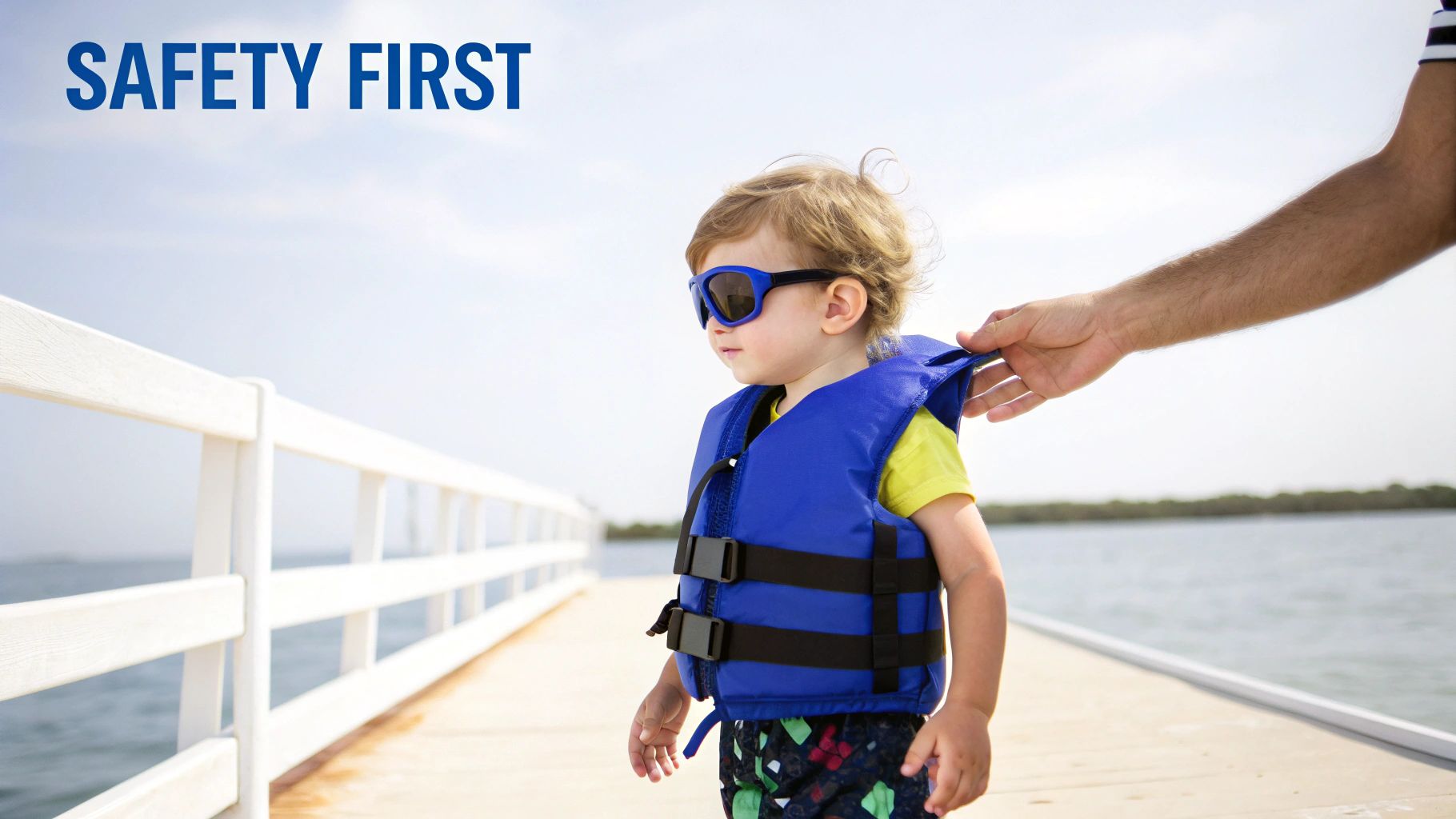
The undisputed champion of water safety is a properly fitted Personal Flotation Device (PFD), or life jacket. For kids, this isn't a suggestion; it's a non-negotiable rule anytime you're on a boat, a dock, or even a steep bank.
Choosing the Right Life Jacket
A life jacket only does its job if it fits right. If it's too big, it can easily slip up over a child's head in the water. Too small, and it won't provide enough lift. The key is to always choose a PFD based on your child's current weight, not their age.
Here's what to look for when you're buying one:
- U.S. Coast Guard Approval: Flip it over and look for the USCG-approved label. This is your assurance that it meets strict safety standards. No label, no deal.
- Correct Weight Rating: The tag will list a weight range (e.g., 30-50 lbs). Make sure your child's weight falls squarely within that range. Never buy a bigger size for them to "grow into."
- Crotch Strap: This is a must-have for younger kids. It’s a simple strap that goes between their legs and keeps the vest from riding up if they end up in the water.
Once you think you've found the one, do a quick fit test. Put the jacket on your child, zip it up, and clip all the buckles. Then, grab the shoulders and lift gently. If the jacket comes up past their ears, it’s too big.
A life jacket is the seatbelt of the water. You put it on hoping you'll never need it, but you'd never dream of going without it. When you make it a habit from day one, kids learn that safety is just part of the fun.
Beyond the PFD: Your Safety Checklist
While the life jacket is the star of the show, a few other items are just as crucial for keeping a kid's fishing trip safe and comfortable. I like to keep a small, dedicated safety bag ready to go so I never forget the essentials.
Think of it as your on-the-water insurance policy. It's far better to have this gear and not need it than the other way around.
Here’s what else should be on your must-have list:
- Polarized Sunglasses: They're not just for looking cool. They protect sensitive young eyes from damaging UV rays and, as a bonus, cut the glare on the water, which reduces eye strain and helps them spot fish.
- A Good First-Aid Kit: Scrapes, bug bites, and the occasional hook prick are all part of the experience. Your kit should have the basics like antiseptic wipes, bandages, pain reliever, and tweezers for splinters or careful hook removal.
- Non-Slip Shoes: Docks, boat decks, and wet rocks can be slicker than ice. Closed-toe water shoes or sandals with a solid grip are essential for keeping everyone upright.
- Sunscreen and a Hat: A sunburn can ruin a trip fast, and it can happen even on an overcast day. Always apply a broad-spectrum, water-resistant sunscreen and top it off with a wide-brimmed hat.
Putting this kit together first builds a foundation of safety that frees you up to focus on what really matters: enjoying the adventure with your family.
Dressing for Success on the Water
Just like a seasoned captain knows the right lure can make or break a day, the right clothes are a crucial piece of fishing gear for kids. What your little one wears has a huge impact on their comfort, safety, and ultimately, how long they'll stay happy and engaged out on the water. For sportfishing legends like the Murray Brothers, who spent countless hours under the sun in grueling tournaments, having the right performance apparel wasn't a luxury—it was essential equipment.
The trick is to think like a pro: prepare for anything with smart layers and the right fabrics. This simple approach keeps kids comfortable whether the sun is beating down or a cool breeze unexpectedly rolls in.
Beyond the Cotton T-Shirt
It’s tempting to just grab a basic cotton t-shirt, but honestly, it’s one of the worst things a kid can wear for a day of fishing. Once cotton gets wet—whether from sweat, a splash, or a quick rain shower—it stays wet. That damp fabric clinging to their skin can make a child feel cold and miserable, even on an otherwise warm day.
Instead, you want to look for clothing made from moisture-wicking, quick-drying materials like polyester or nylon blends. These technical fabrics are designed to pull sweat and water away from the skin and dry out fast, keeping your kids' body temperature regulated and comfortable. It's the same kind of gear the pros rely on when they spend all day exposed to the elements.
Choosing the right apparel is like packing the right tackle. You wouldn't use a heavy saltwater lure for panfish, and you shouldn't rely on cotton for a day of changing weather on the water. Performance fabrics are the all-purpose tool for comfort.
This move toward high-performance, family-friendly fishing apparel isn't just a small niche, either. The global fishing clothing market is expected to hit USD 5.54 billion by 2032, and a huge part of that growth is coming from parents looking for kid-friendly options that keep their families safe and comfortable. You can see more data on this growing market over at coherentmarketinsights.com.
Sun Protection is Essential Gear
Sun protection goes way beyond just slathering on sunscreen. The best defense is actually the clothing you choose, specifically gear with a built-in Ultraviolet Protection Factor (UPF) rating. Think of it like SPF for fabric. A shirt with a UPF 50+ rating, for example, blocks over 98% of the sun's harmful UV rays. That's far more reliable and consistent protection than sunscreen, which can wear off or get applied unevenly.
Here's a quick checklist to make sure your young angler is dressed for success:
- UPF Performance Shirt: A lightweight, long-sleeved shirt is the absolute best foundation for sun protection.
- Wide-Brimmed Hat: A hat is non-negotiable. It shields their face, neck, and ears—all spots that are super susceptible to getting burned.
- Lightweight Jacket: Always have a packable, water-resistant jacket handy. It's perfect for cutting the morning chill, blocking the wind, or handling an unexpected shower.
When you invest in a few quality pieces like these, you're not just buying clothes. You’re investing in longer, happier, and safer fishing trips for the whole family. You can learn more about finding the perfect apparel by checking out our guide on youth fishing shirts.
Packing the Perfect Kid-Friendly Tackle Box
For a kid, opening a tackle box should feel like finding a treasure chest. It’s not about cramming it with dozens of complicated lures; it's about putting together a simple, effective kit that lets them feel like they're really part of the action. Your goal is to create a tackle box that’s built for fun and learning, not just a miniature version of yours.
This all comes down to prioritizing simplicity and safety. Instead of a cluttered mess, aim for a clean, organized selection of gear that a young angler can actually understand. When you give them tools they can handle, you turn them from a spectator into a hands-on participant in every step of the fishing process.
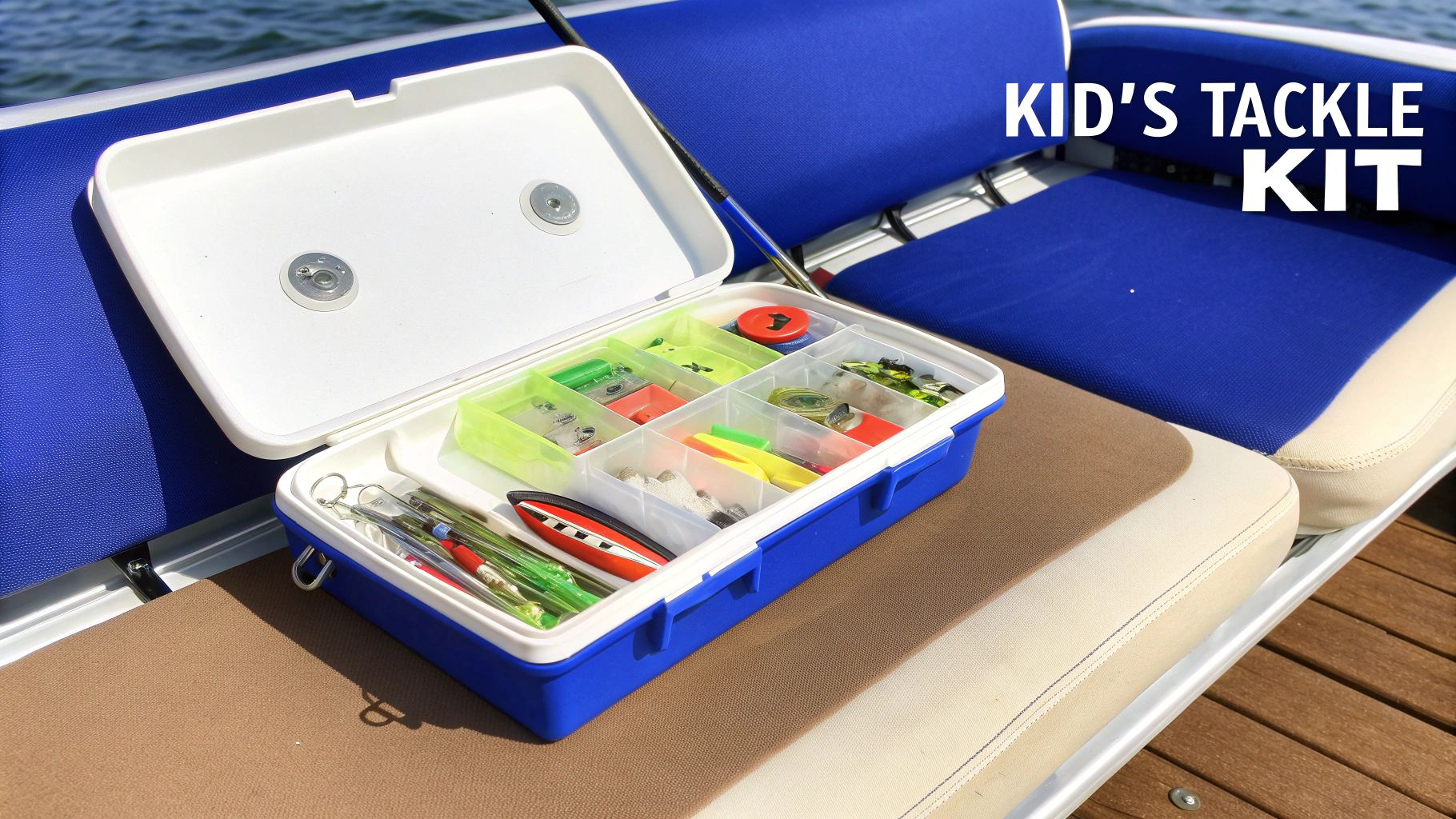
Building a Simple and Safe Kit
A great kid's tackle box starts with a few safe, easy-to-use essentials. Every single item should have a clear purpose and be manageable for little hands.
Here are the absolute must-haves for their first tackle box:
- Barbless Hooks: This is the single most important safety upgrade you can make. A barbless hook is so much easier (and safer!) to remove from a fish, a t-shirt, or even skin, making it essential fishing gear for kids.
- Brightly Colored Bobbers: You can’t go wrong with a classic red-and-white plastic bobber. They’re super visible, easy to clip on the line, and give kids that unmistakable signal—when it goes under, it's fish on!
- Lead-Free Weights: Look for small, non-toxic split-shot sinkers made from materials like tin or steel. They’re simple enough for a kid to learn to pinch onto the line and are much safer for them and the environment.
These three core items cover all the basics without overwhelming a new angler.
A child’s tackle box should be a toolkit for independence. Every item inside should be something they can learn to use themselves (with supervision), fostering a sense of ownership and pride in their gear.
Bait, Lures, and Essential Tools
Once you have the basics covered, you can add a few simple options for actually catching fish. For beginners, live bait is almost always the fastest way to get a bite. A wiggling worm on a hook is pretty hard for any sunfish to ignore.
That said, it’s a great idea to toss in a few simple lures to teach them the basics of casting and reeling in. Start with small spinners or curly-tail jigs in bright colors like white, yellow, or chartreuse. They’re easy to use and incredibly effective for common species like crappie and bluegill.
Finally, round out their kit with a couple of kid-friendly tools. A pair of small needle-nose pliers for hook removal and a simple line clipper are all they need. As they get more confident, this curated little tackle box will truly feel like their own—a huge step in building a lifelong love for the sport. For a bigger-picture look at foundational equipment, take a look at our guide on the best fishing gear for beginners.
Making Your First Family Fishing Trip a Success
Alright, you've got the right fishing gear for kids all packed and ready to go. Now for the most important part: making sure the trip itself is a memory they'll cherish. Think about the spirit that drove legends like Ed and Frank Murray through all those saltwater tournaments. It wasn't just about winning—it was about the thrill of the chase and a genuine love for being on the water. That's the secret sauce for a great first family fishing trip.
The real goal here isn't to fill a cooler; it's to spark a lifelong passion. Let the day be about the simple joys of being outdoors together. Skipping stones, watching dragonflies, and celebrating every single tug on the line—that's what success looks like.
Keep It Fun and Keep It Short
If there’s one golden rule for a kid’s first few fishing trips, it’s this: keep them short. A child's attention span can be fleeting, and it’s always better to head home while they’re still having fun than to push them past their limit. An hour or two of exciting, hands-on fishing will leave a far better impression than a long, grueling day that ends in tears.
This very idea—focusing on the experience—is catching on everywhere. In fact, the global fishing equipment market is projected to hit USD 20.88 billion by 2033, driven largely by a growing interest from families just like yours. As more parents discover fishing as a way to build patience and focus, the industry is responding with better gear to support these positive first outings. You can dive deeper into this trend in this detailed industry report.
The measure of a successful kids' fishing trip isn't the size or number of fish caught. It's the number of smiles, the excitement of the first nibble, and the answer to the question, "When can we go again?"
Celebrate Everything and Teach Respect
Make a huge deal out of every small victory. A perfect cast? High-fives all around. A tiny nibble? The crowd goes wild. Finally landing a little sunfish? You'd think they just won the championship. This kind of positive reinforcement builds their confidence and makes them feel like a real angler.
This is also the perfect moment to teach a little about conservation. Gently show them how to handle a fish and explain the concept of catch-and-release. Returning a fish safely to the water is a simple act, but it instills a deep respect for nature. You’re not just creating a new angler; you're raising a responsible one who will carry that legacy forward.
Got Questions About Kids' Fishing Gear? We've Got Answers.
Stepping into the world of kids' fishing gear can feel a bit overwhelming at first. Don't worry, it's a common feeling. To help you get your bearings, here are a few answers to the questions we hear most often from parents just starting out.
What’s the Magic Age to Get a Kid Started in Fishing?
Most kids are ready to give fishing a real try somewhere between the ages of 4 and 6. By this point, they've usually developed enough coordination to hold a small rod and have the attention span for a short outing.
The real secret is to keep those first few trips short and sweet. It’s all about the fun of being outdoors, not about catching a monster fish. A simple, push-button spincast combo is your best friend here—it’s easy to use, keeps frustration low, and lets them feel like they're really doing it themselves.
The sportfishing legends Ed and Frank Murray built their legacy on passion and persistence, traits that start small. For a child, that same spirit is kindled not by a trophy fish, but by the simple joy of their first successful cast.
How Do I Know When It's Time to Upgrade Their Gear?
You'll know it's time to upgrade when your child starts getting the hang of it and, more importantly, wants to do more. If they’re casting their little spincast reel consistently without making a mess of the line and start asking how to cast farther or catch different kinds of fish, they're probably ready.
This leap usually happens around ages 8 to 10. Moving up to a spinning rod and reel is the natural next step. It will give them better casting distance and more accuracy, which is a fantastic confidence booster for a young angler who’s getting serious about their new hobby.
What Is the Absolute Most Important Piece of Safety Gear?
Hands down, a properly fitted, U.S. Coast Guard-approved life jacket (or Personal Flotation Device, PFD) is the one thing you can't skip. It’s a must-have anytime you're near the water, whether you're on a boat, a dock, or just a slippery riverbank.
Make sure the PFD fits snugly and is designed for your child's current weight. This is one piece of gear you never buy for them to "grow into." After the life jacket, a good pair of polarized sunglasses is a close second. They not only protect sensitive eyes from UV rays but also shield them from the scary possibility of a stray hook.
At Murray Brothers Palm Beach, we believe in passing down the angling tradition with gear that’s built on a legacy of quality and passion. Equip your young adventurer for a lifetime of memories on the water. Shop the collection at Murray Brothers Palm Beach today.
Leave a comment