

A Guide to Fishing Winter Gear
Ask any serious angler, and they'll tell you the same thing: your gear is your lifeline. And when the temperature drops, that statement takes on a whole new meaning. For sportfishing legends like the Murray Brothers, success was never just about skill—it was about outlasting the competition and the elements. The right apparel is what makes that possible.
Let's break down why quality winter gear isn't just a luxury, but your single best investment for extending your season and, more importantly, staying safe out there.
Forging a Legacy in Saltwater Tournaments
Think about the careers of pioneers like Ed and Frank Murray. They spent their lives chasing giant marlin and tuna in high-stakes tournaments from the Bahamas to the Outer Banks. All those decades on the water taught them a critical lesson: the fish is only one of your opponents. The elements are the other.
They knew firsthand that running a boat through a pre-dawn squall or wrestling a fish in a cold offshore current could drain you physically and mentally. Their ability to stay warm, dry, and sharp was directly tied to their success. It wasn't an afterthought; it was part of their strategy.
This hard-won experience gave them a deep respect for gear that could take a beating. They learned that even a small drop in core body temperature can cloud your judgment, slow your reaction time, and turn a great day into a dangerous one. Their legacy isn't just about the incredible fish they caught; it's about mastering the art of endurance through meticulous preparation.
From Experience to Essential Gear
The Murray Brothers' philosophy was straightforward: you can't be at the top of your game if you're shivering. This core belief influenced everything they did, right down to the apparel they chose to wear. It's a lesson that holds true for every angler today, whether you're a seasoned pro or just heading out for the weekend.
The right winter fishing gear does more than just keep you warm—it keeps you in the fight. It lets you stay focused, use your skills flawlessly, and make the right call when that trophy fish is finally on the line.
Picture a long day offshore. The weather can turn on a dime, and being caught unprepared simply isn't an option. This is exactly where purpose-built apparel proves its worth.
- Sustained Performance: Good gear stops the cold from wearing you down. You can fish hard for hours, not just a few chilly minutes before you have to call it a day.
- Enhanced Safety: Staying warm and dry is your first line of defense against hypothermia. It's a serious risk in cold water, and it can set in much faster than people think.
- Unwavering Focus: When you aren't distracted by chattering teeth or damp clothes, you can put all your mental energy where it belongs: on finding fish, managing your tackle, and landing your catch.
In the end, the wisdom from legends like the Murray Brothers hammers home a simple truth for the modern angler. Your clothing is just as critical as your rod and reel. Investing in proper fishing winter gear is an investment in your safety, your comfort, and your ability to make your own stories out on the water.
Building Your Personal Climate Control System
Staying warm on the water isn't about throwing on the single thickest coat you own. Take it from sportfishing legends like Ed and Frank Murray, who spent decades on the water; their endurance was built on a much smarter, more adaptable strategy.
Think of it as creating your own personal climate control system. It's a setup you can adjust on the fly as conditions change—from a frigid pre-dawn run out to the fishing grounds to a surprisingly sunny midday lull.
This system is all about a simple, time-tested three-part principle: the base layer, the mid-layer, and the outer shell. Each piece has a specific job to do. When they work together, they create a perfect microclimate around your body that keeps you dry, warm, and completely focused on the fish. Mastering this layering technique is what separates a comfortable, productive day from a miserable one cut short.
The Foundation: Your Base Layer
Your entire warmth strategy starts right against your skin. The number one job of a base layer isn't actually to provide warmth—it’s to manage moisture. Whether you’re casting, fighting a fish, or just moving around the boat, your body produces sweat, even when it’s freezing out. If that moisture gets trapped against your skin, it will chill you to the bone faster than any cold wind.
This is where a high-quality, moisture-wicking fabric is absolutely non-negotiable. Materials like merino wool or modern synthetics are designed to pull perspiration away from your body and move it to the fabric's outer surface, where it can evaporate. This process, known as wicking, is the most important function of your first layer. It keeps you dry, and staying dry is the first rule of staying warm.
For pros like the Murray Brothers, a wet base layer was a non-starter. It didn’t matter how tough their outer jacket was; if they were damp underneath, their focus would suffer, and their day would be cut short.
Trapping Heat: Your Mid-Layer
Once you’ve got moisture under control, the next step is to trap your own body heat. That's the job of the mid-layer, which acts as your primary insulation. Unlike an old cotton hoodie that soaks up sweat and stays wet, a proper mid-layer is made from materials designed to create and hold pockets of warm air.
This is where you'll want to look at materials like fleece or down (and its synthetic counterparts). Fleece is an absolute workhorse—it's durable, breathable, and does a great job of holding in warmth even if it gets a little damp. Down, on the other hand, offers an incredible warmth-to-weight ratio, packing a ton of insulation into a lightweight package, which makes it perfect for brutally cold, dry days. The trick is picking a mid-layer that gives you enough warmth without being so bulky that you can't cast or move freely.
Your Shield: The Outer Shell
Finally, you need a shield to protect you from the elements. Your outer shell—your jacket and bibs—has two critical jobs: blocking the wind and keeping out the water. This is your armor against rain, sleet, snow, and that relentless ocean spray.
A truly effective outer layer must be 100% waterproof and windproof. Look for the details that matter, like fully sealed seams and storm flaps over the zippers, which are crucial for stopping any moisture from creeping in.
But here’s the other side of the coin: it also has to be breathable. As moisture gets wicked away by your base layer and passes through your mid-layer, it needs somewhere to go. If your outer shell traps all that vapor, you'll end up just as soaked from your own sweat as you would from the rain. This is exactly why purpose-built fishing winter gear is so important.
This entire system is what gives you the ability to adapt. Getting too warm? Just shed the mid-layer. Wind starts howling? Cinch down the shell. This adaptability is what allowed the legends to perform at their best, no matter what the ocean threw at them.
For a deeper dive into the specific jackets, bibs, and other apparel that make up a great system, check out our complete guide to the best cold weather fishing gear.
Winter Angler's Layering System Breakdown
To make it even clearer, here’s a quick-reference table breaking down how each layer works. Think of this as your cheat sheet for building the perfect system for your needs.
| Layer | Primary Function | Recommended Materials | Key Features to Look For |
|---|---|---|---|
| Base Layer | Moisture Wicking | Merino Wool, Synthetic Blends (Polyester, Polypropylene) | Snug fit, seamless construction, quick-drying |
| Mid-Layer | Insulation (Trapping Heat) | Fleece (Polartec), Down, Synthetic Down (PrimaLoft) | Lightweight, breathable, good warmth-to-weight ratio |
| Outer Shell | Weather Protection | GORE-TEX, Proprietary Waterproof/Breathable Membranes | 100% waterproof, windproof, sealed seams, adjustable cuffs/hood |
Putting these three pieces together correctly ensures you're prepared for anything the weather report—or the fish—might throw your way.
As this diagram shows, having the right gear is just as fundamental to your success as skill and endurance. It's one of the three pillars that supports a successful day on the water.
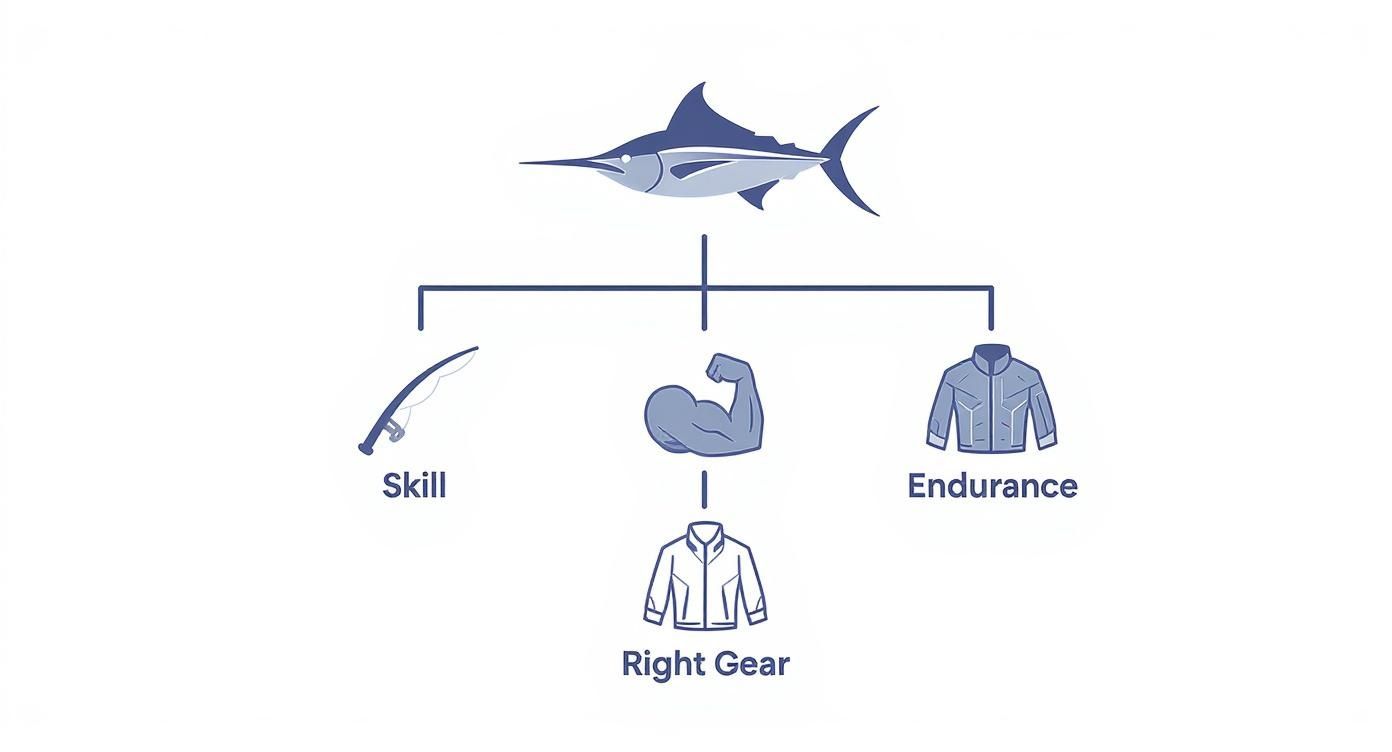
Without that foundation of proper, functional gear, even the most skilled angler will struggle when the temperature drops.
Choosing Your Armor Against the Elements
Your outer shell—that final jacket and bib combo you pull on—is your fortress. For sportfishing legends like Ed and Frank Murray, this wasn't just another piece of clothing; it was mission-critical equipment. It's hands-down the most important part of your fishing winter gear system, the one thing standing between you and the raw, biting power of a winter day on the water.
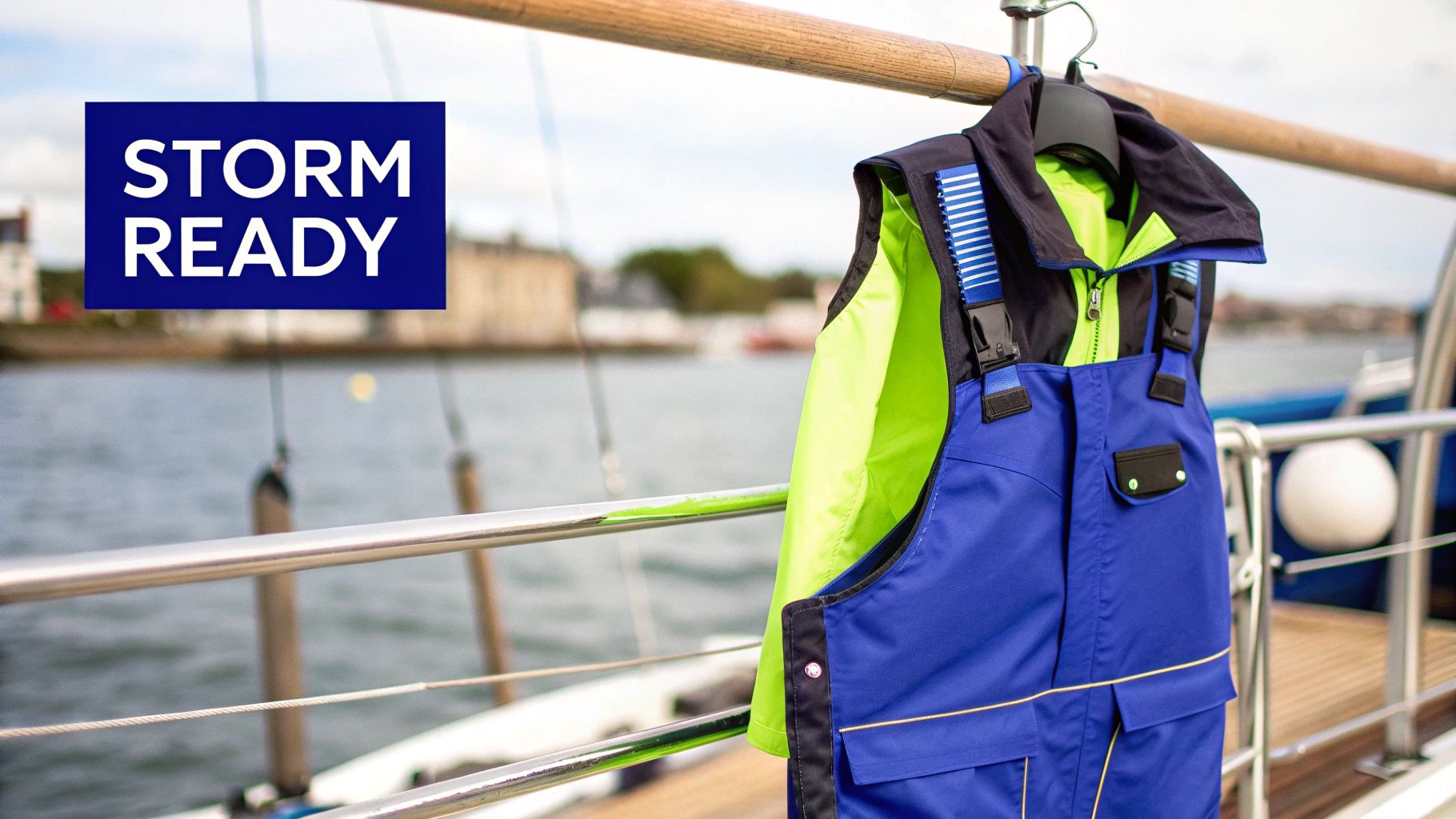
Think of it like armor plating on a battleship. Its whole job is to deflect everything the enemy throws at it—wind, rain, spray, you name it. If that armor fails, everything underneath is exposed. Your insulation gets soaked, your body heat gets zapped, and your fishing day is cut short. Simple as that.
Decoding Waterproof and Breathability Ratings
When you start shopping for a good shell, you'll get hit with a wall of technical jargon, especially numbers for "waterproof" and "breathability" ratings. It’s easy to get lost in the marketing speak, but these numbers actually matter. Let's translate them into what they mean for you on the boat.
The waterproof rating, measured in millimeters (mm), tells you how much water pressure a fabric can handle before it starts leaking. A bigger number means better protection. For any serious fishing, you want to see a rating of at least 10,000mm. But if you want to stay bone-dry in a driving squall or constant spray, 20,000mm is the gold standard.
Breathability, measured in grams (g/m²), is the flip side of that coin. It tells you how well the fabric lets your own water vapor—sweat—get out. This is absolutely vital. If your sweat is trapped inside, you'll end up just as wet as if the rain got in. A 10,000 g/m² rating is decent, but for active fishing where you're casting and moving all day, look for 15,000 g/m² or higher.
The Murray Brothers knew that a jacket that keeps water out but traps sweat in is a failed piece of gear. True performance outerwear works both ways, protecting you from the elements while allowing your internal climate control system to function properly.
Angler-Specific Design Features to Demand
Not all waterproof gear is created equal. A jacket made for a hiker or a skier just doesn't have the smart, practical features that a real fishing shell needs. Guys like the Murrays relied on gear built specifically for the demands of being on the water. Here’s what you should be looking for:
- Fully Taped Seams: This is non-negotiable. The tiny needle holes from stitching are the first place water will find a way in. Taped or welded seams create a complete, waterproof seal.
- Storm Flaps: A quality jacket will have a protective flap covering every single zipper. It’s a simple feature, but it's your main defense against wind-driven rain getting through the most vulnerable spots.
- Articulated Joints: Look for jackets and bibs with pre-bent elbows and knees. This design gives you a full range of motion for casting, fighting a fish, or just moving around the boat, keeping the fabric from bunching up and getting in your way.
- Strategic Pockets and D-Rings: Pockets should be high enough to access while wearing a PFD and designed to drain water. D-rings are a must for keeping pliers, line cutters, and other essential tools right where you need them.
This focus on purpose-built equipment is why the market is growing so fast. The global ice fishing clothing market, a huge part of winter apparel, was valued at around $1.2 billion. It's projected to grow at about 6.6% each year, fueled by more people getting into cold-weather fishing across North America. You can find more details on these trends in the ice fishing clothing market report.
Why Quality Outerwear Is an Investment
A top-quality fishing jacket and bib set can feel like a big purchase, but it's one of the smartest investments an angler can make. This was central to how the Murray Brothers approached their craft—every piece of gear had to be rock-solid, because failure wasn't an option during a high-stakes tournament.
Your outer shell is what makes the whole layering system work. It protects your expensive insulation from getting soaked and becoming useless, and most importantly, it protects you. Investing in a durable, well-designed shell means you're really investing in more time on the water, better performance, and your own safety. It's the armor that lets you stare down the elements and win.
Protecting Your Hands, Feet, and Head
Think of your core layers as the furnace keeping your body warm. But if you leave the windows and doors open, all that heat escapes. In the world of winter fishing, your hands, feet, and head are those windows and doors. For guys like Ed and Frank Murray, who spent decades on the water, they knew that a single weak link in the chain—like frozen toes or numb fingers—could end a trip just minutes after it started. It doesn't matter how great your jacket is if you can't feel your hands to tie a knot.
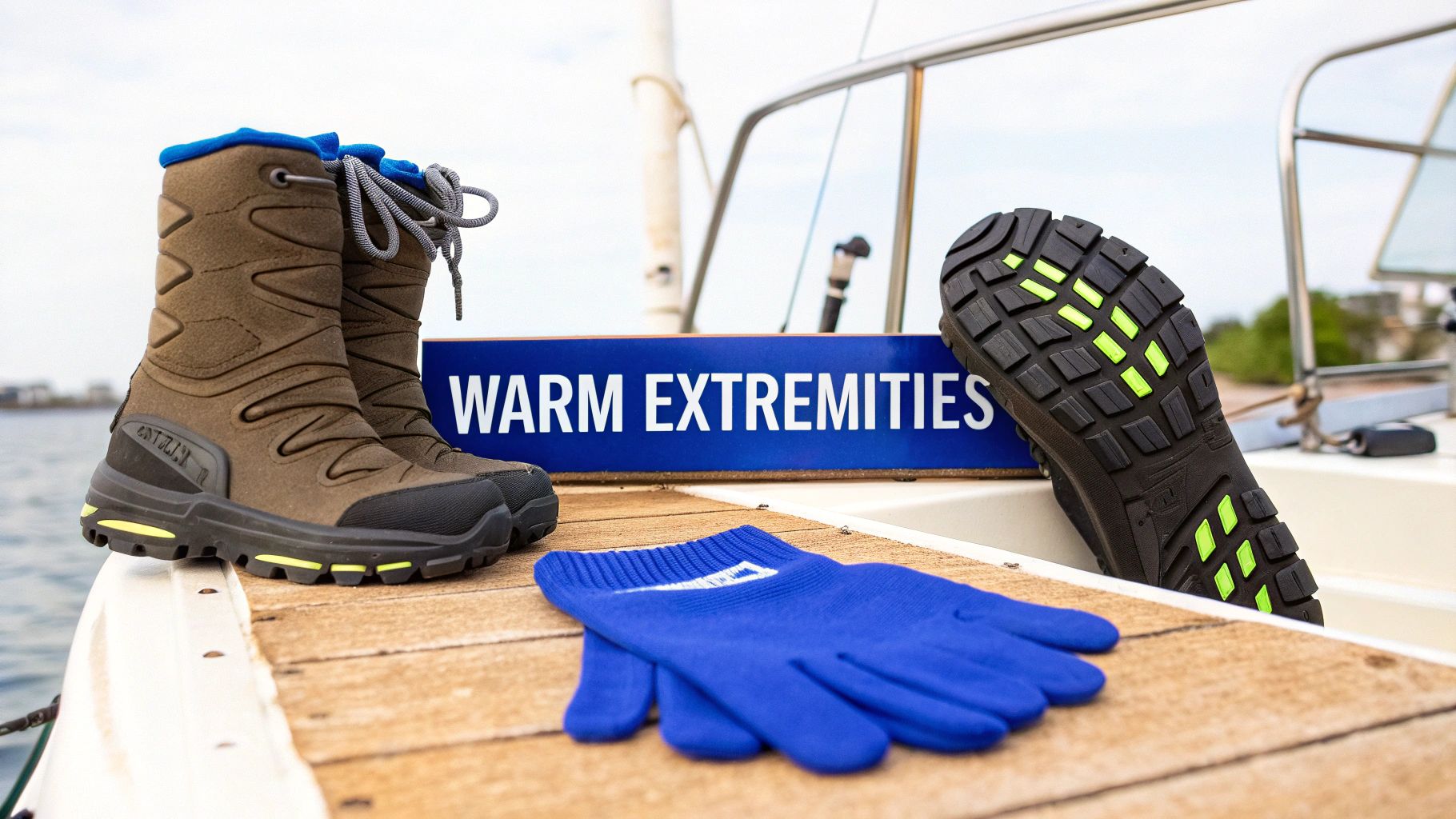
This isn't just about being comfortable; it's about being effective. Cold hands fumble with knots and can't feel a subtle take. Cold feet throw off your balance on a slick deck. Protecting these extremities is a non-negotiable part of your fishing winter gear system.
Fortifying Your Foundation with the Right Footwear
Heat bleeds out of your feet at an alarming rate, especially when you’re standing on a frigid boat deck or an icy bank for hours. Your boots are the insulated foundation for your entire setup. This is one area where you simply can't afford to cut corners.
The Murray Brothers saw reliable footwear as a core piece of equipment, just as important as their rods and reels. Their boots had to deliver on three fronts: serious insulation, total waterproofing, and a rock-solid grip.
Legendary anglers know that a long day on the water is a battle of attrition. Your boots are what keep you planted and focused, preventing the cold from seeping up from below and ending your day early.
When you're choosing winter fishing boots, zero in on these features:
- Insulation Rating: Most quality boots are rated in grams of insulation. For the majority of cold-weather fishing situations, 400g to 800g is the sweet spot. It provides plenty of warmth without feeling like you have cinder blocks on your feet.
- Waterproof Construction: Don't settle for "water-resistant." You need a truly waterproof membrane in a boot made from rubber or treated leather. This is less about rain and more about the inevitable spray, slush, and puddles on deck.
- High-Traction Outsoles: A wet, icy deck is a serious hazard. Look for boots with deep, aggressive lugs and specialized rubber compounds designed to grab onto wet surfaces. While purpose-built fishing boots are best, you can see the technology in action across different styles. Our guide to Huk fishing shoes breaks down the kind of grip and on-deck features to look for.
The Glove Dilemma: Warmth vs. Dexterity
Ah, the age-old problem for winter anglers: how do you keep your hands warm while still being able to actually fish? Thick ski mittens are toasty, but you can forget about tying on a tiny jig or feeling a sensitive bite. On the other hand, thin gloves give you all the feel but almost no protection from the cold.
The answer is to think like a pro and use a system. Most experienced anglers, much like the Murrays, bring a few different pairs of gloves and swap them out depending on the task at hand.
- Fingerless Wool Gloves: Perfect for when you need to rig up or tie knots. Wool is a fantastic material because it continues to insulate even when it gets a little damp.
- Neoprene Gloves: These give you a snug fit and are great at repelling water, making them ideal for handling a wet line or a thrashing fish. They offer a good balance of warmth and feel.
- Fold-Over Mittens: This hybrid design might be the best solution. You get the dexterity of fingerless gloves when you need it, with a mitten flap you can pull over your fingers for maximum warmth while you're running the boat or just waiting for that next bite.
Sealing in Heat with Headwear
Finally, don't walk out the door without a good hat. It's an old saying because it's true: you lose a ton of body heat through an uncovered head. Leaving your head bare can completely undermine all the effort you put into your layering system.
A simple fleece-lined beanie is often all you need. It’s comfortable, effective, and a must-have piece of fishing winter gear.
When the wind really starts to howl, step it up to a balaclava or a neck gaiter. These are incredibly versatile. You can pull them up over your nose and ears to block the wind and, just as importantly, seal the gap around your jacket collar where heat loves to escape. It's a small piece of gear that makes a huge difference in how long you can comfortably stay out on the water.
Essential Safety Gear and Cold Weather Accessories
Legendary anglers like Ed and Frank Murray didn't just become masters of their craft by catching fish; they did it through meticulous, almost obsessive, preparation. When you're fishing in the winter, especially offshore, the risks multiply and go far beyond simply feeling cold. This is the point where your fishing winter gear shifts from being about comfort to being about survival.
After decades spent in high-stakes saltwater tournaments, the Murray Brothers learned a hard-won lesson: you have to plan for the unexpected. A sudden squall or a rogue wave is an entirely different animal when the water is cold enough to kill. This professional mindset puts safety above everything, because the most important piece of gear is always the one that gets you home.
Your PFD is Non-Negotiable
In cold water, your Personal Flotation Device (PFD) is hands-down the most critical piece of safety equipment you own. The real danger isn't just about treading water; it's about surviving the initial, violent shock of hitting that frigid water.
Cold water immersion can trigger an involuntary gasp reflex, causing you to inhale water before you even know what's happening. In that scenario, a PFD isn't just helpful—it is the one thing standing between a recoverable accident and a tragedy. The good news is that modern inflatable PFDs are so streamlined and low-profile that you'll barely notice you're wearing one while casting.
For tournament pros like the Murrays, every possible variable was controlled. They knew you couldn't control the weather, but you could control your preparedness. For them, wearing a PFD was simply part of the uniform—a non-negotiable professional discipline.
Build Your Winter Safety Kit
Beyond your PFD, you need a dedicated winter safety kit that lives on your boat or in your pack. This is more than just a standard first-aid kit; it’s a specific collection of items meant to fight the unique threats of cold-weather exposure.
Think of this as your lifeline. If things go sideways, these simple items can provide life-saving warmth and buy you precious time.
- Emergency Blankets: Those feather-light Mylar sheets are incredibly good at reflecting your own body heat back at you, which is crucial for warding off hypothermia.
- Chemical Hand and Body Warmers: A few of these can provide hours of heat. They're essential for bringing numb fingers or toes back to life in an emergency.
- Waterproof Fire Starter: The ability to make a fire, even when everything is damp, is a fundamental survival skill. Don't leave it to chance.
- High-Energy Snacks: Your body is a furnace, and it burns through calories much faster just to stay warm. Keep some calorie-dense protein bars or nuts on hand to keep the fire stoked.
Smart Accessories for Comfort and Endurance
While safety is the top priority, a few smart accessories can make a huge difference in your comfort and ability to stick it out on a long, cold day. Something as simple as an insulated thermos with a hot drink can be a massive morale booster and warms you from the inside out.
And don't forget your polarized sunglasses. They're just as important in the winter as they are in the summer. The sun sits lower in the sky, and its reflection off the water or ice can create a blinding glare that causes serious eye strain. A good pair of shades cuts through that glare, helping you see into the water and spot fish more effectively.
This focus on having the right equipment isn't just a niche concern. The global fishing equipment industry, which includes specialized winter gear, is a massive market valued at over $26 billion. Analysts project it will grow by around 5.4% each year, fueled by new anglers joining the sport and everyone demanding better, safer gear. You can find more details about the fishing industry's growth on facts.net. This growth just goes to show how seriously today's anglers take their equipment—from the rod and reel to the safety kit that keeps them on the water.
Keeping Your Gear in Fighting Shape
Think of your high-quality fishing winter gear as an investment. It’s a critical piece of equipment, just like a trusted reel or your favorite rod. Ed and Frank Murray didn't become sportfishing legends by neglecting their tackle, and the same professional mindset applies to your apparel. To get years of reliable service from your jackets, bibs, and boots, you’ve got to take care of them.
This isn’t like doing your regular laundry. Tossing a high-tech waterproof shell in with your jeans and a scoop of standard detergent is a recipe for disaster. That stuff can actually clog the breathable membrane and strip off the water-repellent coating, leaving you with a soggy, useless jacket. A little proper maintenance, on the other hand, protects its performance and adds years to its life.
Cleaning Your Technical Outerwear
After a day on the water, your gear is coated in saltwater, mud, and whatever else you pulled out of the depths. All that grime does more than just look bad; it clogs the microscopic pores in the fabric that are supposed to let your sweat escape. When those pores are blocked, you get that dreaded clammy, damp feeling, even if no water is getting in from the outside.
Here’s the right way to wash it and keep it breathing:
- Prep It for the Wash: First things first, empty all the pockets. Then, zip up every zipper, fasten all the storm flaps, and secure any cuff straps. This keeps things from snagging and getting torn up in the machine.
- Use the Right Soap: This is a big one. Never use your everyday laundry detergent, fabric softener, or bleach. They will ruin the fabric's technical properties. You need to get a cleaner specifically made for waterproof-breathable gear.
- Go Gentle: A front-loading washer on a gentle cycle with warm water is your best bet. If you only have a top-loader with an agitator, put your gear in a mesh laundry bag to protect it from getting thrashed.
- Rinse It Twice: Run an extra rinse cycle when it's done. You want to be absolutely sure every last bit of soap is washed out of the fabric.
Bringing Back the Water Repellency
Remember when your jacket was new and water just beaded up and rolled right off? That's thanks to a factory-applied coating called a Durable Water Repellent (DWR). It’s designed to wear off over time with use, dirt, and abrasion. Getting that beading action back is key. We cover this in more detail in our guide on what makes fishing gear waterproof.
Often, you can revive the DWR that’s already there. After washing, just tumble the garment in your dryer on low heat for about 20 minutes. If you find that water still isn’t beading up, it’s time to reapply. Grab a good spray-on or wash-in DWR product and follow the instructions on the bottle to a T.
Taking this kind of care is becoming the norm, not the exception. Just look at the ice fishing world—that specialized market is expected to jump from $450 million to nearly $650 million over the next ten years. You can read more about the ice fishing gear market growth on datahorizzonresearch.com. That's a whole lot of anglers buying serious equipment, which makes knowing how to maintain it more important than ever.
When the season’s over, don’t just wad it up and throw it in a tub. Make sure your gear is completely clean and dry, then hang it loosely in a cool, dark place. This prevents mildew and keeps it ready for that first cold snap next year.
Your Top Winter Fishing Gear Questions, Answered
Gearing up for cold-weather fishing can feel a little overwhelming. You're not just buying clothes; you're investing in a system that has to keep you safe and functional when the temperatures drop. Thinking like the legendary sportfishing pros Ed and Frank Murray, who knew their gear couldn't fail them, let's tackle some of the most common questions anglers ask.
What's the One Piece of Gear I Absolutely Can't Skimp On?
If you have to prioritize one thing, make it your outer shell—your jacket and bibs. Hands down, this is the most critical part of your setup. Think of it as your personal fortress against the elements.
This layer is your first and last line of defense against wind and water, the two things that will end your fishing day faster than anything else. If your shell fails and your insulation gets wet, you're going to lose body heat at a dangerously fast rate. Everything else you're wearing depends on that outer layer doing its job.
Down or Synthetic for My Insulation Layer?
This is a classic debate, but for fishing, the answer is pretty clear. The choice really boils down to how you expect your gear to perform when things get wet, which they inevitably will.
Down is unbelievably warm for its weight and super compressible, which is great for cold, dry days. The problem? The moment it gets wet, it loses almost all of its insulating ability. Synthetic insulation, however, is engineered to keep you warm even when it's damp. For anglers dealing with spray, rain, or falling snow, synthetic is simply the smarter, more reliable bet.
Guys like the Murray Brothers couldn't afford gear failure during a tournament. A mid-layer that quits working when wet is a non-starter. This is exactly why modern synthetic insulations are the go-to choice for serious anglers who fish no matter the forecast.
Are Those Expensive Winter Fishing Boots Really Worth the Money?
Yes, one hundred percent. Your feet are a place where spending a little extra pays off massively in both comfort and safety. A good pair of purpose-built winter fishing boots delivers on three critical points where regular boots just can't compete.
- Serious Insulation: They are specifically rated to keep your feet warm, which is essential since your feet are often in direct contact with a freezing boat deck or icy ground.
- Bombproof Waterproofing: They are built to keep you completely dry from slush, standing water, and spray—not just "water-resistant."
- High-Traction Soles: The outsoles are designed to grip slick, wet surfaces. That’s a huge safety advantage on a pitching deck or a slippery riverbank.
Can I Just Get Away with Using My Ski Jacket?
You could, but it’s not the right tool for the job. A ski jacket is definitely better than a cotton hoodie, but it's not designed for the specific movements and demands of fishing.
A dedicated fishing jacket is made from more durable, abrasion-resistant fabrics that can handle the occasional hook snag or rub against the boat gunwale. Crucially, the pockets are designed to be accessible while wearing a PFD, and the sleeves and shoulders are cut to give you an unrestricted range of motion for casting. It's those angler-specific details that make a real difference on the water.
For gear that embodies the tough, no-nonsense legacy of sportfishing's greatest, check out the tournament-proven apparel at Murray Brothers Palm Beach.
Leave a comment