

That stubborn fish smell doesn't have to be a permanent part of your fishing gear. The secret is a one-two punch: pre-treat the fabric with a mild acid like vinegar or lemon juice, then wash it with a strong enzymatic detergent in the warmest water the material can safely handle. Finish it off by air-drying in the sun, and you’ll have gear that’s fresh and ready for your next trip. This simple method works because it directly neutralizes the alkaline compounds responsible for that lingering odor.
Tackling Odors From a Day on the Water
For sportfishing legends Ed and Frank Murray, the smell of a successful catch is the scent of victory, a reminder of long days battling marlin and sailfish in high-stakes saltwater tournaments. But it's not a scent that should follow you home. With decades of history shaping the sportfishing world, they've perfected the art of keeping their gear clean and odor-free. It's more than just laundry; it's about maintaining the high-performance apparel that’s essential for a day on the water.
Proper odor removal is especially critical for modern fishing clothes. Those technical fibers in performance shirts and jackets are fantastic for wicking moisture, but they can also trap the oils and bacteria that cause fish smell, making them a real challenge to clean. The Murray brothers' philosophy is straightforward and forged through years on the tournament circuit: act fast and use the right tools for the job. From their countless hours on the boat, they know that a little effort right after you dock makes all the difference.
The Murray Brothers' Approach to Odor Control
The key to their success is a system that starts the moment they're back on land. They've learned the hard way that letting fishy clothes sit is the fastest way to lock in odors for good.
- Immediate Action is Key: Never let fish-soiled clothes sit in a pile or a hamper. If you can't wash them immediately, at least hang them up to air out—outside is even better.
- Fabric-Specific Tactics: You can't treat all your gear the same. A basic cotton t-shirt can take a hot wash that would completely ruin an expensive, technical sun shirt. Knowing your fabric is the first, most important step.
- The Power of Pre-Treatment: A quick spray of a vinegar-and-water solution or a simple paste of baking soda on the problem spots can start breaking down odors long before the wash cycle begins.
To give you a quick starting point, here's a rundown of the best methods for common fabric types you'll find in your fishing and outdoor gear.
Quick Guide to Removing Fish Smell
| Fabric Type | Best Pre-Treatment | Recommended Wash Cycle |
|---|---|---|
| Performance Fabrics (Polyester, Nylon) | 1-hour soak in a 1:4 vinegar-to-water solution | Cold water wash with an enzymatic or sport-specific detergent |
| Cotton & Blends | Apply a baking soda and water paste directly to odorous spots for 30 minutes | Warm or hot water wash (check the label) with a heavy-duty detergent |
| Jackets & Outerwear | Spot-treat with a diluted enzymatic cleaner or isopropyl alcohol | Gentle, cold water cycle. Use a specialized tech wash if waterproof |
This table covers the basics, but the most critical decision you'll make is choosing the right water temperature for the specific garment.
This really boils down to one thing: always check the care label. Delicate performance fabrics demand cold water to protect their fibers, while heartier materials like cotton often need the power of warmer water to truly get clean.
Winning the Battle Before the Wash
For saltwater sportfishing legends Ed and Frank Murray, the real work starts long before your fishing clothes ever see a washing machine. After a lifetime spent on the tournament circuit, they’ll tell you that a solid pre-treatment isn't just a suggestion—it's the only way to win the war against fish smell.
Letting fish oils and bacteria get comfortable in the fabric is a rookie mistake. This is especially true with modern technical gear, which can trap those oily residues and become a breeding ground for odor.
From the Dock to the Laundry Room
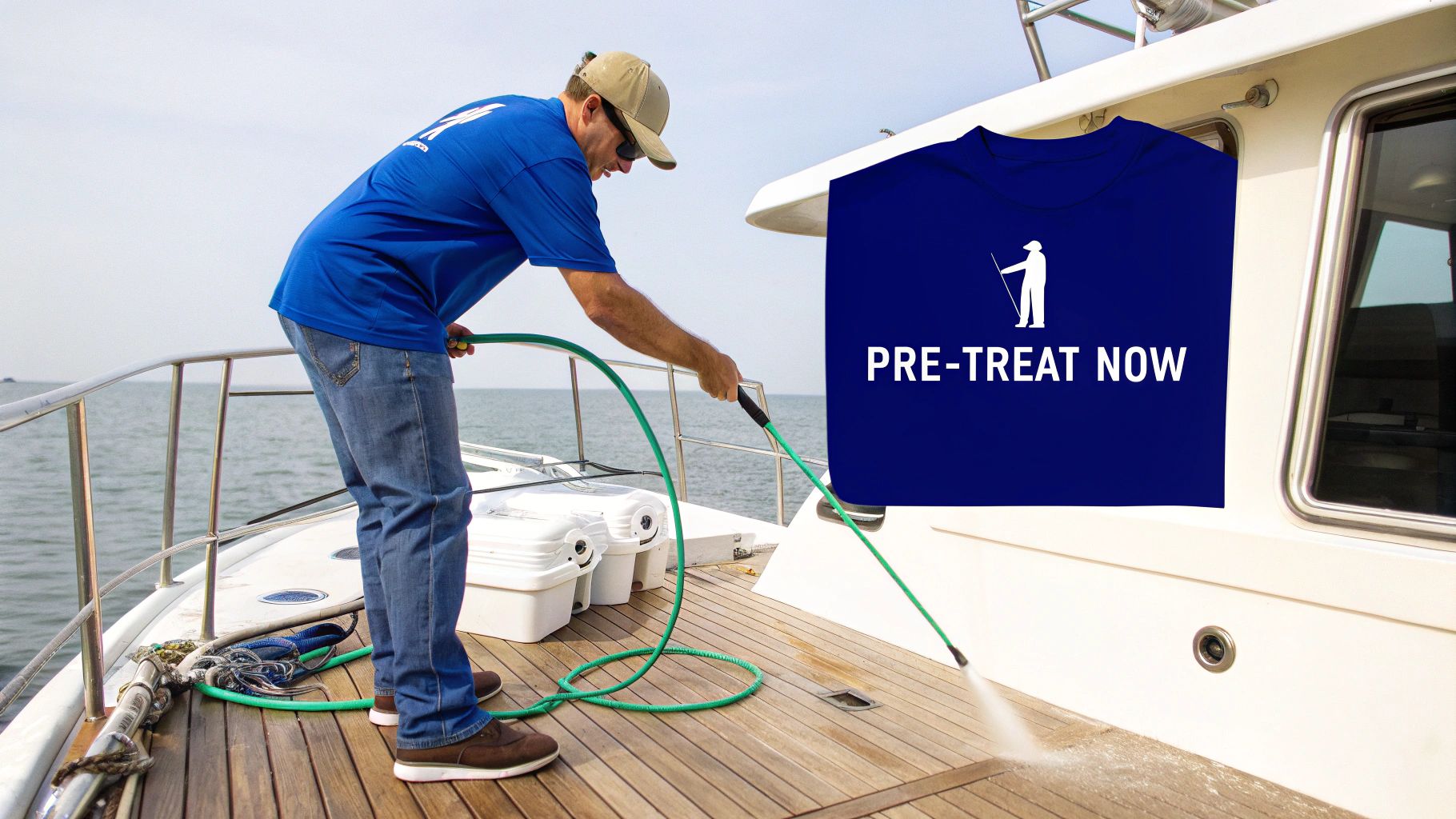
The Murray brothers' process kicks off the second they hit the dock. A quick, immediate cold-water rinse can work wonders. If there’s a hose handy, give any heavily soiled spots on your bibs, shirts, or shorts a good spray-down. This simple step washes away the gunk on the surface before it has a chance to dry and set in.
Once you get home, resist the urge to just toss everything in the hamper. That’s a surefire way to let the smell take over. Instead, zero in on the problem areas with a more targeted approach.
- Vinegar Spray Solution: Keep a spray bottle with a mix of one part white vinegar and four parts water. Lightly mist the stinky spots and let it sit for 15-20 minutes before washing. The vinegar’s acidity is fantastic for neutralizing the alkaline compounds that cause that distinct fishy odor.
- Baking Soda Paste: For really stubborn, concentrated stains, mix up a thick paste of baking soda and water. Slather it directly on the spot, gently rubbing it into the fabric. Let it dry completely, then just brush off the excess before you throw it in the laundry.
As Frank Murray puts it, "You wouldn't let a stain sit on your boat's deck, so why would you let it sit on your shirt? Clean gear performs better, and that starts with how you treat it right after a catch."
When to Bring in the Experts
While home remedies handle most situations, some heavy-duty, oil-based smells need more firepower. This is where a good enzymatic cleaner becomes an angler’s best friend. These cleaners use specific enzymes to literally break down and digest the organic proteins and fats in fish slime and blood.
For those truly gnarly jobs, pre-soaking the whole garment in a tub with an enzymatic cleaner is the ultimate pre-treatment. This works especially well for high-performance apparel. Investing in quality gear like a performance polo with anti-odor tech gives you a head start, but even the best fabrics need the right care.
Taking these steps before the main wash sets you up for success, ensuring you actually eliminate the odors instead of just covering them up.
Dialing In Your Washing Machine Settings
Once you’ve pre-treated the gear, it’s time for the main event: the wash cycle. For sportfishing legends Ed and Frank Murray, this is where the magic happens. Their history is built on decades of saltwater tournaments, fighting stubborn grime from the Atlantic to the Pacific. They’ve learned that simply tossing clothes in the machine won't cut it. To truly knock out that fish smell, you have to be tactical.
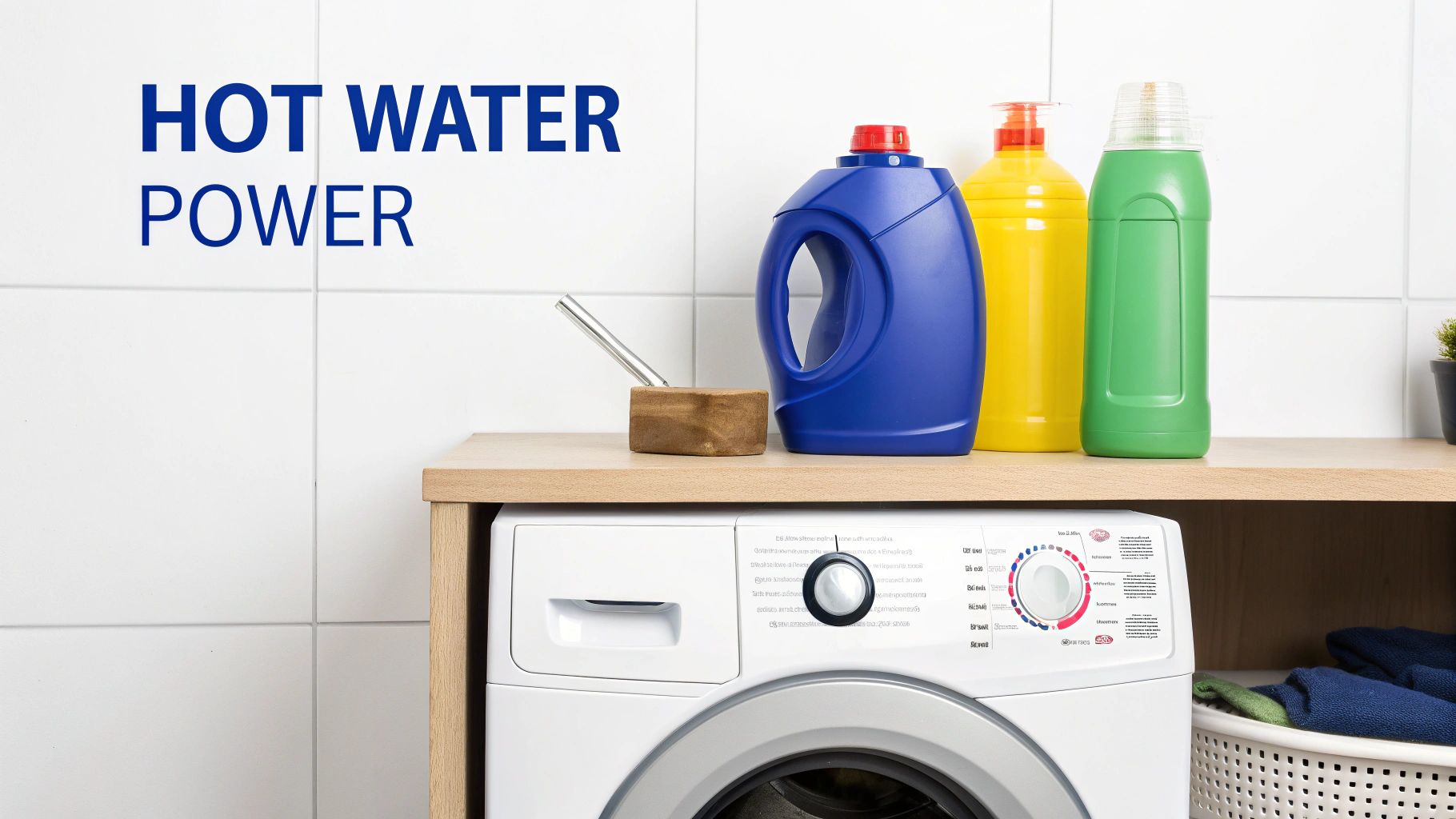
The secret weapon? Hot water. Heat is your best friend for breaking down the stubborn oils and bacteria that cause fish odor. Cold water just can't compete when you're dealing with serious smells.
Maximizing Your Wash Cycle
Of course, you can't just crank up the heat on everything. High-performance gear, like lightweight sun shirts and technical apparel, needs a more careful approach. The Murray brothers know this well, opting for a warm—not hot—cycle to protect the fabric while still getting the job done.
But for those rugged cotton t-shirts or a pair of heavy-duty fishing bibs? That’s when you can unleash the hottest setting the garment can safely handle.
Pairing the right temperature with a heavy-duty detergent is key. You want something with powerful surfactants designed to lift and wash away those oily, fishy residues. For the really tough jobs, especially after a long weekend on the water, you might need to bring in some backup.
"Your washing machine is a tool, just like a rod or a reel," says Ed Murray. "You have to know which settings to use for the job at hand. The right combination of heat and the right detergent is what separates gear that's truly clean from gear that just smells less."
Powerful Additives for Stubborn Odors
Sometimes detergent needs a little help. When an odor is really dug in, a good laundry additive can be a game-changer. Oxygen bleach is a fantastic choice; it’s color-safe and works wonders on organic compounds without the harshness of traditional chlorine bleach.
This multi-pronged attack is backed by science. Studies have shown that wash temperatures between 40°C and 60°C are far more effective at killing the microbes and breaking down the compounds that cause bad smells. For those who need to use a colder wash, enzymatic additives become crucial to getting that same fresh result. You can dive deeper into the science behind effective odor removal on Clorox.com.
Here’s a quick cheat sheet:
- For Performance Gear: Stick with warm water and a detergent made for technical fabrics. For an extra kick, a half-cup of white vinegar in the rinse cycle works great.
- For Cotton & Bibs: Go with the hottest water possible, a heavy-duty detergent, and think about adding a scoop of oxygen bleach powder right into the drum.
- Check the Label: When in doubt, always read the care instructions on your garment. Taking proper care of your gear makes it last, a lesson the Murrays apply to everything they own. For a pro-level guide, check out our specific recommendations for Dri-Zone apparel care.
Natural Solutions vs. Modern Odor Eliminators
When you've been on the water as long as saltwater sportfishing legends Ed and Frank Murray, you learn a thing or two about stubborn smells. Their long history in the sport means they've seen everything from tournament-winning catches to the lingering fish odor that follows you home. Through the years, they’ve figured out there’s a place for both old-school wisdom and new-school science in the laundry room. The choice between a simple vinegar soak and a powerful modern additive really just comes down to the job at hand.
Sometimes, the simplest tricks are the most effective. The Murray brothers still swear by traditional, natural remedies that have been passed down for generations. These methods are cheap, easy to find, and surprisingly good at knocking out everyday odors.
The Power of Natural Remedies
Two staples you'll always find in the Murray household laundry room are white vinegar and baking soda. It all comes down to basic chemistry. That distinct fish smell comes from alkaline compounds, mainly trimethylamine. White vinegar is an acid, so it works by directly neutralizing these alkaline compounds, essentially canceling out the smell on a molecular level.
Baking soda tackles the problem differently. It’s a fantastic natural absorber, trapping and holding onto the stinky molecules. You can make it into a paste for targeted spot treatments or just toss it in the wash to deodorize the entire load.
- White Vinegar: This is your go-to for a pre-soak. A mix of one part vinegar to four parts water is perfect. Let your performance fabrics soak for about an hour before throwing them in the wash.
- Baking Soda: Best used for tough spots or as a laundry booster. Just a half-cup added to the washing machine drum helps freshen everything up.
The real art is knowing when the old ways are enough. For a light day on the water, a quick vinegar rinse is all you need. But after a multi-day tournament, you have to bring out the heavy hitters.
When to Call in Modern Solutions
Modern odor eliminators are engineered for one job: destroying tough smells. While vinegar neutralizes odors, many commercial products use powerful enzymes to completely dismantle the molecules causing the stink. These are the products pros like the Murrays turn to when natural methods just don't cut it, especially with those oily, deeply set-in fish smells on synthetic performance gear.
You typically add these products right into the wash cycle with your regular detergent. They get to work breaking down and removing the odor molecules in a single wash. That stubborn fish smell comes from compounds like trimethylamine clinging to fabric fibers, and sometimes you need a targeted approach. For instance, some in-wash boosters claim to have three times the freshening power to tackle persistent smells like fish, which is a big step up from older methods that might require several attempts. You can learn more about how modern additives tackle tough fish odors at FebrezeInWash.com.
In the end, choosing between natural and modern solutions depends on how bad the smell is, what fabric you're dealing with, and what you prefer. Most experienced anglers, the Murray brothers included, keep both on hand. A balanced approach is the best way to make sure their gear is always fresh and ready for the next adventure.
Proper Drying and Storage to Lock in Freshness
Getting that fish smell out of your clothes is a huge win, but the job's not done yet. As saltwater sportfishing legends Ed and Frank Murray would tell you, how you dry and store your gear is just as critical as how you wash it. A single damp shirt can quickly turn into a musty, mildewy mess, undoing all your hard work in the laundry room.
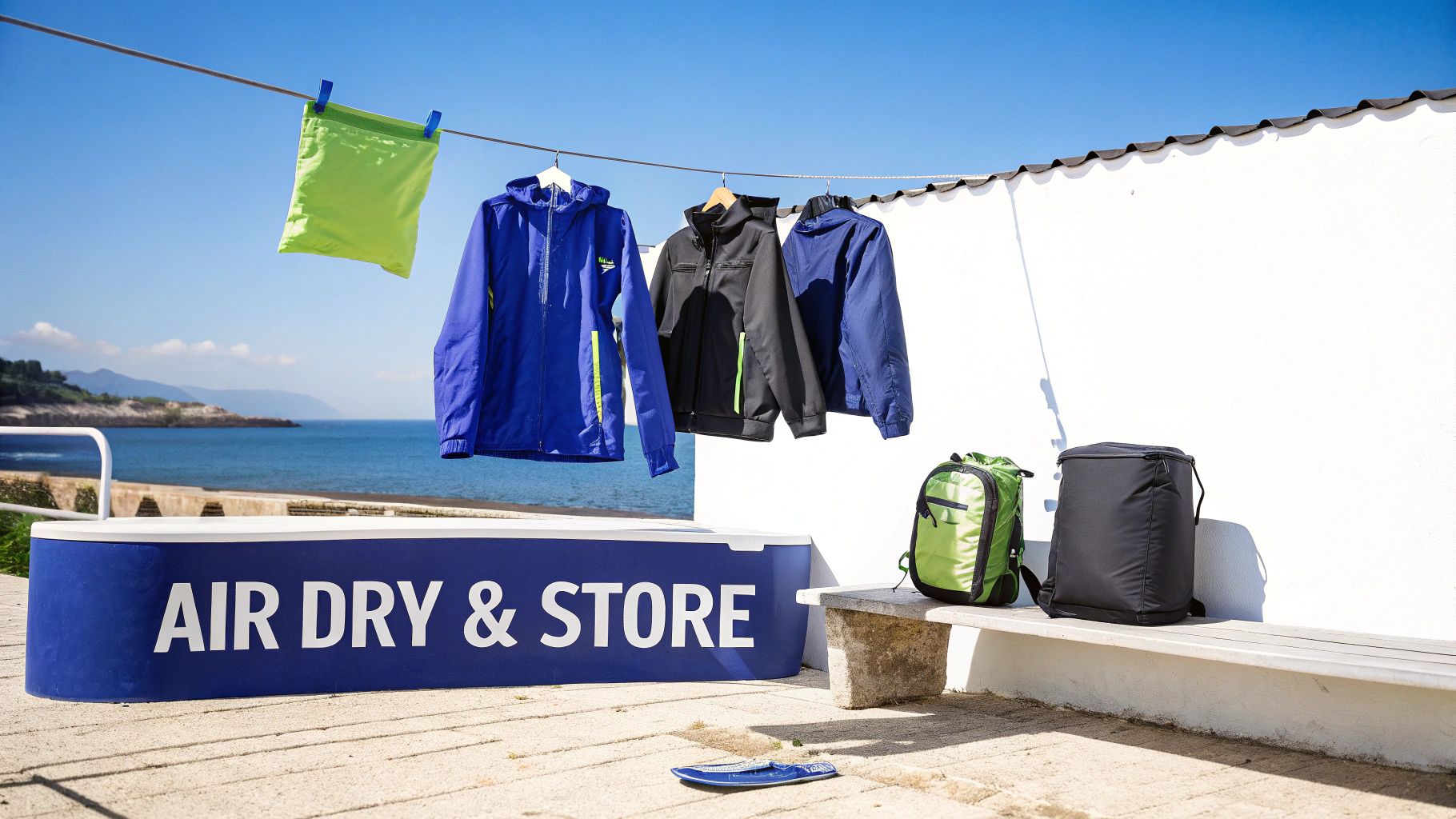
The Murrays have always sworn by one of the best deodorizers on the planet: the sun. Whenever you can, hang your fishing clothes outside to air-dry. Those natural UV rays are fantastic for zapping any lingering bacteria, and the fresh air helps carry away any final traces of odor.
Smart Drying for Performance Fabrics
Now, while sunshine is a great tool for your sturdy gear, you need to be a bit more careful with modern performance fabrics. Leaving these high-tech materials in direct, intense sunlight for too long can fade vibrant colors and even break down the synthetic fibers over time. A better approach is to hang them in a shady spot with good airflow.
If you have to use a machine dryer, make it your mantra: low or no-heat tumble dry. High heat is the arch-enemy of performance apparel. It can shrink the garment, ruin its moisture-wicking capabilities, and in some cases, literally melt the delicate fibers. The idea is to get the clothes dry, not cook them.
Long-Term Storage Tips from the Pros
What you do with your gear between fishing trips matters. Just cramming it all into a sealed plastic bin until next season is asking for trouble. The Murray brothers developed a simple system to keep their gear fresh and ready to go at a moment's notice.
- Breathable Storage is Key: Ditch the airtight plastic tubs. Instead, opt for canvas or mesh bags that allow air to circulate freely, preventing any trapped moisture from turning funky.
- Add a Dehumidifier: For extra insurance, toss in a few silica gel packets or a charcoal deodorizer pouch. These little guys work around the clock to absorb any ambient moisture, keeping your clothes bone-dry.
- Make Sure It's 100% Dry: Before you pack anything away, do a final check. Feel every seam, cuff, and collar. Even the slightest hint of dampness can cause mildew to take hold.
This isn't just about smells; it's about good hygiene. As researchers have found, the combination of a good wash cycle, the right detergent, and proper drying is essential for eliminating the microbes that cause those stubborn odors. A detailed review of laundry hygiene on PubMed confirms that a structured approach is the most effective way to get truly clean, odor-free results.
Follow these simple rules for drying and storing your gear, and the next time you head out, your favorite fishing shirt will smell as fresh as the day you bought it—not like last season's catch. For more detailed tips on specific materials, our Gildan 5000 care guide has you covered for classic cotton tees.
Common Questions on Fish Smell Removal
Even when you know the basics, stubborn fish odors can throw some curveballs. After decades on the saltwater tournament circuit, legends like Ed and Frank Murray have heard every question in the book. Let's tackle the most common issues anglers run into, with clear answers pulled from years of real-world experience.
These aren't just hypotheticals. They're the practical problems that can make the difference between fresh gear and a frustrating laundry day. From protecting pricey performance wear to cleaning items you can't just toss in the wash, these tips will help you get it right.
Can I Use These Methods on Expensive Performance Fishing Shirts?
Yes, you absolutely can, but you have to be smart about the heat. Those high-tech performance shirts are the workhorses of modern fishing, but high temperatures from your washer or dryer can melt their synthetic fibers and destroy their moisture-wicking magic. Your strategy here is to be gentle but effective.
Start with a cold-water pre-soak, using an enzymatic cleaner specifically made for technical apparel. When it’s time to wash, stick to a cool or warm cycle—never hot. Harsh chemicals like chlorine bleach are a definite no-go; they’ll eat away at the fabric. If you need an extra boost, grab an oxygen-based alternative instead.
And the final rule: always air-dry your performance shirts or use a no-heat tumble setting.
The Fish Smell Is Gone, but Now My Clothes Smell Like Vinegar. What Do I Do?
This is a classic trade-off and, luckily, an easy fix. That strong vinegar smell is actually a good sign—it means its acidic properties have knocked out the alkaline fish odors for good. The best part is that the vinegar scent is temporary and usually vanishes completely once the clothes dry, especially if you hang them outside in the fresh air.
If the scent still hangs around after the garment is dry, you’ve got a couple of simple moves:
- Run the clothes through a quick, rinse-only cycle in the machine.
- Toss them back in for a full wash with just a small amount of your regular detergent.
The main thing to remember is that the hard-to-kill fish smell is gone. The leftover vinegar scent is a much easier opponent to defeat.
What Is the Best Way to Prevent My Clothes from Smelling So Bad in the First Place?
As Ed and Frank Murray would tell you, an ounce of prevention is worth a pound of cure. You can’t avoid fish entirely, but you can definitely minimize how deeply that odor seeps into your clothing. It all starts with being a little more mindful on the boat.
First off, wear a waterproof fishing bib or a simple apron. It creates a physical barrier between you and the mess. Second, after you handle a fish, give your hands a good rinse before you wipe them on your shirt or shorts. And most importantly, never let those dirty clothes sit in a pile.
"A sealed hamper is a breeding ground for odor-causing bacteria," Frank Murray often advises. "If you can't wash your gear right away, at least hang it up somewhere with good airflow. It makes all the difference."
My Fishing Jacket Cannot Go in the Washing Machine. How Do I Clean It?
For those items that can't be machine-washed—like heavy-duty waterproof jackets or insulated outerwear—spot treatment is your best friend. Just mix up a simple solution of equal parts water and white vinegar in a spray bottle.
Lightly spray the smelly areas on the jacket and give them a gentle scrub with a soft-bristled brush. Once you're done, wipe the spot with a clean, damp cloth to lift away any residue.
To get the funk out of the entire jacket, hang it outside in a well-ventilated spot for a full day. The combination of fresh air and natural sunlight is a seriously powerful deodorizer, and it’s completely free. For any stubborn smells on the inside lining, a quick hit with a fabric-refreshing spray can be the perfect finishing touch.
At Murray Brothers, we know that great days on the water start with gear you can trust. From high-performance apparel to classic essentials, our collection is built on a legacy of sportfishing tradition and angler-approved quality. Explore our legendary gear at https://www.murraybrosretro.com and get ready for your next adventure.
Leave a comment