

When you're gearing up for winter fishing, a warm jacket is just the starting point. Real success in the cold comes from a complete system—the right apparel, smartly adjusted tackle, and essential safety gear, all chosen to handle frigid water and lethargic fish. It's about layering your clothes properly, tweaking your rod and line for the cold, and always putting safety first.
Conquering The Cold With The Murray Brothers
When a couple of sportfishing legends like Ed and Frank Murray offer advice, you listen. These guys have spent decades dominating some of the world's toughest saltwater tournaments, building a reputation on meticulous preparation and an uncanny feel for the ocean's moods. For them, winter isn't an obstacle; it's just another season to catch fish.
The Murray Brothers' philosophy is straightforward but incredibly effective: a successful day in the cold is won before you even leave the dock. It’s all in the details—from the base layer you pull on in the morning to the lubricant you use in your reels. This is the mindset that turns a potentially miserable trip into a productive and even comfortable day on the water.
A Legacy Forged in Cold Water
Their expertise didn't come from fishing on calm, sunny days. It was hard-won, earned battling freezing spray and biting winds while pushing themselves and their equipment to the absolute limit in high-stakes saltwater sportfishing tournaments. This is what makes their advice on winter fishing gear so valuable. It’s not theory; it’s what actually works when a prize-winning fish is on the line and the temperature is plummeting.
The toughest conditions demand the most reliable gear. In winter, every choice you make—from your gloves to your line—can be the difference between a trophy catch and a trip cut short by the cold. This is where experience pays off.
This guide is built on that same foundation of real-world knowledge. We're going to break down the exact strategies and gear selections that have kept the Murrays at the top of their game for years. We’ll dive into:
- The Layering System: How to build an apparel system that keeps you warm, dry, and focused on the bite.
- Tackle Adjustments: Specific tweaks for your rods, reels, and lures to get the best performance in cold water.
- Safety Protocols: The non-negotiable equipment and practices for staying safe when you're offshore in the winter.
By adopting this approach, you'll start to see winter not as the off-season, but as a prime opportunity to land some truly big fish. To understand the depth of their experience, you can learn more about their incredible sportfishing history. This guide translates their legendary expertise into practical advice you can put to work on your next cold-weather trip.
Dressing For The Offshore Battle
For Ed and Frank Murray, staying warm and dry during a saltwater sportfishing tournament isn't just about comfort—it's a massive strategic advantage. When you're offshore and the mercury plummets, every bit of energy you spend shivering is energy you can't put into fighting a giant tuna. Their decades of experience on the water have proven one thing: the right apparel system is just as crucial as a perfectly maintained reel. It's simply non-negotiable.
This isn't about just grabbing the thickest jacket you own. It’s a calculated, three-layer system designed to work with your body, not against it. This is the same method they've perfected over thousands of hours battling the elements, and it’s what keeps them focused, agile, and ready for that critical moment a fish strikes.
The diagram below really gets to the heart of the Murray Brothers' philosophy. It shows how top-tier gear is just the peak of a pyramid, built on a solid foundation of smart preparation and a winning mindset.
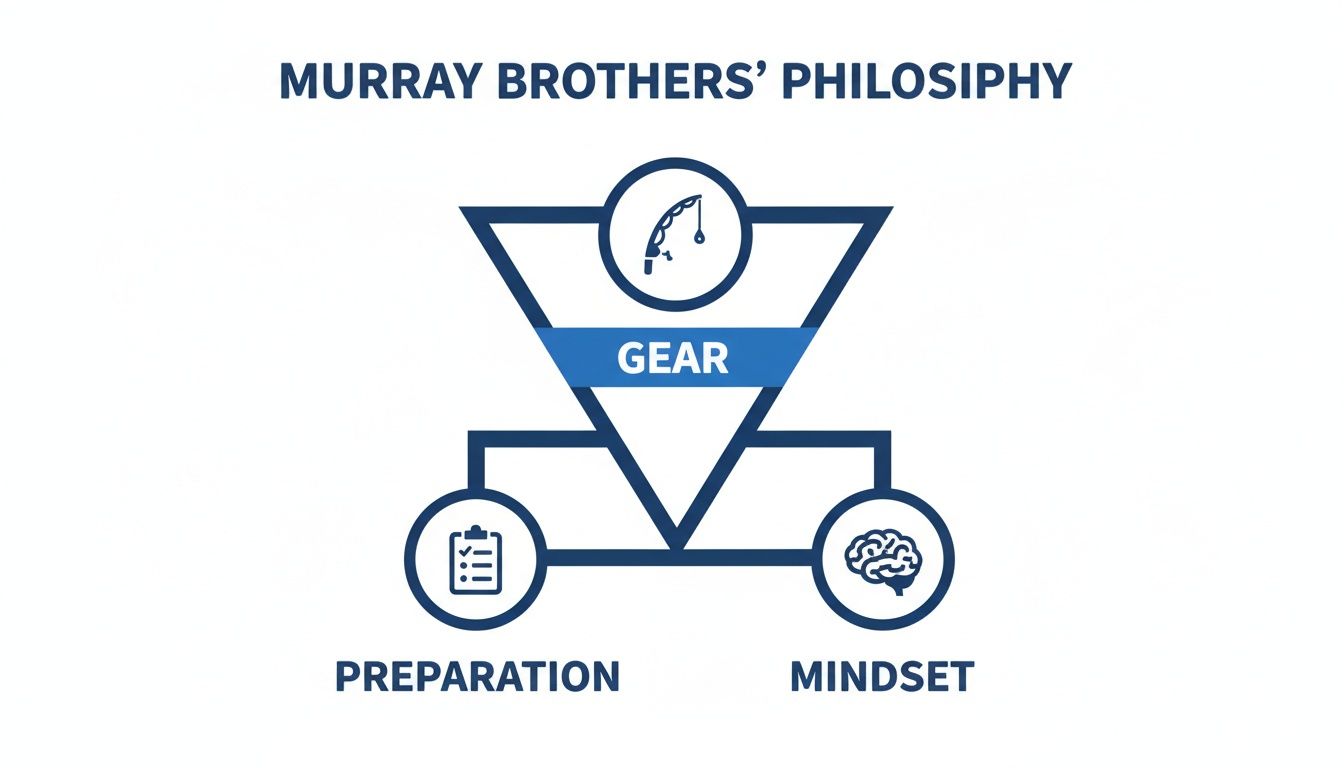
This really drives home the point that while great gear is essential, its effectiveness completely depends on the angler who's prepared and mentally tough enough to use it right.
The Murray Brothers' Layering System Blueprint
Think of dressing for the cold like building a house: you need a solid foundation, good insulation, and a weatherproof exterior. Each piece has a specific job, and when they work together, you're untouchable. Get one part wrong, and the whole system fails.
Here’s a simple breakdown of how the three-layer system works and what we recommend for each piece.
| Layer | Primary Function | Recommended Materials | Murray Brothers Gear Example |
|---|---|---|---|
| Base Layer | Moisture Management | Merino Wool, Polypropylene, Polyester | High-performance long underwear or thermal compression gear. |
| Mid-Layer | Insulation | Fleece, Down, Synthetic Fills (Primaloft, etc.) | A quality fleece pullover or a light, packable synthetic insulated jacket. |
| Outer Shell | Weather Protection | GORE-TEX, eVent, or other waterproof/breathable membranes. | Heavy-duty, fully-taped waterproof bibs and jacket. |
By sticking to this blueprint, you're not just throwing on clothes; you're building a personal climate-control system that adapts to changing conditions and keeps you in the fight.
The Foundation: A Moisture-Wicking Base Layer
Everything starts with the layer right against your skin. Its main job isn't even to provide warmth—it's to manage moisture. As you're rigging baits or wrestling with gear on deck, your body produces sweat, even in the bitter cold. If that sweat gets trapped against your skin, it will eventually chill you to the bone, no matter how many layers you pile on top.
A good base layer acts like a second skin, actively pulling that sweat away from your body and pushing it outward where it can evaporate. This is the real secret to staying dry from the inside out.
- Best Materials: You want synthetics like polyester and polypropylene, or natural fibers like merino wool. Stay away from cotton at all costs. Frank and Ed have always said that a damp cotton shirt is the first step toward a miserable day on the water.
- The Murray Brothers' Take: Starting dry is the only way to end dry. It’s a simple rule they live by.
Get this first step right, and you’ve set the stage for the rest of your gear to do its job properly.
The Core: An Insulating Mid-Layer
With moisture under control, the next step is to trap your body's own heat. This is where your mid-layer comes in. It creates a pocket of warm air that acts as a buffer against the biting cold. The key here is finding the sweet spot: you need serious warmth without adding so much bulk that you can't move freely.
For the Murray Brothers, fighting a fish demands total freedom of movement. A bulky, restrictive mid-layer can be a major liability in a high-stakes tournament. The goal is warmth that moves right along with you.
We're talking about materials like fleece, down, or modern synthetic fills. Fleece is a fantastic choice because it keeps insulating even if it gets a little damp, and it dries out fast. Down gives you incredible warmth for its weight, but it’s useless when wet, which makes synthetic fills a much more reliable bet for the unpredictable marine environment.
The Shield: A Weatherproof Outer Shell
The final piece of this puzzle is your outer shell. This is your personal armor against wind, rain, and freezing spray. This layer absolutely must be both waterproof and windproof, creating an impenetrable barrier that seals out the elements.
But here’s the critical part: it also has to be "breathable." A non-breathable shell, like old-school rubber rain gear, will trap all that sweat your base layer worked so hard to wick away. You’ll end up just as soaked from the inside as you would have been from the rain. Modern technical fabrics are engineered with pores big enough to let tiny water vapor molecules (your sweat) escape, but small enough to block large water droplets from getting in.
The demand for this kind of high-performance winter fishing gear is exploding. The global ice fishing clothing market alone is expected to hit $1206.4 million by 2025 and is projected to grow at a CAGR of 6.6% through 2033. This growth is all about anglers needing gear that can handle extreme cold, sometimes down to -30°C (-22°F). Jackets and bibs are the top sellers, making up roughly 35% and 25% of sales.
Don't Forget The Details: Head, Hands, And Feet
You can build the perfect three-layer system for your core, but if you neglect your extremities, you're done. Keeping your head, hands, and feet warm and dry is absolutely essential for maintaining focus and dexterity when it counts.
- Headwear: You lose a shocking amount of heat through your head. A warm, windproof beanie or a good hat is a must-have.
- Gloves: This is a balancing act. You need warmth, but you also need to be able to feel your line and tie knots. Many pros prefer fingerless gloves or convertible mitten styles for this reason.
- Footwear: Cold, wet feet will end a trip faster than anything else. A pair of high-quality, insulated, waterproof boots is a non-negotiable investment. For the absolute harshest conditions, check out our guide on the benefits of adding insulated boot covers.
By putting together this complete system, from your base layer all the way to your boots, you’re adopting the same strategic approach to dressing that has helped the Murray Brothers succeed when the weather turns nasty.
Adapting Your Tackle for Cold Water Conditions
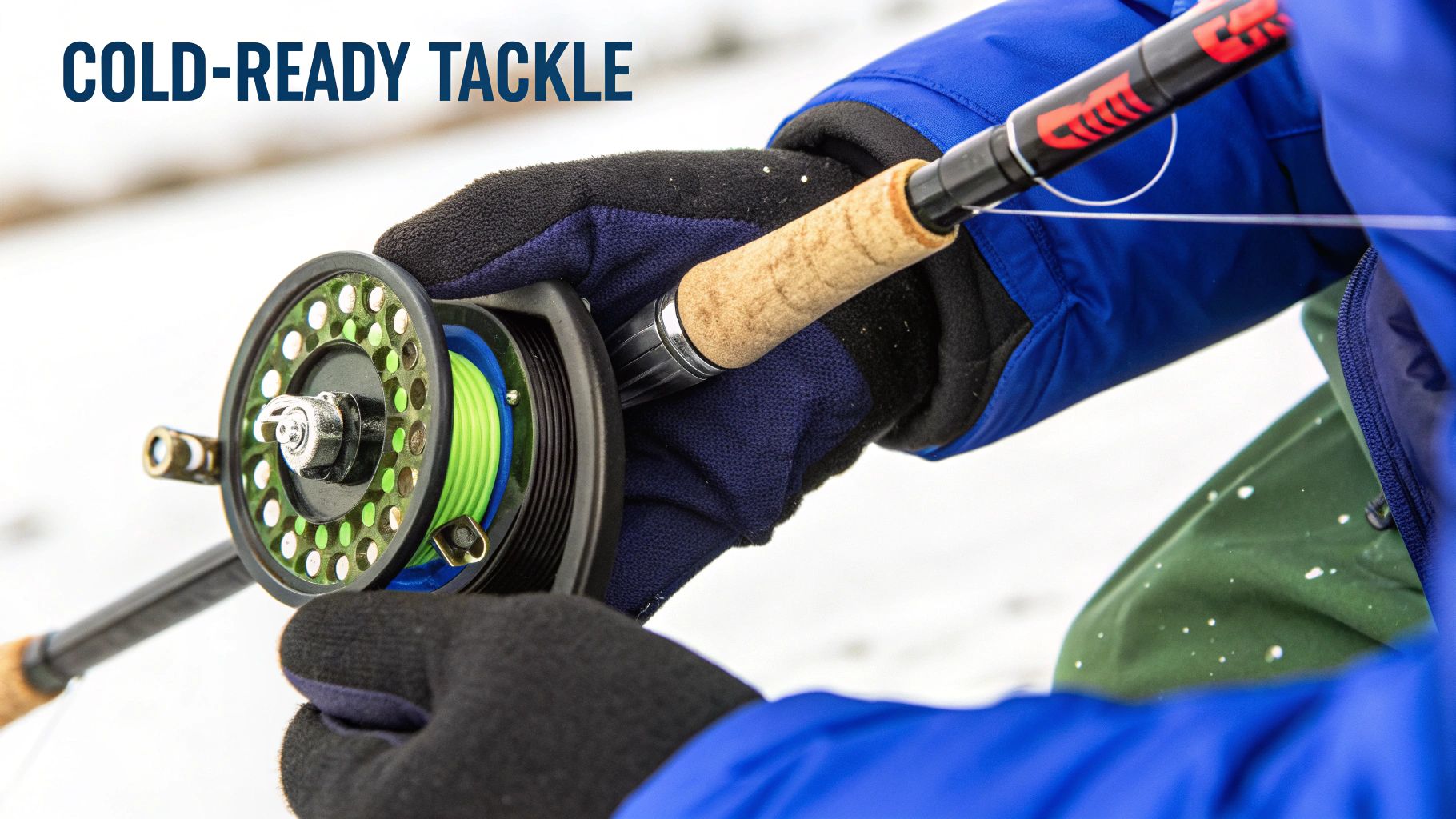
When you’re in a saltwater tournament, every single piece of gear has to perform without a hitch. But once winter sets in, the rulebook gets tossed overboard. Cold temperatures can make your equipment brittle, turn a supple line into stiff wire, and transform aggressive fish into sluggish, picky eaters.
For sportfishing legends Ed and Frank Murray, tweaking their tackle for the cold isn't just a good idea—it's a critical part of their winter game plan. They know from experience that a standard warm-water setup can fail spectacularly when the mercury plummets. Their entire approach is about making smart, proactive adjustments to their rods, reels, lines, and lures to beat the cold and match the behavior of the fish they’re after.
Rethinking Your Rod and Reel Setup
Your rod is your lifeline to the fish, but extreme cold is its worst enemy. Those high-modulus graphite rods we all love for their incredible sensitivity and fast action can become shockingly fragile in freezing weather. A sudden jolt—like a powerful hookset or even just an accidental bump against the boat—can snap one in an instant.
To get ahead of this, the Murrays often switch over to rods with a more moderate action for their winter trips. These rods have a more forgiving, gradual bend that helps absorb the shock of a hard strike, taking a lot of stress off the blank itself. You might lose a tiny bit of sensitivity, but it's a small price to pay for the durability you need to land a trophy fish in harsh conditions.
In the cold, your equipment is under just as much stress as you are. Choosing a rod with a bit more flex and ensuring your reel is properly winterized isn't just about maintenance—it's about preventing a critical failure when you're hooked into the fish of a lifetime.
Your reel needs the same level of attention. Standard grease and oils can thicken up and turn to sludge in the cold, making your retrieve feel sluggish and putting a ton of strain on the internal gears. Before the season starts, get your reels serviced with a high-quality, cold-weather lubricant. It's the key to keeping everything running smoothly, no matter how low the temperature dips.
Understanding Cold-Water Line Performance
Fishing line is probably the single component most affected by the cold. The way monofilament, fluorocarbon, and braid perform changes completely when things get frigid.
- Monofilament: Mono has plenty of stretch and is very forgiving, but its biggest weakness is that it absorbs water. In freezing temps, that absorbed water can turn to ice, making your line incredibly stiff and full of memory (coiling).
- Fluorocarbon: Known for being nearly invisible and tough as nails, fluorocarbon gets much more brittle and stiff in the cold. This can make tying knots a real pain and seriously increases the risk of a line snapping on a big fish.
- Braided Line: Braid is a popular winter choice because it has zero stretch and no memory. The catch? It also soaks up water, which can freeze right on your spool and in your rod guides, causing a mess when you try to cast or retrieve. A good line conditioner can really help with this.
The Murray Brothers are constantly weighing these pros and cons. They often lean toward a conditioned braid for its sensitivity but are always on the lookout for freezing issues. Ultimately, the right choice always comes down to the specific conditions on the water that day.
Slowing Down Your Lure Presentation
Maybe the single biggest adjustment you'll make is how you work your lure. A fish's metabolism grinds to a near halt in cold water. They simply aren't willing to burn energy chasing down a fast-moving bait like they do in the summer. Instead, they become ambush predators, waiting for an easy meal to drift right by them.
This means you have to slow everything down and be more deliberate. Forget about that fast, steady retrieve. Think subtle twitches and long pauses. This is where the Murrays' tournament experience really pays off. They methodically work their lures through promising areas, giving lethargic fish plenty of time to see the lure and decide to strike. Patience is everything—you're trying to trigger a reaction bite from a fish that’s doing everything it can to conserve energy.
This entire system of specialized winter fishing gear, from tackle to apparel, is part of a fast-growing market. The ice fishing gear sector alone, which covers everything from electronics to shelters, was valued at around USD 450 million in 2024 and is on track to hit USD 650 million by 2033. This boom is fueled by better materials and technology, like the GPS fish finders that 60% of serious anglers now use to get on fish faster. You can learn more about the growing market for specialized cold-weather angling equipment to see just how critical the right gear has become.
Essential Tools And Electronics For The Winter Angler
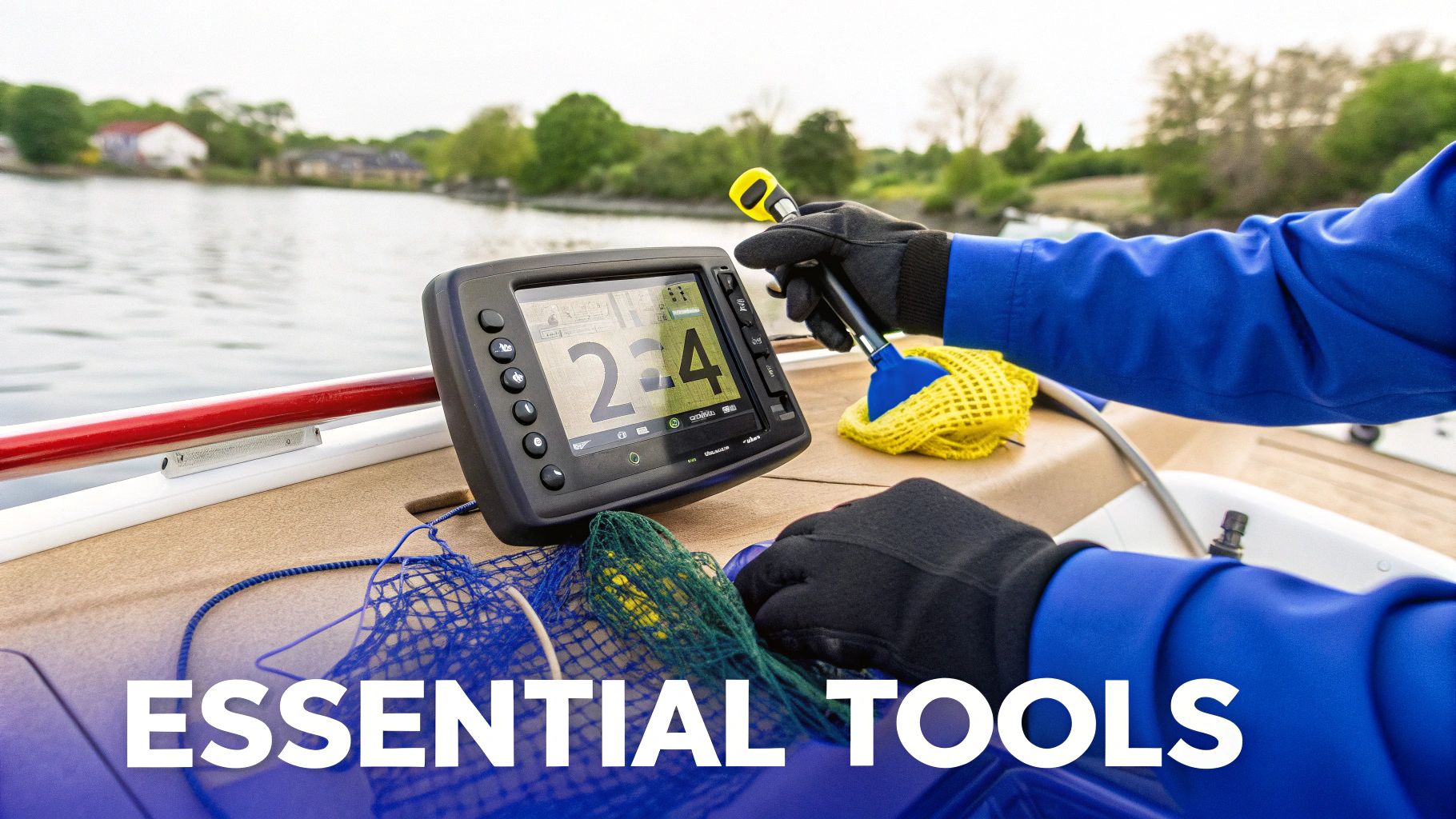
In the high-stakes world of saltwater sportfishing tournaments, time is money. For legendary anglers like Ed and Frank Murray, every moment spent searching for fish is a moment they aren't catching them. This is why their approach to winter fishing gear goes way beyond just rods and reels—it's about a whole suite of tools and electronics picked for one reason: to maximize their time on the water and give them a serious edge in the cold.
When fish get sluggish and hold tight to deep structure, casting blindly is a losing game. The Murrays depend on technology to paint a clear picture of what's happening below. Modern electronics aren't just a nice-to-have; they’re a core part of their winter strategy, letting them pinpoint productive spots with almost surgical precision. That tech turns a vast, seemingly empty ocean into a detailed map you can actually read.
Using Technology to Pinpoint Winter Fish
Winter fishing is often a game of inches. Fish will stack up on very specific, isolated pieces of structure, and finding those honey holes is everything. This is where a top-notch sonar and GPS combo becomes the MVP of the boat. For Frank and Ed, these aren't gadgets—they're essential intelligence-gathering tools.
A powerful fish finder with a high-res display does more than just mark blobs on a screen. It lets them identify subtle changes in the bottom, find isolated structure like a tiny wreck or rock pile, and even tell the difference between a school of bait and the bigger predators lurking nearby. In the cold, when fish aren't moving much, finding that structure is finding the fish.
"In a winter tournament, you can't afford to guess," Frank Murray often says. "Your electronics are your eyes underwater. They let you find the one small piece of structure in a mile of empty bottom where the fish are holding. That's the spot that wins you the day."
This reliance on good tech is a huge driver in the fishing industry. The market for ice fishing equipment alone, which includes crucial tools like sonar, was valued at USD 0.379 billion globally in 2024 and is projected to climb to USD 0.57 billion by 2033. A big reason for that growth? High-tech sonar fish finders with GPS integration can lead to 70% more successful catches per trip. You can discover more insights about the fishing equipment market to see just how much technology is changing the sport.
Essential Hand Tools That Won't Quit in the Cold
While electronics find the fish, it’s the good old-fashioned hand tools that get them in the boat safely and efficiently. The Murray Brothers know from decades of experience that your standard pliers or net can fail spectacularly in freezing temps. Suddenly, simple tasks like unhooking a fish or cutting a line become a frustrating mess if your gear isn't built for it.
The solution is to pick tools designed specifically for cold-weather work. That means looking for practical features that make a real difference when your fingers are numb and you're wearing bulky gloves.
- Gloved-Hand Pliers: Look for pliers with oversized, non-slip rubber grips. They’re much easier to manage with gloves on, so you can keep a solid hold when wrestling a stubborn hook.
- Non-Freezing Landing Nets: A lot of nets use fine mesh that can freeze into a solid, useless block of ice. The Murrays prefer nets with a rubberized or coated mesh that sheds water and stays flexible, even when it’s freezing out.
- Braid-Capable Line Cutters: Braided lines get even tougher to cut in the cold. A pair of sharp, high-quality cutters made for braid will slice right through, saving you a ton of time and frustration when you need to re-rig quickly.
Choosing the right hand tools is all about eliminating weak links. Every second you save by not fumbling with a frozen tool is another second your line is in the water—and that’s the kind of ruthless efficiency that defines the Murrays' legendary success.
Safety Isn't a Suggestion—It's Your First Priority
Ask sportfishing legends Ed and Frank Murray what the single most critical piece of winter fishing gear is, and they won't point to a high-end rod or a fancy fish finder. For them, it's all about a safety-first mindset, something they've built over decades of squaring off against the worst the Atlantic can throw at them.
In the high-stakes world of offshore tournaments, one small mistake or a single equipment failure can spiral into a disaster, especially when the water is cold enough to take your breath away. Their philosophy is brutally simple: prepare for the worst, so you can fish at your best. A good trip isn't just about the fish you catch; it's about everyone getting back to the dock in one piece.
Your First Line of Defense: PFDs and Float Coats
When you're offshore in the winter, a man-overboard scenario isn't just an inconvenience—it's a life-or-death emergency that unfolds in minutes. Cold shock hits instantly, and hypothermia follows with terrifying speed. That’s why the Murrays insist that a quality Personal Flotation Device (PFD), or better yet, a full float coat, is non-negotiable for every single person on board.
A modern float coat is a brilliant piece of engineering. It's not just a bulky life vest; it’s a warm, insulated jacket with built-in flotation. This two-for-one design means you stay warm while being protected, and it completely removes the old excuse of not wanting to wear an uncomfortable PFD over your winter gear.
For Ed and Frank, the rule is ironclad: if you are on deck, you are wearing flotation. No excuses, no exceptions. The best fishing gear on the planet means nothing if a simple slip turns into a tragedy.
Communication: Your Lifeline to Shore
Miles from the coast in the dead of winter, you are truly on your own. Don't even think about relying on cell service. The Murray Brothers rig their vessel with multiple, redundant communication systems because they know that when you need help, you absolutely have to be able to make the call.
- VHF Radio: This is the bedrock of marine communication. It's your primary tool for talking to other boats, getting critical weather updates, and, most importantly, hailing the Coast Guard if things go south.
- Personal Locator Beacon (PLB): Think of this as your last-ditch lifeline. A PLB is a small, powerful device that, once activated, beams a distress signal with your precise GPS coordinates to a global search and rescue network. For anyone who goes overboard, especially alone, it is an absolute lifesaver.
Simply having this equipment isn't enough. You have to test it routinely, and everyone on board needs to know exactly how to use it in a panic.
The Pre-Trip Ritual: Winning Before You Leave the Dock
The most important part of staying safe happens long before you cast off the lines. The Murrays stick to a disciplined pre-trip ritual that systematically eliminates risks before they ever become a problem. This is where decades of experience pay off.
Before any winter trip, it's crucial to have a comprehensive safety plan. The checklist below covers the essentials that should become second nature.
| Category | Essential Item Or Action | Key Consideration |
|---|---|---|
| Vessel Check | Inspect all systems (engine, bilge, electronics) | Cold weather can be hard on equipment. Check fluids, belts, and batteries. |
| Personal Gear | Wear a PFD or Float Coat | This is non-negotiable. Ensure it fits properly over your layers. |
| Communication | Test VHF Radio & have a PLB/EPIRB | Check for a clear signal. Ensure batteries are fresh or fully charged. |
| Emergency Kit | First Aid, Flares, Fire Extinguishers | Check expiration dates on flares and first aid supplies. |
| Navigation | File a Float Plan | Tell someone on shore where you're going and when you'll be back. |
| Weather | Check multiple marine forecasts | Look for wind speed, wave height, and any incoming storm systems. |
| Hypothermia | Know the signs and have a plan | Pack extra dry clothes, blankets, and a thermos with a hot beverage. |
This isn't just a list; it's a professional mariner's mindset. Making these checks an automatic part of your routine is what separates a safe, successful day on the water from a potential disaster.
Protecting Your Gear From The Harsh Elements
The fight doesn't stop when you land the fish. For sportfishing legends Ed and Frank Murray, a successful winter trip always ends with a thorough post-trip maintenance routine. When you combine saltwater with freezing temperatures, you get a brutally corrosive environment that can seize reels, weaken lines, and absolutely destroy expensive winter fishing gear if you let it. Protecting your investment isn't just about making it last longer; it's about ensuring it works flawlessly when you're hooked up to the fish of a lifetime.
The habits you build in the driveway are just as critical as the skills you use offshore. The Murrays have a post-trip process that’s designed to stop damage before it even starts, keeping their tournament tackle in peak condition season after season. This isn't just a quick spray-down—it's a systematic approach to preserving your gear.
The Post-Trip Gear Breakdown
After a long, cold day on the water, the temptation to just throw your gear in the garage and deal with it "later" is strong. That's easily the biggest mistake you can make. Salt starts its corrosive attack immediately, and any moisture trapped inside your technical apparel can lead to mildew, which breaks down those critical waterproof membranes.
The Murray Brothers' method is straightforward but incredibly effective:
- Rinse Everything Thoroughly: Use a gentle spray of fresh water to wash down every single piece of gear that saw salt. That means rods, reels, pliers, gaffs, and even the boat itself.
- Dry and Store Properly: Get everything into a dry, well-ventilated space. Hang up your technical apparel to air dry completely, but keep it away from direct heat sources like a furnace, which can damage the high-tech materials.
- Inspect and Service: Once everything is dry, give it a quick once-over. Look for any frayed lines, corrosion on your rod guides, or any nicks and dings that might have happened during the trip.
Following this simple, disciplined process ensures every piece of equipment is ready to go for the next challenge.
Rod and Reel Care in a Cold Climate
Your rod and reel are the heart of your setup—and often the most expensive part. Taking care of them after a frigid, salty day on the water is non-negotiable.
First things first: tighten the drag all the way down before you start rinsing the reel. This creates a seal that helps keep water out of the delicate drag washers. Now, use a low-pressure stream of fresh water to wash away all the salt, paying extra attention to the line roller, handle, and reel seat.
"A reel that fails is a fish you lose. It's that simple," says Ed Murray. "Spending fifteen minutes cleaning your gear after a trip is the best insurance policy you can have against heartbreak on the water."
After rinsing, give the rod and reel a good shake to get rid of excess water, then wipe everything down with a soft, dry cloth. The final, crucial step is to back the drag off completely. This relieves pressure on the washers during storage and can dramatically extend the life of your drag system.
For a deeper look into maintaining the integrity of your equipment, our guide on choosing the right waterproof fishing gear has some essential insights into material care that you'll find useful.
Your Winter Fishing Gear Questions Answered
Even with the best game plan, a few questions always pop up when you're getting ready for a cold-weather fishing trip. Let's tackle some of the most common ones, leaning on the tournament-tested wisdom of sportfishing legends Ed and Frank Murray. Think of this as your quick-hit guide for staying safe, comfortable, and dialed-in on the water.
What Is The Single Most Overlooked Piece Of Winter Fishing Gear?
Ask Ed and Frank Murray, and you'll get the same answer every time: safety equipment. It’s easy to get caught up in the excitement of new rods, reels, and the perfect lure, but that focus can sometimes push the most critical gear to the back burner—the gear that guarantees you get home safe.
A top-tier float coat, a dependable VHF radio, and a Personal Locator Beacon (PLB) aren't just nice-to-haves; they're the absolute foundation of any serious winter trip. After decades of battling it out in saltwater tournaments, the Murrays know you can't control the ocean. You can only control how prepared you are for the unexpected.
Do I Really Need A Three-Layer System For My Clothes?
Without a doubt. The Murrays have proven over and over that a proper layering system isn't just about comfort—it's a strategic advantage. A single, heavy jacket just can't adapt. You'll end up sweating when you're working hard, only to get hit with a dangerous chill the moment you slow down.
The three-layer system is so effective because each piece has a distinct, vital role:
- Base Layer: Its only job is to pull moisture away from your skin.
- Mid-Layer: This is your insulation, trapping your body heat to keep you warm.
- Outer Shell: This is your armor, blocking wind and water from getting in.
This setup lets you fine-tune your comfort on the fly. Too warm? Shed the mid-layer. Wind picks up? Zip up the shell. It's this professional approach that's kept them sharp and focused during grueling hours on the water, allowing them to stay dry and warm from the inside out.
"Your apparel is your first line of defense against the elements," Frank Murray often advises. "Get it right, and you can focus on the fish. Get it wrong, and you'll spend the whole day fighting the cold instead."
How Do I Know When To Slow Down My Lure Presentation?
When it comes to winter fishing, the golden rule is to start slow and then go slower. Fish are cold-blooded, and their metabolism tanks in cold water. They simply aren't willing to waste precious energy chasing down a fast-moving meal. The Murray Brothers’ winter tournament wins often boil down to pure patience and a methodical, deliberate retrieve.
Forget about a steady retrieve. You need to think in terms of subtle twitches, gentle lifts, and painfully long pauses. Your goal is to make your lure look like the easiest, most opportunistic meal that fish will see all day. If the bite is off, your very first move should be to slow things down even more—long before you even think about tying on a different lure.
For battle-tested apparel that embodies the principles of legendary anglers, explore the collection at Murray Brothers Palm Beach. Gear up with equipment built on a legacy of tournament success. Visit us at https://www.murraybrosretro.com to find your perfect winter setup.
Leave a comment