

Let’s be honest, a modern fishing backpack with a cooler is way more than just a bag. It's your mobile command center for a day on the water, neatly combining your tackle, gear, and cold drinks into one slick, hands-free package. It solves that classic angler's dilemma of juggling a bulky cooler and a heavy tackle box, freeing you up to move around and stay organized.
The Evolution of Angling Gear The Murray Brothers Way
For legendary fishermen like Ed and Frank Murray, a day on the water was never just a casual outing—it was a high-stakes game. Their dominance in the intense saltwater sportfishing tournaments from Palm Beach to the Bahamas was built on a foundation of pure skill, sharp intuition, and gear that could take an absolute beating from the open ocean. Back in those days, an angler's kit was a clumsy pile of separate, heavy items.
Picture the scene on a tournament boat: a giant cooler sliding across the deck, a tackle box so heavy it needed two hands, and gear scattered everywhere, just waiting to be tripped over. That was the reality. The Murrays, and every other serious angler, had to fight with equipment that worked but was anything but efficient. Every second spent hunting for the right lure or digging for a cold drink was a second your line wasn't in the water.
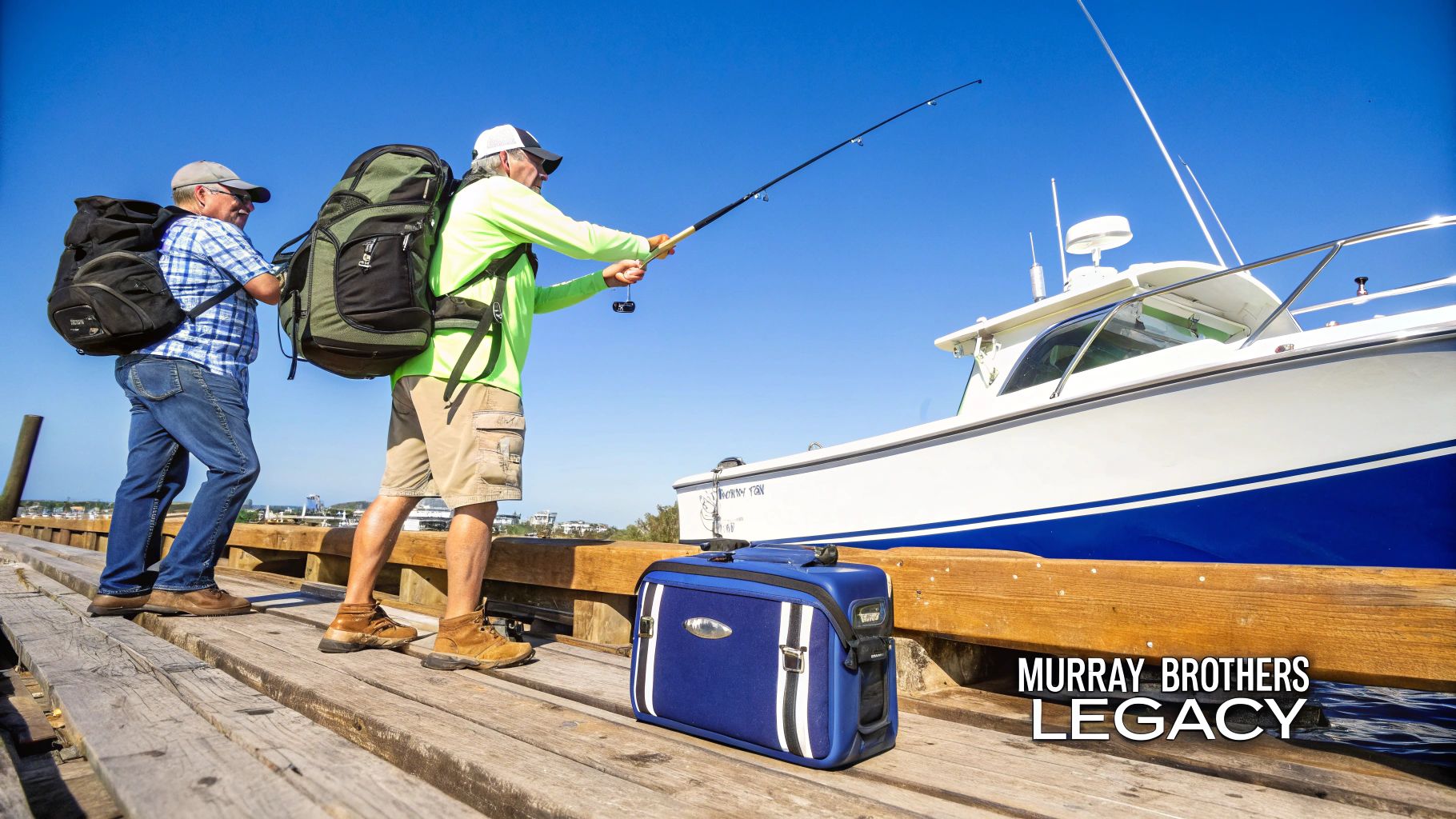
From Clunky Coolers to Integrated Systems
That classic setup created a bunch of headaches that today's gear has thankfully solved:
- Terrible Portability: Try walking down a dock or navigating a rocky jetty with a tackle box in one hand and a cooler in the other. It’s a pain.
- Scattered Gear: Your most important stuff was all over the place. Lures in this box, bait in that cooler, and your keys and phone stashed who-knows-where.
- Questionable Freshness: Keeping your bait and lunch perfectly cold for a long day of trolling for marlin meant lugging yet another massive, high-performance cooler onto the boat.
The modern fishing backpack with a cooler is the direct answer to all that frustration. It’s a smart evolution, blending the organized storage of a tackle bag with the cooling power of a dedicated cooler into a single, comfortable-to-carry design. This isn't just about making things easier; it's about fishing better.
A Legacy of Practical Innovation
This move toward all-in-one gear is clearly what people want. The Backpack Cooler Market was already valued at USD 0.6 billion in 2024 and is expected to hit USD 1.2 billion by 2030. That kind of growth is fueled by anglers and outdoor lovers who are tired of inefficient gear. And with saltwater fishing participation in the U.S. jumping by 15% since 2020, the demand for equipment that supports an active, on-the-go style is higher than ever. You can dig into some more of these market trends and their drivers.
For a tournament fisherman, efficiency is currency. The time you save by having your gear perfectly organized and your bait fresh and ready can be the difference between a trophy and a story about the one that got away.
Today’s angler—whether you’re battling it out in a deep-sea tournament off Jupiter or just enjoying a quiet day with the family—gets to benefit from this history of practical, hard-won innovation. The fishing backpack with an integrated cooler proves that the best gear is the kind that helps you enjoy the experience, not complicates it. That's a principle the Murray Brothers would have definitely stood behind.
Deconstructing the Perfect Fishing Backpack Cooler
A top-tier fishing backpack with a cooler isn't just a bag; it's a complete system designed for the serious angler. Think of it like this: just as Ed and Frank Murray knew every single component on their boat had to work perfectly for a tournament win, every feature on your pack serves a critical purpose. Learning to spot the difference between a basic bag and a piece of professional-grade gear is what will elevate your time on the water.
This isn't just about carrying stuff. It’s your mobile command center, and every detail, from the insulation to the strap design, works together to make you more organized, efficient, and ready for action. Let's break down the anatomy of a truly great angling pack.
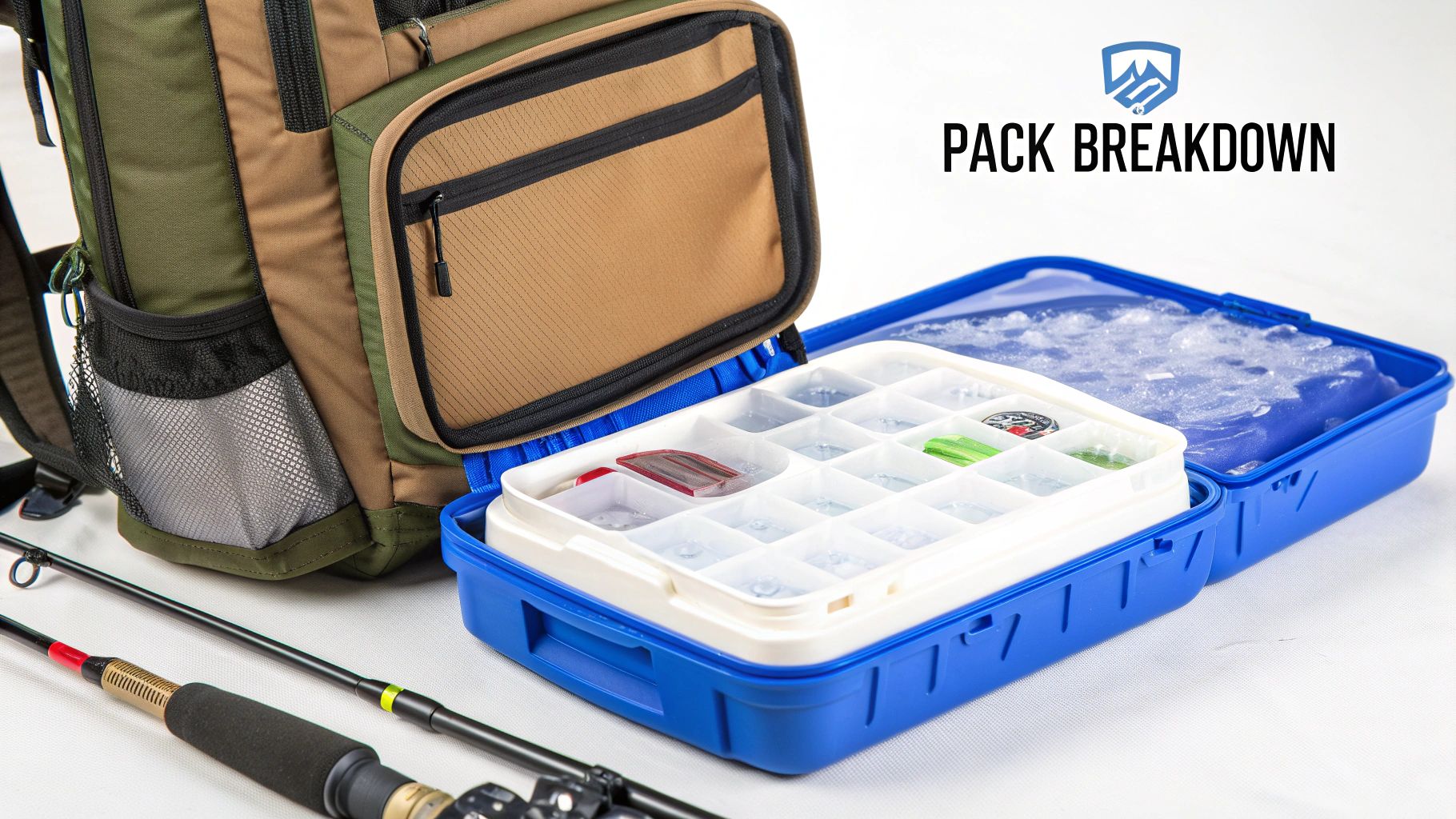
The Heart of the Chill: Insulation and Capacity
The cooler compartment is what sets this pack apart, and its performance all comes down to the insulation. Think of it like the hull of a deep-sea fishing boat—its one job is to keep the heat out and the cold in.
- Closed-Cell Foam: This is the gold standard for a reason. It's dense, won't soak up water, and provides incredible thermal resistance, making it perfect for keeping ice solid for 24 hours or more on those marathon tournament days.
- PEVA Lining: Often found in more budget-friendly packs, PEVA (polyethylene vinyl acetate) is a food-safe, chlorine-free liner. It does a decent job for shorter trips, usually keeping things cold for a solid 8-12 hours.
When it comes to capacity, you're really looking at two different numbers: gear space and cold storage. A well-designed pack will tell you both. You'll want to see space for three to four standard 3600-series tackle trays in the main gear section. The cooler itself is usually measured in cans (like 12-24 cans) or quarts. This dual-capacity thinking ensures you've got room for your lures, bait, and your lunch without having to sacrifice one for the other. If you're weighing different options, our guide on good fishing backpacks has more tips for finding that perfect balance.
Built to Battle The Elements: Materials and Construction
Any fishing backpack is going to take a beating, especially in saltwater where sun, spray, and sharp hooks are a constant threat. The materials are what separate a one-season wonder from a piece of gear you can rely on for years.
The best packs use heavy-duty fabrics, typically rated in denier (D), which is just a measure of the thread's thickness. A 600D polyester is a fine starting point for freshwater fishing, but if you're hitting the salt, you need to step it up. Look for 1000D to 1680D nylon or Cordura, as they offer far better resistance to scrapes and punctures.
A non-negotiable feature for saltwater anglers is a TPU (thermoplastic polyurethane) coating. This rubbery layer creates a powerful water-resistant barrier that stops corrosive salt from seeping into the fabric, dramatically extending the life of your pack.
Don't overlook the zippers. Saltwater will chew through standard metal zippers in no time, making your pack useless. Look for heavy-duty plastic or coated, corrosion-resistant zippers. Another smart, simple feature is a small drainage plug in the cooler, which lets you empty out melted ice water without drenching the rest of your gear.
Comfort and Control: Straps and Rod Holders
When you load up a pack with tackle, ice, drinks, and snacks, it can easily top 25 pounds or more. Without a proper suspension system, carrying that weight all day becomes a serious drag. For any angler who walks to their spots, an ergonomic design is a must-have.
Look for wide, padded shoulder straps that spread the load out. A sternum strap, which connects the two shoulder straps across your chest, is also key for keeping the pack stable and preventing slippage. If you plan on carrying heavy loads, a padded hip belt is essential—it shifts most of the weight from your shoulders to your hips, which are built to handle it.
Finally, integrated rod holders are a true game-changer, freeing up your hands when you need them most. Most packs have side pockets paired with adjustable straps or even dedicated tubes that can securely hold one or two rods. It makes hiking into a remote spot, walking a crowded pier, or just rigging up your line so much easier and safer. These are the details that turn a good fishing backpack into an indispensable tool.
From Saltwater Tournaments to Freshwater Streams
Any seasoned angler knows that the true test of your gear isn't how it looks in the shop—it's how it holds up when everything is on the line. For legends like Ed and Frank Murray, who built their reputation in the high-stakes world of saltwater sportfishing, success demanded equipment that was as tough and versatile as they were. The modern fishing backpack with cooler is the direct descendant of that mindset, built to move seamlessly from the chaos of a Palm Beach tournament to the quiet solitude of a mountain stream.
Think about the grind of a tournament angler, trolling for marlin miles offshore under a relentless sun. Back in the Murrays' day, that meant juggling multiple bulky coolers—one for bait, another for food and drinks. Today, one ergonomic fishing backpack with a cooler handles it all. Its insulated compartment keeps your ballyhoo perfectly chilled and ready to rig, while separate gear sections keep lures, leaders, and tools right where you need them for that split-second change when a billfish crashes the spread.
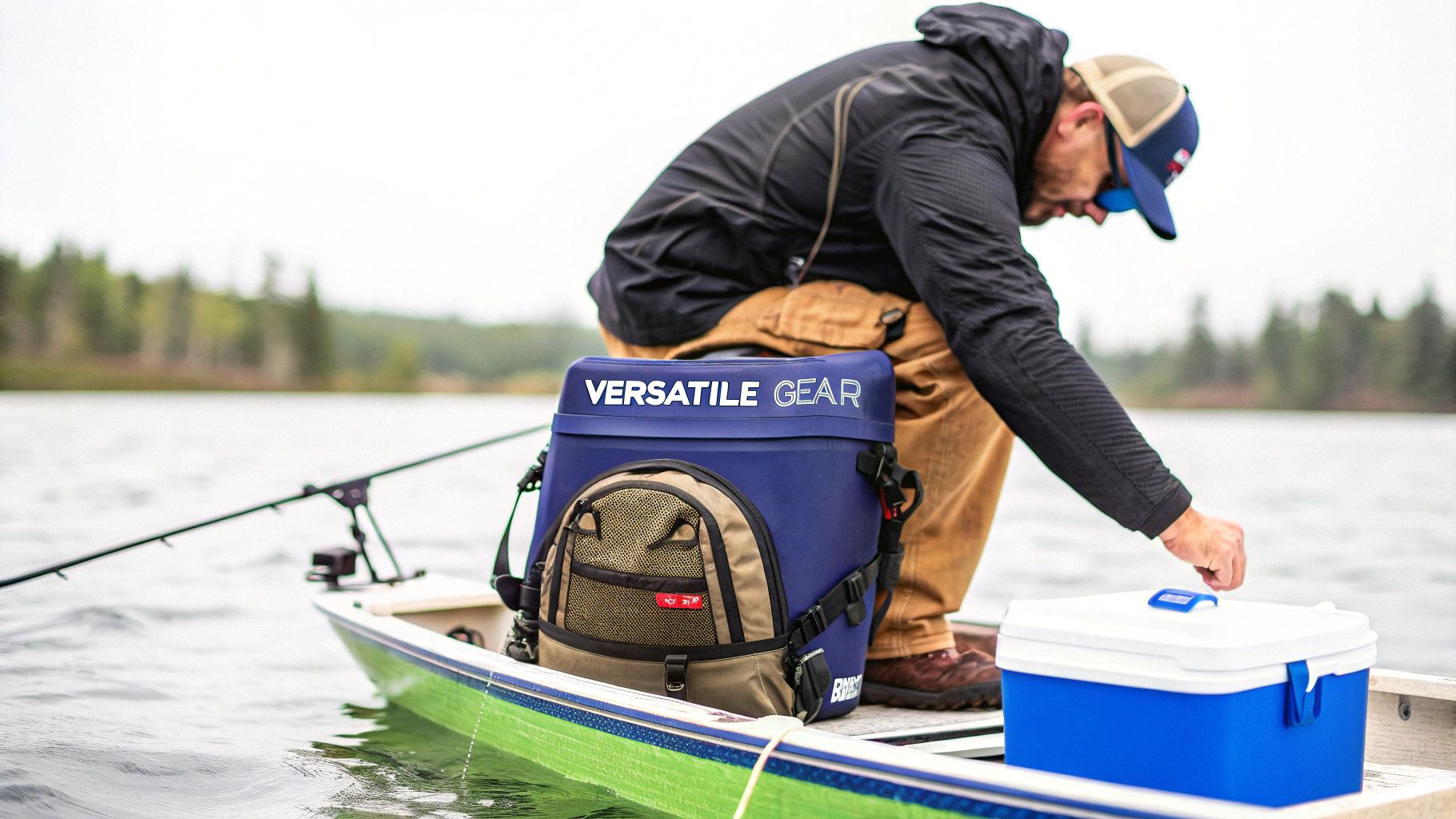
The Saltwater Competitive Edge
In the cutthroat world of saltwater sportfishing, efficiency isn't just a buzzword; it's what separates the winners from the rest of the fleet. A fishing backpack with a cooler becomes a genuine strategic advantage out on the water.
- Pristine Bait: Top-tier insulation means your expensive, tournament-grade bait stays fresh and firm from the first cast to the last. No more mushy bait when the bite gets hot.
- Hands-Free Mobility: Try moving around a rocking boat deck with your hands full. It's not just awkward; it's dangerous. A backpack frees you up to move safely and confidently.
- All-Day Endurance: Staying hydrated and fueled is non-negotiable for maintaining focus during a grueling tournament day. Having ice-cold drinks and food within arm's reach helps you stay sharp and perform at your peak.
This perfect blend of organization and preservation is exactly what gives today's anglers an edge, carrying on the Murray Brothers' legacy of using the absolute best gear to win.
From the Open Ocean to Remote Rivers
Now, let's trade the deep blue for a winding freshwater stream tucked away in the mountains. Here, the challenge isn't about fighting a monster fish; it's about the journey to find them in the first place. This is where the sheer portability of a fishing backpack with a cooler really shines, proving its worth far beyond the tournament circuit.
A fly fisherman can hike for miles to a secluded spot, their rod neatly secured in a built-in holder and their hands free to navigate roots and rocks. That same cooler compartment that held offshore bait now keeps a sandwich and a few cold drinks perfectly chilled for a full day of wading. Every fly box, tippet spool, and pair of forceps is organized and ready to go in the tackle compartments.
The real magic of a fishing backpack with a cooler is its incredible adaptability. It serves the intense, gear-heavy needs of a saltwater pro just as well as it meets the minimalist, mobile demands of a backcountry fly angler.
This versatility is causing a massive shift in how we all think about our gear. The market for portable coolers, which includes these advanced backpack models, is expected to explode, growing by a staggering USD 6.60 billion between 2025 and 2030. It's driven by innovations like new latches that provide 15% better seal effectiveness, making these backpacks a go-to choice for anglers who refuse to compromise on performance. You can read more about the booming portable cooler market in this industry report.
One Pack for Every Angler
But the uses don't stop there. This single piece of gear is a game-changer across a huge range of fishing scenarios.
- Pier Fishing: On a crowded pier, space is gold. A backpack consolidates your tackle, bait, and lunch, keeping your footprint small and tidy. You can pick up and move to a better spot in seconds, no multiple trips required.
- Family Outings: Taking the kids out for a day of fishing? The cooler's dual-purpose nature is a lifesaver. It holds snacks and juice boxes on the way to the lake and keeps the day's catch fresh on the trip home.
Whether you're chasing a grander in the Gulf Stream or just teaching your kids to cast from a local dock, the fishing backpack with a cooler is the ultimate angling partner. It’s a smart, efficient solution for any adventure on the water, honoring the resourceful spirit of sportfishing pioneers like the Murrays.
Packing and Maintaining Your Angling Command Center
Think of your fishing backpack as more than just a bag; it's your mobile base of operations. Just like you wouldn't head offshore in a boat with a sputtering engine or cast with a gritty reel, your backpack needs a little prep and care to perform at its best. A few smart habits will make sure it's always ready to go, lasts for years, and lets you focus on finding the fish.
When you treat your gear right, it treats you right. Mastering these simple packing and maintenance routines means your command center will never fail you when the bite heats up.
Strategic Packing for Peak Performance
How you load your pack makes all the difference between a comfortable day on the water and a frustrating, back-aching one. A poorly packed bag feels twice as heavy and makes you dig for everything. The goal is to pack smart, creating a balanced load where everything is right where you need it.
Let’s start with the cooler, since that’s where most of the weight will be.
- Build a Cold Base: Always start with a solid block of ice or a couple of large, frozen ice packs at the very bottom. Block ice melts way slower than cubes, creating a long-lasting cold foundation that keeps the whole cooler chilled from the bottom up.
- Separate Bait and Sustenance: This is a non-negotiable rule. Keep your bait and your lunch in separate, sealed containers. Nobody wants their sandwich smelling like shrimp. Place your bait on one side of the cooler to avoid any cross-contamination.
- Layer Smartly: Put your drinks and food on the other side. Items you'll need last, like extra water bottles, can go in first. Keep delicate things like sandwiches on top so they don't get squashed. This way, you're not tearing the whole cooler apart just to grab a drink.
Organizing Tackle and Distributing Weight
With the cooler squared away, it’s time to think about your tackle. Getting the weight distribution right is the secret to carrying a heavy load without feeling it.
Your heaviest tackle boxes should go in the main compartment, positioned as close to your back as possible. This centers the load against your spine and hips, which are built to carry weight, taking the strain off your shoulders. Lighter gear—like spools of line, bags of soft plastics, and your rain jacket—can fill in the space around the heavier items.
Think of it like loading a boat. You put the heaviest coolers and gear low and in the center to keep it stable. An off-balance pack will constantly pull on your shoulders and can even throw you off balance when you're walking on slippery rocks or a wet deck.
Lastly, make the most of those exterior pockets. Your go-to tools like pliers, line cutters, and leader spools belong in easy-to-reach side pockets. This lets you grab what you need to re-rig without ever having to take the backpack off and dig through the main compartment.
Maintenance Rituals for Longevity
Good maintenance is what turns a one-season wonder into a trusted piece of gear that lasts a decade. This is especially true after a day in the salt, where corrosive crystals can eat away at zippers and fabric if you let them.
- Post-Trip Rinse: After every single saltwater trip, no exceptions, give the entire backpack a good rinse with fresh water. Make sure to hit the zippers and any metal hardware.
- Deep Clean the Cooler: Don't let fish slime and old bait create a funky mess. Wash the cooler's interior with warm, soapy water after each trip. For stubborn smells, a quick wipe with a diluted white vinegar solution does the trick. Always let it air dry completely with the lid propped open.
- Inspect and Protect: Every so often, give your pack a once-over. Check the seams and zippers for wear. A little zipper lubricant once a month goes a long way in preventing them from getting stuck or corroded.
That lingering fish smell can get into everything, not just your cooler. If you're struggling to keep your apparel fresh, our guide on how to remove fish smell from clothes has some great tips. Taking care of your whole kit ensures you're always ready for the next adventure.
Choosing Your Perfect Angling Partner
Trying to pick the right fishing backpack with a cooler can feel a lot like staring into a tackle box, wondering which lure will get the job done. With so many features, materials, and designs out there, the real trick is to match the pack to how you fish.
Think of it this way: just like Ed and Frank Murray wouldn't take the wrong boat or tackle to a saltwater tournament, your choice needs to be strategic. It all comes down to where you fish, how long you're out, and what you’re carrying. This isn't about finding the "best" backpack on the market—it's about finding the best one for you.
A few honest questions can cut through the noise and point you straight to the perfect partner for your adventures.
A Practical Checklist for Anglers
Before you pull the trigger on a purchase, run through this quick self-assessment. Your answers will be the compass that guides you to a backpack that feels like it was built just for you.
- Your Primary Fishing Hole: Do you mostly fish in the corrosive salt spray or stick to freshwater streams and lakes? Saltwater demands tough materials like TPU coatings and corrosion-resistant zippers to avoid getting eaten alive by the elements.
- Trip Duration: Are you an early bird out for a few hours, or are you a sunup-to-sundown warrior? The longer the trip, the more cooler capacity you'll need for drinks, food, and bait. You'll also want comfortable, ergonomic straps to manage that extra weight all day.
- Gear Loadout: Are you a minimalist with just a couple of tackle trays, or do you haul an arsenal for every possible species? Get real about how much gear you actually bring. This ensures you have enough organized space without lugging around a bulky, half-empty pack.
- Your Budget: Prices can swing wildly from affordable to premium. Set a realistic budget, but don't forget that investing a little more in durability and top-notch insulation often pays for itself in the long run—just like quality tackle.
Comparing Pack Styles
Once you've got a handle on your needs, you can start comparing the different types of packs available. Each one brings something different to the table.
A fully integrated model is a seamless unit where the cooler is built right into the main body. This setup is fantastic for stability and usually offers the best insulation performance.
On the other hand, a pack with a detachable cooler is all about versatility. You can use the backpack by itself for a quick trip or clip on the cooler for an all-day affair, giving you two pieces of gear in one.
You'll also see a difference in structure. A soft-sided structure is lightweight and flexible, making it easy to stow. Meanwhile, a semi-rigid design offers better protection for your gear and often stands up on its own—a massive convenience on a rocking boat or a crowded pier.
The market is definitely leaning toward this kind of versatile, lightweight gear. The Camping Cooler Market, which includes these backpack styles, was valued at a whopping USD 893.7 million in 2022 and is expected to hit USD 1,207.9 million by 2030. Soft backpack coolers, in particular, are surging in popularity thanks to lighter, more efficient materials that are perfect for anglers on the move. You can learn more about these trends in the camping cooler market.
This decision tree breaks down how to get the most out of your gear, focusing on smart packing before you go and essential maintenance when you get back.
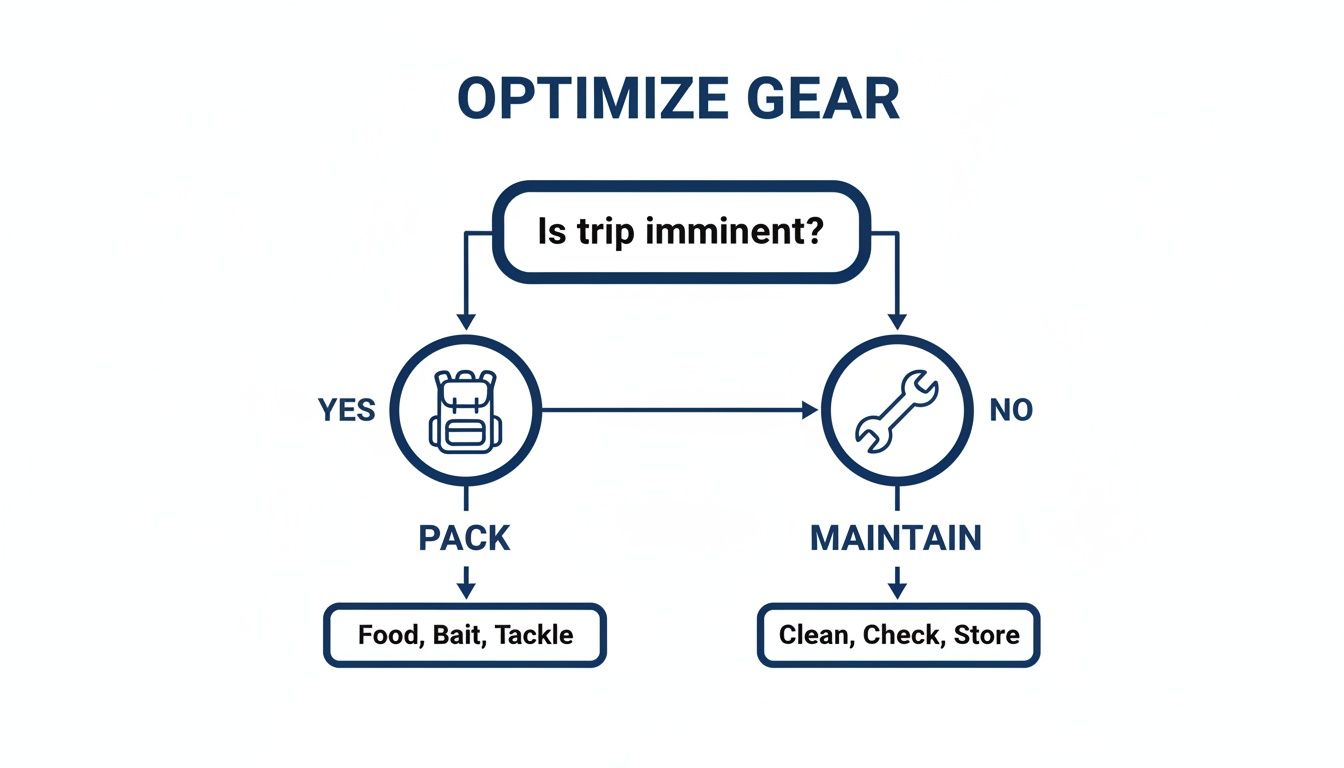
The key takeaway here is that a great day on the water depends just as much on smart preparation and consistent upkeep as it does on the gear itself.
By thinking through these points, you'll go from being an overwhelmed shopper to an informed angler, ready to pick a fishing backpack with a cooler that will be your trusted sidekick for years to come.
Complete Your Kit with Murray Brothers Legendary Gear
So you’ve got the perfect fishing backpack with a built-in cooler. It’s the command center for your tackle, your lunch, and your drinks. But a great pack is just one piece of the puzzle. For a truly successful day on the water, everything has to work in sync.
That’s a lesson sportfishing legends Ed and Frank Murray took to heart during their countless tournaments. They knew that top performance depended on the right equipment, from the boat itself right down to the shirt on your back.
Assembling a Tournament-Ready System
Think of your gear as a complete system. Your ability to fish hard all day is only as strong as its weakest link.
-
For Intense Sun and Heat: When you're spending hours under the blazing sun, you need a shirt that works as hard as you do. Pairing your pack with a Murray Brothers moisture-wicking performance tee is a no-brainer. These shirts are designed to pull sweat off your skin, keeping you cool and focused when you're trolling offshore.
-
Protection from Wind and Spray: Weather can turn in an instant. A durable, lightweight jacket is essential for cutting the wind and deflecting sea spray, keeping you dry and warm so you can stay in the bite. Your apparel should protect you just like your backpack protects your gear.
-
Casual Comfort and Classic Style: Not every trip is a tournament. For those more relaxed days on the pier or a family outing on the boat, a classic Murray Brothers cotton tee is just the ticket. It’s breathable, comfortable, and perfect for when the fishing is easy.
Just as the Murray Brothers knew that every detail mattered in a tournament, today’s angler understands that a complete system—backpack, apparel, and accessories—creates a superior fishing experience. It's about efficiency, comfort, and unwavering readiness.
By matching your fishing backpack with cooler with the right apparel, you’re building a cohesive, high-performance setup that won't let you down. To learn more about how the right clothes can make a real difference, check out our guide on performance fishing gear clothing. Murray Brothers has the legendary, battle-tested gear you need to be ready for anything the water throws at you.
A Few Final Questions
Even after you've landed the perfect fishing backpack with a cooler, a few questions might still be swimming around in your head. It doesn't matter if you're chasing records on the saltwater circuits like legends Ed and Frank Murray or just enjoying a quiet day on a freshwater bank—anglers everywhere want to get the most from their gear. Let's tackle some of the most common queries.
How Long Will Ice Actually Last in One of These?
That’s the million-dollar question, isn't it? The real answer depends on the quality of the pack, the heat of the day, and how often you're digging around for a cold one. A top-tier model with thick, closed-cell foam insulation—the kind a serious tournament pro would trust—can realistically keep ice for 24 to 48 hours. That’s more than enough for a long day offshore or an overnight trip.
Your more standard packs will give you a solid 8-12 hours of cooling, which is plenty for most day trips. Pro tip: to get the most out of it, pre-chill the cooler compartment before you load it up, use bigger blocks of ice instead of cubes (they melt way slower), and try not to open it every five minutes.
Are These Backpacks Genuinely Waterproof?
This is a huge one, and you need to know the difference. The vast majority of these backpacks are highly water-resistant, but they are not fully waterproof or submersible. Think of it this way: the tough outer fabrics, often coated with TPU, are designed to shrug off heavy sea spray and a downpour, just like the gear the Murray Brothers relied on.
The zippers, however, are almost always the vulnerable spot. For the best protection, look for packs that have water-resistant zippers or storm flaps covering them. While the cooler section itself is usually leakproof from the inside (to keep meltwater from getting everywhere), it’s always a good idea to toss your phone, keys, and wallet into a small dry bag before stashing them in a main compartment. Better safe than sorry.
Is a Fishing Backpack with a Cooler Really Worth the Money?
For any angler who doesn't stay put, it's a resounding yes. The whole point is freedom and efficiency. Having your tackle, gear, and a cooler all in one hands-free package is a complete game-changer when you're hiking into a remote spot, trying to navigate a packed pier, or just dealing with the tight quarters on a boat.
It simplifies your entire system, meaning you have less stuff to carry and keep track of. The price tag might be a bit higher than buying a separate tackle bag and a cheap cooler, but the integrated features like rod holders, tool loops, and saltwater-grade materials provide serious long-term value. It just makes your time on the water that much better.
Ready to gear up like a legend? Explore the full collection of angler-approved apparel and accessories at Murray Brothers Palm Beach and complete your kit for your next adventure on the water. Shop the collection today.
Dejar un comentario